
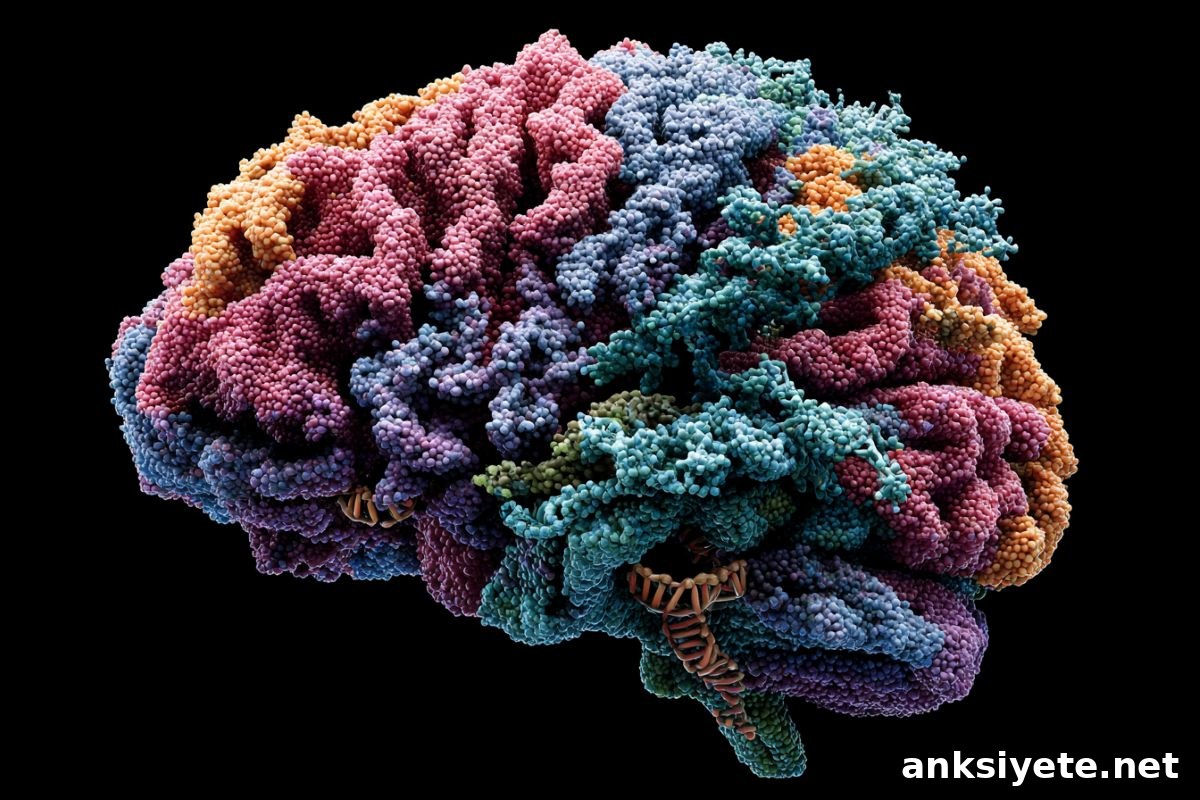
Summary: The endoplasmic reticulum (ER) is the cell’s busiest production center, responsible for folding, proofreading, and exporting proteins. Although researchers long knew the ER depended on a carefully maintained chemical balance, the molecular machinery that enforces that balance remained unclear.
A team led by Kıvanç Birsoy has now identified SLC33A1 as a key regulator of glutathione within the ER. Their work shows that SLC33A1 controls the redox environment needed for correct protein folding. When this regulation fails, misfolded proteins accumulate, forming toxic aggregates associated with neurodegenerative diseases and certain cancers.
Key Findings
- Mitochondria vs. ER: In mitochondria, glutathione supports metabolic activity, while in the ER its main role is maintaining protein quality control.
- Direct visualization: Collaboration with structural biologists produced the first detailed views of how SLC33A1 binds and translocates oxidized glutathione (GSSG) across the ER membrane.
- Therapeutic potential: Discovering SLC33A1 as the principal GSSG exporter opens approaches to modulate ER glutathione—potentially through synthesis inhibitors or other agents—to address neurodevelopmental disorders and cancers that depend on altered glutathione balance.
Source: Rockefeller University
Overview of the research team and context
Over recent years, Birsoy and his Laboratory of Metabolic Regulation and Genetics have advanced our understanding of glutathione, an antioxidant that detoxifies free radicals, supports repair, and shapes cellular metabolism. Their earlier work identified glutathione transporters, exposed its role in iron regulation, and clarified complex interactions with mitochondria—where glutathione both sustains normal function and, in some contexts, contributes to cancer progression.
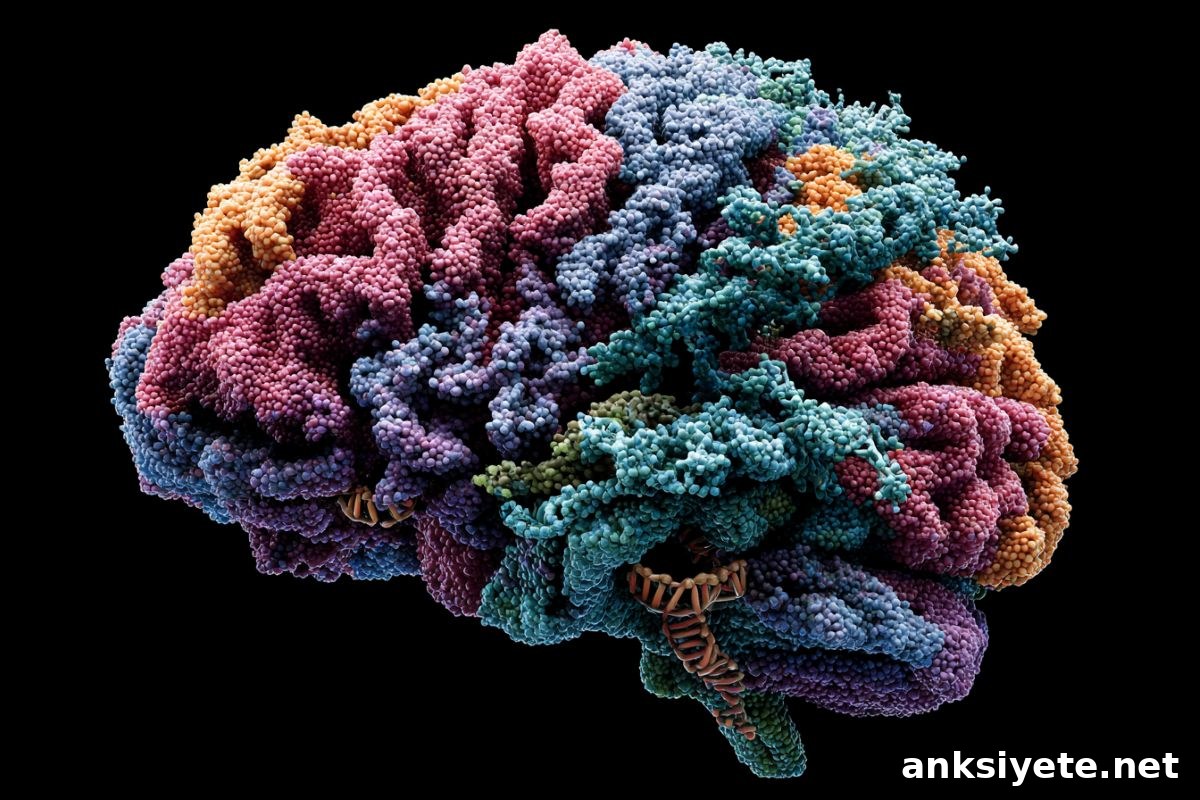
Their latest study, published in Nature Cell Biology, pinpoints how glutathione maintains the ER’s oxidative environment to enable proper protein maturation and export. The researchers report that SLC33A1 actively exports the oxidized form of glutathione (GSSG) from the ER while reduced glutathione (GSH) is imported or retained according to cellular needs, establishing and preserving the ER’s high GSSG:GSH ratio.
Striking the right balance
Previous work from the group had shown the critical need to precisely regulate glutathione in mitochondria. Building on those insights, the researchers asked how glutathione contributes to the ER’s distinct redox environment. The ER is a specialized compartment where secretory and membrane proteins are folded and oxidized before they leave the organelle. That folding process requires an oxidizing environment, different from the more reducing cytosol and mitochondria.
To explore this, the team developed a rapid ER immunopurification method that allowed comprehensive profiling of the organelle’s proteome and metabolome. That approach, paired with genetic screening, revealed that SLC33A1 is essential to exporting GSSG from the ER. Structural and biochemical experiments then demonstrated that SLC33A1 directly binds and transports GSSG, and identified amino acid residues required for that transport.
Quality control
Using the new profiling tools, postdoctoral researcher Shanshan Liu observed that the ER maintains its oxidized state by importing GSSG from the cytosol and exporting GSH to preserve a high GSSG:GSH ratio. When SLC33A1 is absent or impaired, GSSG accumulates in the ER, shifting the redox balance and interfering with protein-folding enzymes that depend on the correct oxidation state.
That disruption compromises a key proofreading step in protein maturation. Misfolded proteins that fail quality control are retained and accumulate in the ER. Over time, this buildup can trigger ER stress and cell death. Structural studies led by Mark Gad, in collaboration with Memorial Sloan Kettering investigators, provided the first direct views of how SLC33A1 engages its glutathione cargo and moves it across the membrane—giving researchers a molecular handle on a process previously treated as a black box.
Neurodevelopmental disorders and cancer
The discovery helps explain disease links previously associated with SLC33A1. Huppke-Brendel Syndrome, a severe neurodevelopmental disorder featuring intellectual disability, motor impairments, and progressive neurodegeneration, has been connected to mutations in the SLC33A1 gene. The new data suggest those mutations disrupt ER glutathione homeostasis during brain development, promoting protein misfolding and cellular dysfunction.
The findings also suggest strategies for targeting cancers that rely on enhanced glutathione synthesis, such as tumors with KEAP1 mutations. By inhibiting SLC33A1 or otherwise manipulating ER glutathione export, it may be possible to drive an imbalance that selectively kills cancer cells dependent on high glutathione levels.
“Defining how metabolites cross organelle membranes reveals core principles of cell biology and identifies disease-relevant, druggable proteins,” says Birsoy. The team plans to continue mapping metabolite transport and its implications for health and disease.
Key Questions Answered:
A: A protein’s three-dimensional shape determines its function. A misfolded protein often cannot perform its role and can become stuck inside the ER. When many defective proteins accumulate, the cell experiences stress that can lead to dysfunction and death.
A: Although this study focused on mechanisms relevant to Huppke-Brendel Syndrome, many neurodegenerative disorders involve misfolded protein accumulation. Restoring ER protein-folding quality control or correcting glutathione imbalance could eventually help strategies aimed at clearing toxic protein aggregates in diseases like Alzheimer’s or Parkinson’s.
A: Some cancer cells depend on elevated glutathione to survive rapid growth and oxidative stress. Disrupting SLC33A1-mediated export of oxidized glutathione could force an ER redox imbalance that selectively kills those cancer cells.
Editorial Notes:
- This article was edited by a Neuroscience News editor.
- The journal paper was reviewed in full by editorial staff.
- Additional explanatory context was added by the editorial team.
About this genetics and neuroscience research news
Author: Katie Fenz
Source: Rockefeller University
Contact: Katie Fenz – Rockefeller University
Image: The image is credited to Neuroscience News
Original Research: Closed access.
“SLC33A1 exports oxidized glutathione to maintain endoplasmic reticulum redox homeostasis” by Shanshan Liu, Mark Gad, Caifan Li, Kevin Cho, Yuyang Liu, Khando Wangdu, Viktor Belay, Alon Millet, Hiroyuki Kojima, Henry Sanford, Michele Wölk, Linas Urnavicius, Maria Fedorova, Gary J. Patti, Ekaterina V. Vinogradova, Richard K. Hite & Kıvanç Birsoy. Nature Cell Biology. DOI: 10.1038/s41556-026-01922-y
Abstract
SLC33A1 exports oxidized glutathione to maintain endoplasmic reticulum redox homeostasis
The ER requires an oxidative environment to support efficient maturation of secretory and membrane proteins. Glutathione, present as reduced (GSH) and oxidized (GSSG) forms, contributes to that environment. The ER maintains a higher GSSG:GSH ratio than the cytosol, but the mechanisms that set this balance were unclear.
Using a rapid ER immunopurification method combined with CRISPR screening, the authors identified SLC33A1 as the principal GSSG exporter in mammalian cells. Loss of SLC33A1 causes GSSG accumulation in the ER. Biochemical assays confirmed direct GSSG transport, and cryogenic electron microscopy plus molecular dynamics clarified how SLC33A1 binds GSSG and which residues are critical for transport.
An altered GSSG:GSH ratio induces ER stress and increases reliance on the ER-associated degradation pathway, driven by shifts in protein disulfide isomerases toward oxidized forms. These results establish SLC33A1-mediated GSSG export as a central mechanism for maintaining ER redox homeostasis and enabling proper protein maturation.