
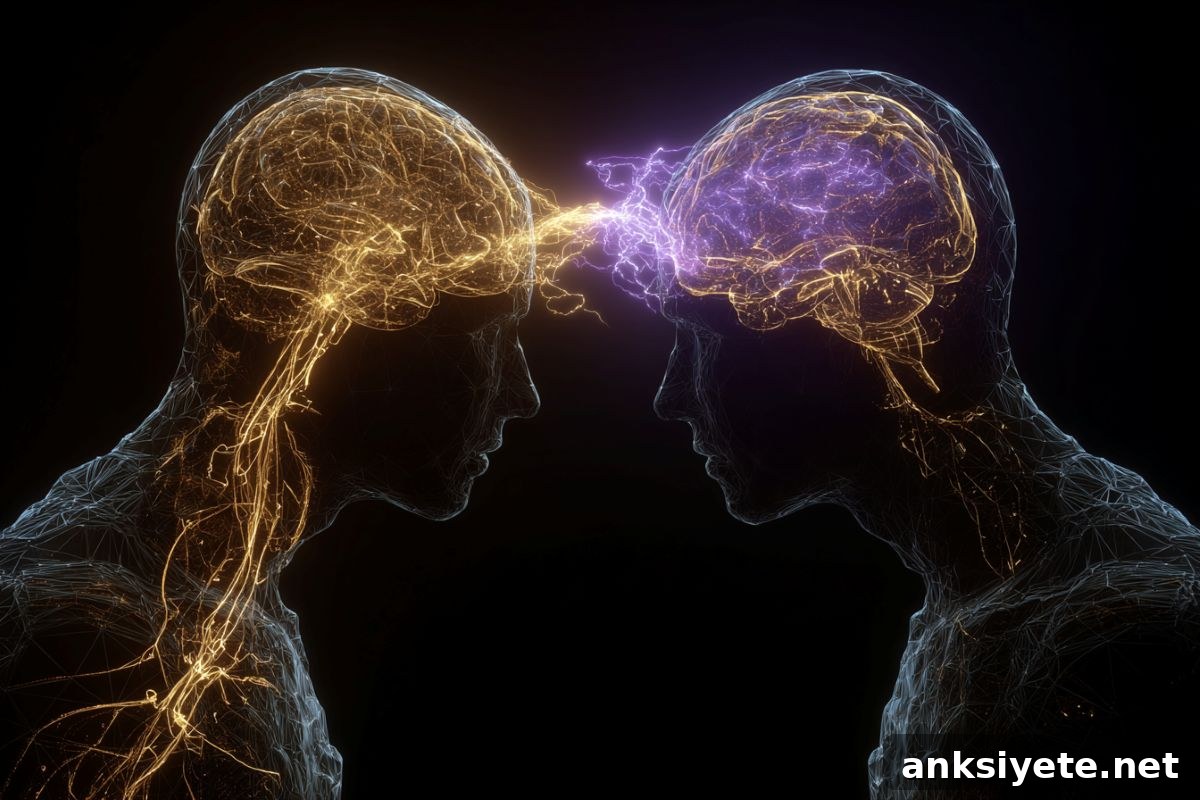
Summary: Whether you are negotiating a contract, chatting with a colleague, or playing rock-paper-scissors, your brain is constantly evaluating other people’s intentions in a process known as adaptive mentalization. A new University of Zurich study identifies a reliable neural “fingerprint” that predicts how quickly and accurately someone updates their beliefs about others.
Using fMRI and computational modeling on more than 570 participants, researchers mapped a distributed social-brain network that becomes active when we realize our expectations about another person are wrong. These findings clarify how the brain dynamically tracks others’ strategies and may help improve diagnosis and treatment of social-cognitive disorders such as autism spectrum conditions and borderline personality disorder.
Key Facts
- The mentalization network: A coordinated network centered on the temporoparietal cortex (involved in attributing thoughts to others) and the dorsomedial prefrontal cortex (involved in social evaluation) supports ongoing social inference.
- Neural fingerprint: Patterned activity across this network predicts, with nearly 90% accuracy, how well a person adapts to an opponent’s changing strategy.
- The “oops” signal: The anterior insula and adjacent ventrolateral prefrontal areas show sharp activity increases when expectations are violated, prompting reassessment.
- Dynamic interaction: Unlike static tasks used in earlier studies, this research used repeated, live games to demonstrate that mentalization is a continuous, adaptive process.
- Clinical potential: Objective neural markers of adaptive mentalization could be used to assess social-cognitive function and track response to social skills therapies.
Source: University of Zurich
How quickly do we recognize whether someone is predictable or strategic?
Across everyday situations—games, conversations, negotiations—we constantly infer others’ intentions and adjust our behavior. Scientists call this ongoing evaluation adaptive mentalization. The new University of Zurich study explains which brain systems drive that rapid social updating.
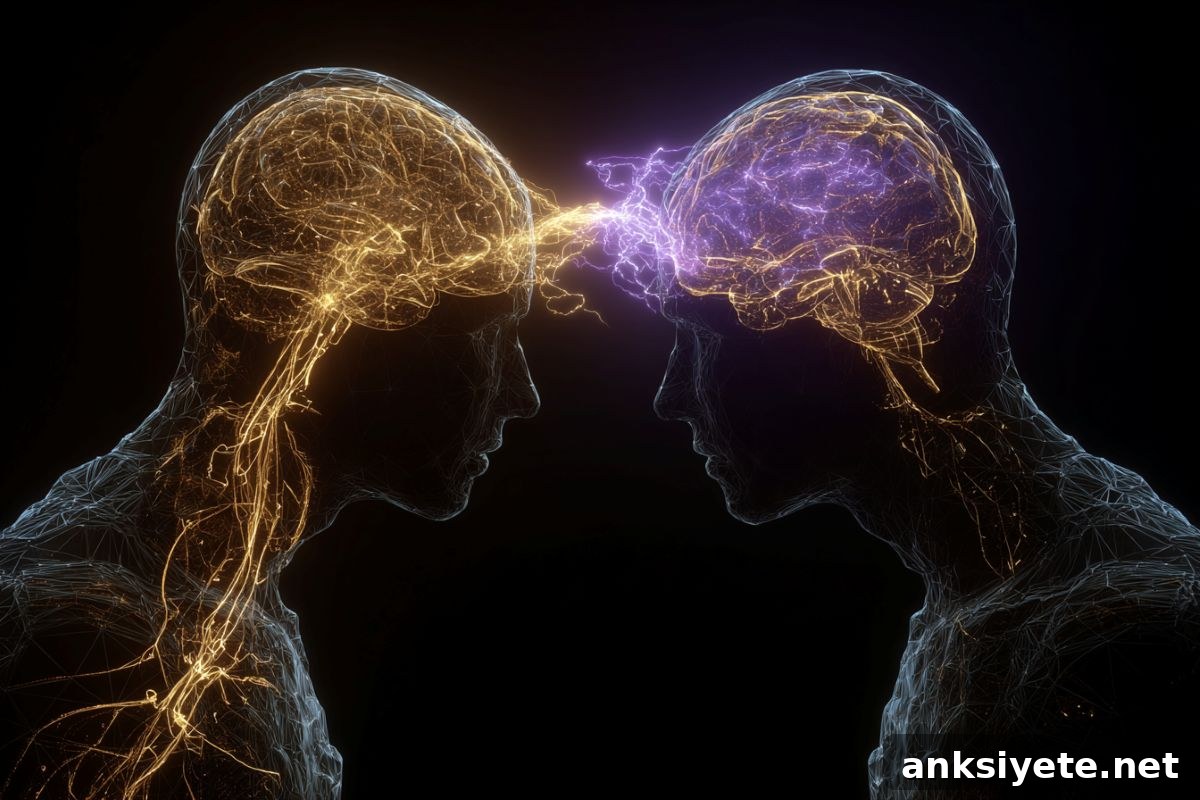
Individual differences in social mentalization
Led by Christian C. Ruff, professor of neuroeconomics and decision neuroscience, the research team tested more than 570 people across interactive tasks. Participants played repeated rounds of rock-paper-scissors against either human opponents or artificial agents. A new computational model quantified how participants inferred opponents’ strategies and how strongly they updated those inferences from round to round.
Most participants adapted when opponents changed behavior, but the speed and accuracy of that adaptation varied widely. Some people quickly recognize and respond to a changing strategy; others require many rounds before their estimates align with the opponent’s actions. “Some participants are almost instant at detecting strategy, while others take longer to arrive at an accurate read,” Ruff notes.
Which brain regions drive social updating?
Functional MRI revealed a distributed social-brain network whose activity increases when participants revise their beliefs about an opponent. Key nodes include the temporoparietal cortex—critical for reasoning about others’ thoughts—and the dorsomedial prefrontal cortex, which evaluates social information. The anterior insula and neighboring ventrolateral prefrontal regions also show marked activation, particularly at moments when expectations fail and reassessment is required. “Activity in these regions reliably changes at the moment people need to update their social beliefs,” explains Gökhan Aydogan, a postdoctoral researcher involved in the study.
Predicting social adaptation from brain activity
Crucially, the patterns of activity across this network constitute a neural fingerprint that predicts how much a person will update beliefs about another’s sophistication. The model predicted adaptive behavior for nearly 90% of participants, including individuals whose brain data were not part of the model’s training set. That out-of-sample prediction supports the idea that a stable neural signature underlies adaptive mentalization.
The study departs from earlier work that relied on static tasks—short stories or one-off choices—by using repeated, interactive decisions that resemble everyday social exchanges. The results indicate that mentalization is not a single cognitive state but an ongoing, flexible process, continuously tracking and revising beliefs about others.
Clinical and practical implications
Ruff and colleagues suggest this neural fingerprint could become a tool for assessing social-cognitive abilities more objectively. That would be particularly useful for neurological and psychiatric conditions where social interaction is impaired. Neural markers of adaptive mentalization may also offer objective endpoints to evaluate and refine social skills interventions over time.
Key Questions Answered
A: The speed and sensitivity of social updating differ between individuals. Those who excel have a network that recalibrates quickly when an opponent switches tactics, while slower updaters take more time to adjust.
A: Yes. The adaptive-mentalization network is engaged in both cases, but brains tend to work harder when inferring a human opponent’s intentions because people’s behavior is typically more complex and less rule-bound than a machine’s.
A: Potentially. Because the neural fingerprint predicted adaptive behavior with high accuracy, a short brain scan combined with an appropriate task could provide objective measures of how effectively someone processes social information. That approach might be helpful for tracking progress in therapy for autism and related conditions.
Editorial Notes
- This article was edited by a Neuroscience News editor.
- Journal paper reviewed in full by the editorial team.
- Additional context was added by staff for clarity.
About this social neuroscience research news
Author: Nathalie Huber
Source: University of Zurich
Contact: Nathalie Huber, University of Zurich
Image: Image credited to Neuroscience News
Original Research: Open access. “A neural fingerprint of adaptive mentalization” by Niklas Buergi, Gökhan Aydogan, Arkady Konovalov & Christian C. Ruff. Nature Neuroscience. DOI: 10.1038/s41593-026-02219-x
Abstract
A neural fingerprint of adaptive mentalization
Mentalization—the ability to infer others’ emotions and intentions—is central to human social interaction and is disrupted in several brain disorders. While prior neuroscience work mostly examined static mentalization tasks, less is known about how the brain chooses and updates strategies during ongoing interactions. Combining computational modeling with fMRI during interactive strategic games, the study shows most people adapt their strategies to opponents of varying sophistication, but individual differences are substantial. Model-based fMRI identifies a distributed network whose activity and connectivity track belief updates about others. The degree to which individuals revise their beliefs can be predicted from neural activity, offering a neural signature of adaptive mentalization and a method to assess these capacities in healthy and clinical populations.