
Summary: A new imaging study from TU Dresden investigates the rapid neural processes that enable short-term task learning and the brain-wide reorganization that supports turning instructions into fluent behavior.
Source: TU Dresden
Researchers at TU Dresden have used functional imaging to examine how large-scale brain networks reorganize during rapid, instruction-based task learning. The findings, published in Nature Communications, show that short-term task automatization involves both increased coordination among task-relevant subnetworks and a release or segregation of networks involved in controlled attention.
A team of cognitive neuroscientists investigated how the brain transforms novel instructions into efficient, automated actions over short practice periods. Their approach builds on the notion that complex mental functions—such as perception-to-action mapping, attention, and cognitive control—are supported by dynamic patterns of communication within and between large-scale functional brain networks. Rather than focusing only on long-term learning, the researchers tested whether these communication patterns can reorganize rapidly during initial practice and automatization of newly instructed tasks.
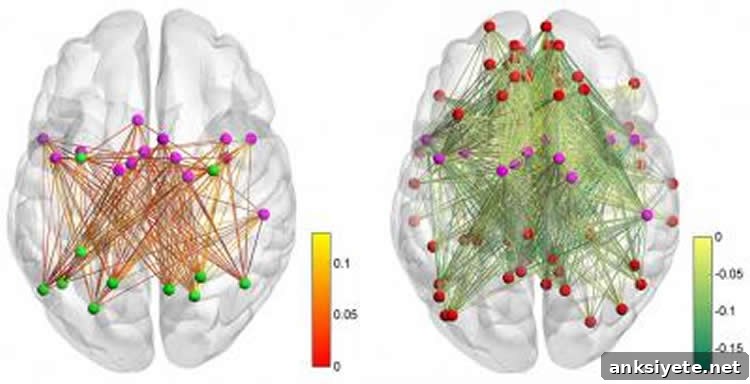
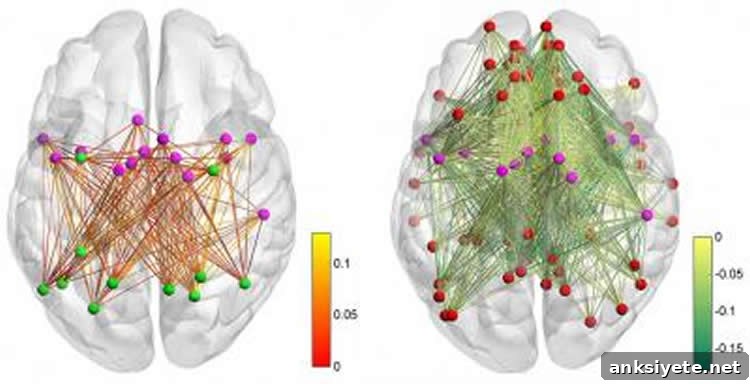
Using functional MRI, the study compared brain activity from a learning sample (N = 70) with a control sample (N = 67). Across short practice sessions, participants showed faster and more efficient task performance. These gains in behavioral efficiency coincided with a measurable reconfiguration of large-scale network interactions. Specifically, practice-related gains were associated with stronger coupling between the cingulo-opercular network and the dorsal attention network. This increased communication appears to support the transformation of visual input into coordinated motor responses.
At the same time, researchers observed a downregulation of the fronto-parietal network—commonly linked to high-level cognitive control—suggesting that as tasks become more automatic, the brain releases resources previously dedicated to deliberate, attention-demanding control. Concurrently, the default mode network (DMN), which is typically more active during internally focused processes, became increasingly segregated from task-related networks. This decoupling indicates a shift in how the brain allocates processing resources: networks that drive specific stimulus-response mappings become more tightly integrated while networks associated with broad or internally oriented processing disengage.
Taken together, the results support a model in which short-term task automatization is enabled by rapid, system-level reconfiguration. The brain balances integration and segregation across distributed networks, selectively increasing communication among task-critical subnetworks while reducing coupling with networks involved in controlled attention and internally focused processing. These complementary processes allow the brain to implement instructions quickly and convert them into fluent behavior within only a few practice trials.
The study provides direct evidence that large-scale brain networks are not static during early learning: they can rapidly change their interaction patterns to meet new task demands. Practically, these findings help explain how humans can follow novel instructions and perform new tasks effectively after minimal practice, and they highlight specific network dynamics—such as enhanced cingulo-opercular to dorsal attention coupling and DMN segregation—that underlie this capability.
Study details: Title: Integration and segregation of large-scale brain networks during short-term task automatization. Authors: Holger Mohr, Uta Wolfensteller, Richard F. Betzel, Bratislav Mišić, Olaf Sporns, Jonas Richiardi & Hannes Ruge. Journal: Nature Communications. Published online November 3, 2016. DOI: 10.1038/ncomms13217.
Key terms for search: short-term task automatization, large-scale brain networks, cingulo-opercular network, dorsal attention network, default mode network, fronto-parietal network, fMRI, TU Dresden, Nature Communications.
Integration and segregation of large-scale brain networks during short-term task automatization
The human brain is organized into functional networks that can flexibly reconfigure their connectivity patterns to support both rapid adaptive control and longer-term learning. This study examined how short-term network dynamics enable the fast transformation of instructions into fluent behavior. Comparing fMRI data from a learning sample (N = 70) and a control sample (N = 67), the authors found that practice-related efficiency gains corresponded to a reorganization of large-scale network interactions. Enhanced coupling between the cingulo-opercular and dorsal attention networks supported improved task processing, while decreasing activation of the fronto-parietal network indicated a reduction in high-level cognitive control demands. Simultaneously, the default mode network became more segregated from task-related networks. These complementary integration and segregation processes suggest that the brain’s ability to rapidly reconfigure its large-scale network architecture enables short-term task automatization.
Image credit: Holger Mohr et al. Research conducted at TU Dresden and published in Nature Communications (2016).