
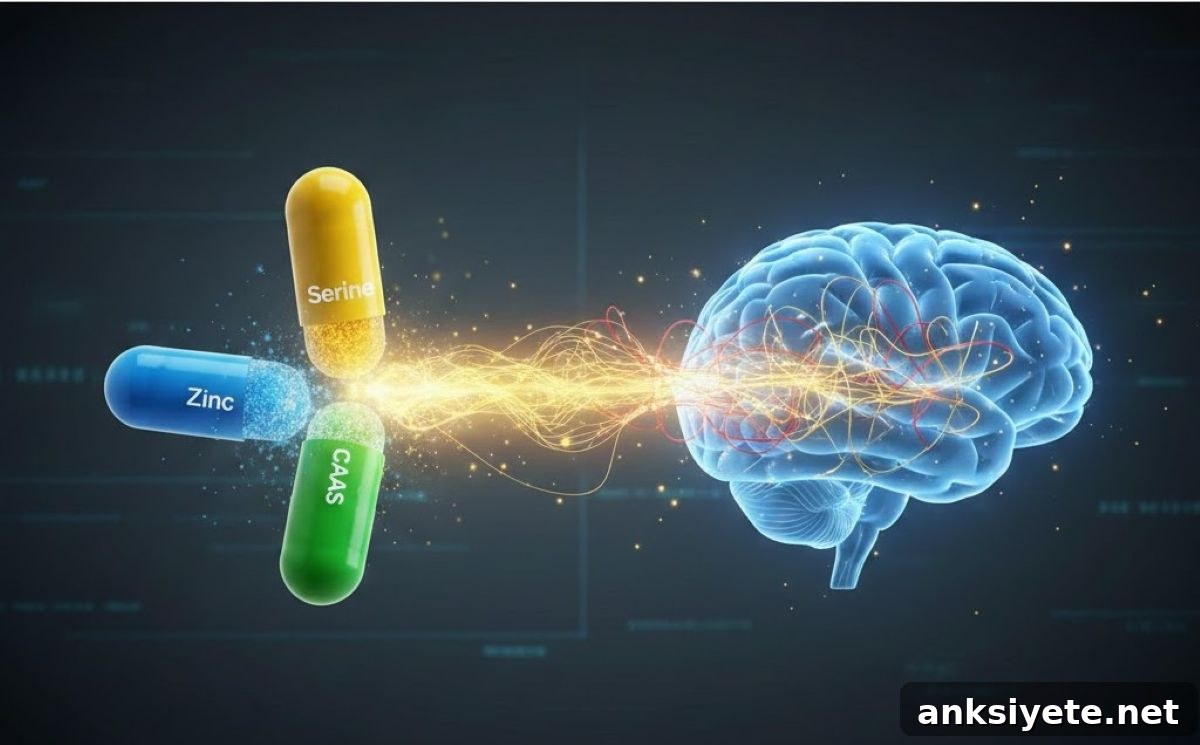
Summary: Researchers have made a significant advance by showing that a low-dose combination of zinc, serine, and branched-chain amino acids (BCAAs) can reduce behavioral deficits across three different mouse models of autism. The benefit depends on the three nutrients acting together: at low doses the combined mixture restores synaptic protein balance and reduces abnormal activity in the amygdala, improving social behaviors and neural communication.
Importantly, the same low doses of each nutrient given alone produced no measurable effect, demonstrating that the therapeutic effect requires the combined treatment. This discovery points to a practical, nutrient-based approach for long-term support of ASD-related symptoms that could be developed further for clinical use.
Key Facts
- Synergy is essential: The therapeutic effect depends on the combined low-dose administration of zinc, serine, and BCAAs; single nutrients at the same low doses were ineffective.
- Restoring synaptic balance: The mixture corrected synaptic protein expression and reduced abnormal amygdala hyperactivity, a brain region central to emotional and social processing.
- Wide applicability: The intervention improved outcomes in three distinct genetic mouse models of ASD, suggesting it targets common functional deficits rather than a single gene.
Source: PLOS
Summary of the study
A research team led by Tzyy-Nan Huang and Ming-Hui Lin at Academia Sinica, Taiwan, reports that a low-dose nutrient cocktail of zinc, serine, and branched-chain amino acids alleviates behavioral deficits in multiple mouse models of autism. Published December 2 in PLOS Biology, the study demonstrates that the three nutrients together improve neural communication and social behaviors by acting on synaptic proteins and neuronal circuit activity.
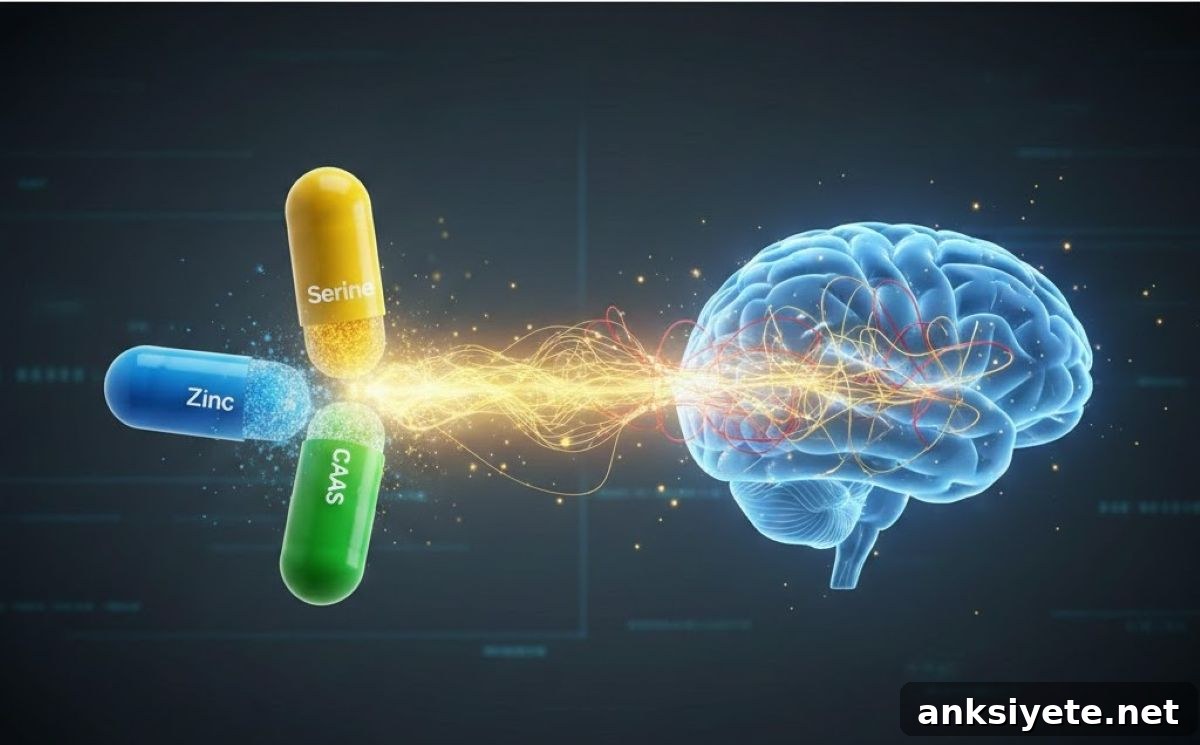
Autism spectrum disorder (ASD) arises from atypical neural development that alters how neurons form connections. Environmental factors, including diet and nutrient availability, influence neural development and can modify ASD-related traits. Zinc, serine, and BCAAs each have known roles in synapse development and function, so the team tested whether a combined low-dose regimen could achieve stronger outcomes with fewer side effects than high-dose single-nutrient approaches.
The researchers evaluated the nutrient mixture in three genetic mouse models of ASD. They measured synapse-related protein levels, used calcium imaging to monitor neuronal activity in the basolateral amygdala (BLA), and assessed social behavior and associative memory. Over seven days of treatment, the low-dose cocktail increased expression of synaptic proteins and normalized BLA neuronal activity and connectivity during social interactions.
Crucially, low doses of each nutrient given alone did not change behavior, while the combined mixture produced measurable improvements in social interaction and memory. The same pattern was observed across additional mouse models (Nf1+/− and Cttnbp2+/M120I), indicating the mixture targets shared synaptic dysfunctions rather than gene-specific pathways.
Yi-Ping Hsueh commented that because hundreds of genes contribute to autism with diverse molecular effects, a “one gene–one therapy” strategy is impractical. A nutrient-based, multi-target approach that improves synaptic function across models could be safer and more widely applicable, potentially suitable for long-term use beginning early in life.
First author Tzyy-Nan Huang noted that while high doses of individual supplements can affect synapses through different mechanisms, those high doses are not always safe or practical. The exciting finding is that combining low doses of these nutrients restored synaptic protein patterns and enhanced social behavior in multiple mouse models. Co-first author Ming-Hui Lin added that only seven days of the nutrient mix produced real-time changes in neuronal circuits and connectivity, supporting the potential benefits of combined low-dose supplementation.
Funding: This research was funded by Academia Sinica, Taiwan, and the National Science and Technology Council, Taiwan. The funders did not influence study design, data collection and analysis, publication decisions, or manuscript preparation.
Key Questions Answered:
A: A low-dose, synergistic mixture of zinc, serine, and branched-chain amino acids (BCAAs) improved social behaviors and neural communication in three mouse models of Autism Spectrum Disorder. Single nutrients at the same low doses were ineffective.
A: The mixture restores levels of key synaptic proteins and reduces abnormal hyperactivity in the amygdala, helping to normalize neuronal ensemble activity associated with social behaviors.
A: The combined nutrient approach targets shared synaptic dysfunction across multiple genetic models, offering a potentially safer, practical, and broadly applicable strategy compared with single-gene therapies.
Editorial Notes:
- This article was edited by a Neuroscience News editor.
- The journal paper was reviewed in full by editorial staff.
- Extra context was added by the editorial team to clarify implications and methods.
About this autism research news
Author: Claire Turner
Source: PLOS
Contact: Claire Turner – PLOS
Image: The image is credited to Neuroscience News
Original Research: Open access. “Low-dose mixtures of dietary nutrients ameliorate behavioral deficits in multiple mouse models of autism” by Yi-Ping Hsueh et al., PLOS Biology.
Abstract (summary)
Autism spectrum disorder (ASD) is a heterogeneous set of neurodevelopmental conditions driven by genetic and environmental influences. This study shows that short-term supplementation with a low-dose mixture of zinc, branched-chain amino acids, and serine modifies synaptic proteomes, reorganizes neural ensembles in the basolateral amygdala, and improves social behaviors in multiple mouse models. The findings suggest that combined low-dose nutrient supplementation can normalize synaptic protein expression and neuronal connectivity across diverse genetic causes of ASD, offering a safe and accessible strategy to mitigate social deficits.