
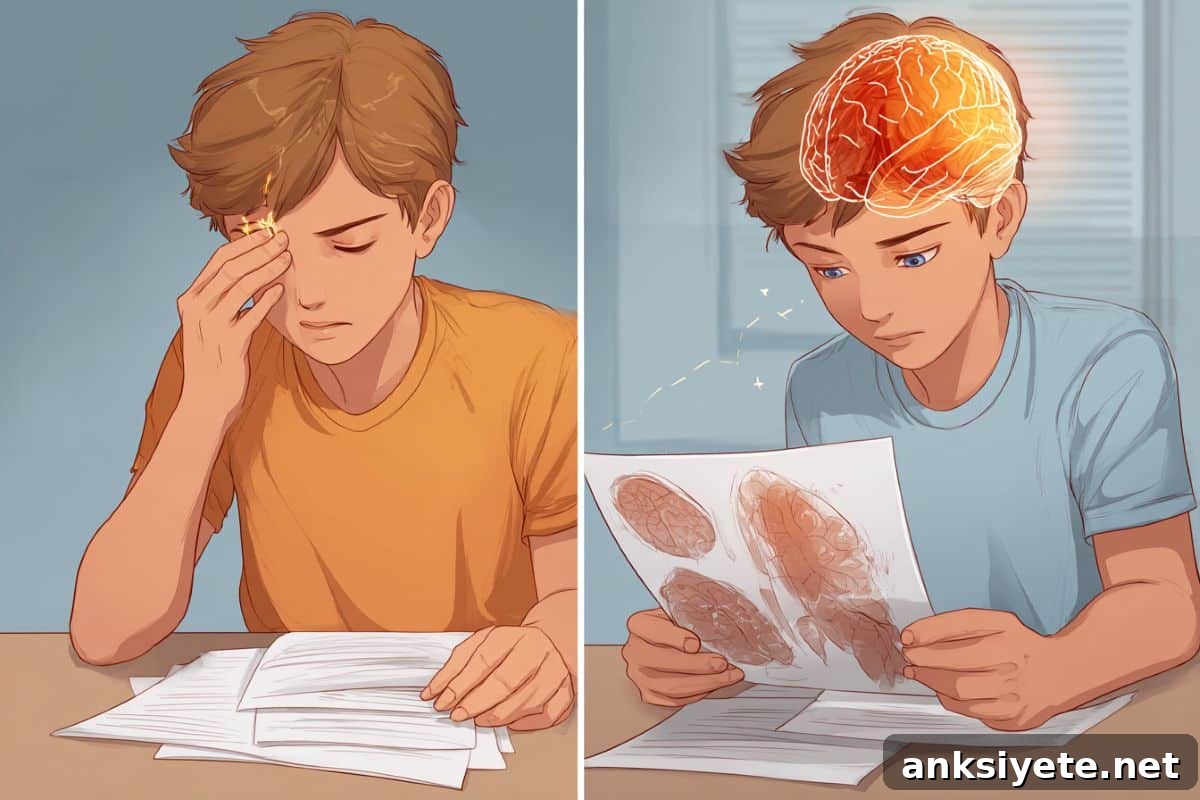
Summary: Concussions often produce lasting vision problems: nearly half of adolescents and young adults with ongoing post-concussion symptoms develop eye coordination disorders that interfere with reading, screen use, and daily activities. A randomized clinical trial found that a 12-week, office-based program of vergence and accommodative vision therapy restored normal vision in almost 90% of participants, compared with under 10% who were observed without immediate treatment.
The study also found that standard vision-rehabilitation exercises commonly used for non-concussion patients are effective for concussion-related deficits. Results emphasize the importance of early diagnosis and treatment, broader insurance coverage, and scalable options such as at-home virtual reality therapy to increase access.
Key Facts:
- High prevalence: About 50% of young people with persistent concussion symptoms show eye coordination disorders like convergence or accommodation insufficiency.
- Therapy effectiveness: Nearly 90% of those receiving 12 weeks of structured vision therapy achieved normal or markedly improved vision, compared with less than 10% of those who simply monitored symptoms.
- Brain-level changes: fMRI measurements revealed therapy-related changes in brain activity and connectivity in regions that support eye movement and visual processing.
Source: NJIT
Almost half of adolescents and young adults with lingering concussion symptoms experience eye coordination disorders that cause double or blurred vision, headaches, and trouble concentrating.
“These visual problems make reading, computer work and smartphone use difficult. They can harm learning and cognition and delay return to sports, driving and jobs for young people,” said Tara Alvarez, distinguished professor of biomedical engineering at NJIT.
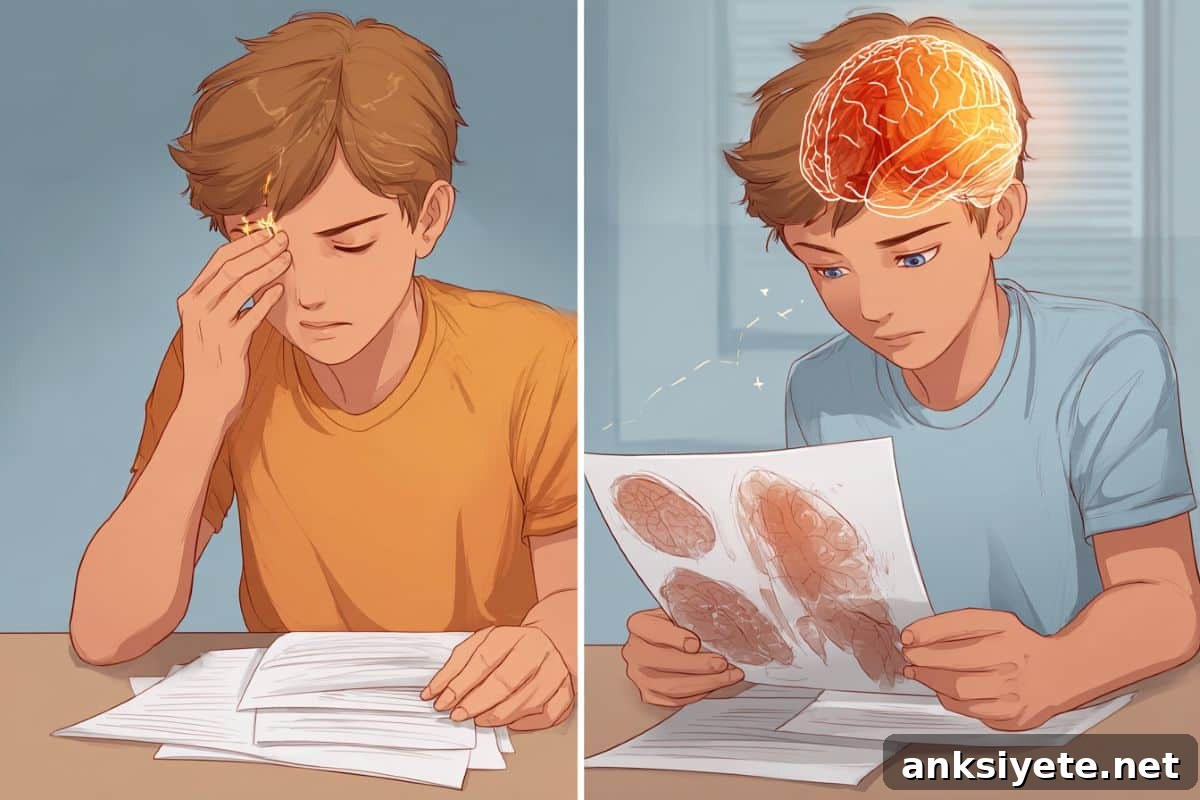
Published in the British Journal of Sports Medicine, this multi-institutional study is the first robust clinical trial to demonstrate that targeted vision therapy can reliably treat concussion-related convergence insufficiency (CI) and accommodative insufficiency (AI). CI causes double vision because the eyes fail to coordinate when focusing on near objects; AI causes near objects to appear blurry.
Over four years, a team of engineers, optometrists, vision scientists, sports medicine physicians and biostatisticians designed the trial to produce evidence-based guidance for clinicians on when and how to treat post-concussion vision disorders, and how to measure outcomes objectively.
“Clinicians often rely on symptom reports and experience to clear patients for activity because quantitative measures are limited,” Alvarez said. “We aimed to identify best practices that optimize therapy for individuals and verify results with objective data.”
Funded in part by a $3 million grant from the National Eye Institute, the trial enrolled 106 patients aged 11 to 25 who had one or more concussions and persistent symptoms occurring one to six months after their most recent injury.
After 12 weeks of office-based vergence and accommodative therapy with movement (OBVAM), approximately 90% of treated participants regained normal vision or showed significant improvement. In contrast, under 10% of participants in the observational (delayed-treatment) group improved during the same period. A small subset of treated patients required an additional four weeks to reach the same outcome.
“If vision problems from concussion are impairing daily life, patients should not delay therapy,” said Mitchell Scheiman, O.D., Ph.D., the study’s lead optometrist. “Even a few weeks of unresolved symptoms can be disabling for students and athletes.”
Importantly, the therapeutic approach used for non-concussed patients — a mix of exercises to strengthen and coordinate the eye muscles — proved effective for concussion-related deficits as well.
Clinical care for participants was provided by sports medicine physicians including Christina Master, M.D., of the Minds Matter Concussion Program at Children’s Hospital of Philadelphia, and Arlene Goodman, M.D., of the Somerset Pediatric Group.
“Eye problems are the most common issue among patients with ongoing concussion symptoms,” Goodman said. Many recover quickly, but a significant proportion remain symptomatic after a month and require further therapy. Access and cost are barriers: few providers offer specialized vision rehabilitation, and treatment is often not covered by insurance, leaving some patients with persistent headaches and visual difficulties.
Master added that vision deficits after concussion are frequently overlooked. “Professional guidelines recommend screening for vision problems after concussion, and this study offers high-quality evidence supporting vision rehabilitation to treat these deficits,” she said. She hopes the findings will inform standardized protocols and third-party reimbursement for this therapy, improving quality of life for many patients.
Alongside clinical measures of reading, daily task performance and eye-movement tracking, the team used fMRI to assess brain activity. They measured blood-oxygen-level changes, consistency of neuronal firing, recruitment of adjacent cells during visual tasks, and strengthening of neural connections — all indicators of improved visual processing following therapy.
Alvarez and co-investigators also plan to develop a virtual reality–based vision therapy that tracks eye movements and can be used at home. Such a system would generate objective scores for clinicians to guide decisions about returning children to sports, school and other activities while making treatment more accessible and convenient.
“Families often struggle to attend twice-weekly clinic visits, and some live in areas without specialized services. Home-based VR therapy could be a practical, engaging alternative that improves adherence,” Alvarez said.
Key Questions Answered:
A: Nearly half of youth with persistent post-concussion symptoms develop convergence insufficiency or accommodation insufficiency, which cause double or blurred vision, headaches and concentration problems.
A: In this trial, almost 90% of patients achieved normal or markedly improved vision after 12 weeks of structured therapy, compared with less than 10% who were monitored without immediate treatment.
A: It provides rigorous clinical evidence that vision rehabilitation restores function and alters brain mechanisms related to eye movement and visual processing, supporting standardized treatment recommendations.
About this concussion and vision research news
Author: Deric Raymond
Source: NJIT
Contact: Deric Raymond – NJIT
Image: The image is credited to Neuroscience News
Original Research: Open access.
“CONCUSS randomised clinical trial of vergence/accommodative therapy for concussion-related symptomatic convergence insufficiency” by Tara Alvarez et al. British Journal of Sports Medicine
Abstract
CONCUSS randomised clinical trial of vergence/accommodative therapy for concussion-related symptomatic convergence insufficiency
Objective
This randomized clinical trial compared immediate office-based vergence/accommodative therapy with movement (OBVAM) to delayed therapy for treating concussion-related convergence insufficiency in participants aged 11–25 who had persistent symptoms 4–24 weeks after injury.
Methods
Symptomatic CI was identified using clinical measures — near point of convergence (NPC) and positive fusional vergence (PFV) — and symptom severity via the Convergence Insufficiency Symptom Survey (CISS). Participants were randomized to immediate OBVAM (twice weekly for 6 weeks) or delayed OBVAM (starting 6 weeks after enrollment). After the first outcome assessment at 6 weeks, the delayed group received twice-weekly therapy for 8 weeks while the immediate group received 2 additional weeks, so both groups eventually completed 16 sessions for the second outcome comparison.
Results
At the first outcome assessment, 46 of 52 (88%) in the immediate group were classified as successful or improved on the primary composite outcome (NPC and PFV), versus 4 of 52 (8%) in the delayed group (p<0.001). Mean NPC improved by 7.9 cm in the immediate group versus 1.8 cm in the delayed group (mean difference 5.1 cm; 95% CI: 3.9 to 6.3; p<0.001). Mean PFV improved by 17.5Δ in the immediate group versus 2.5Δ in the delayed group (mean difference 15.0Δ; 95% CI: 11.7 to 18.3; p<0.001). Symptom improvement based on CISS occurred in 41 of 52 (79%) in the immediate group compared with 7 of 52 (13%) in the delayed group (p<0.001).
After 12 OBVAM sessions, 88% of the immediate group were classified as successful or improved, increasing to 94% after 16 sessions. When both groups had completed all 16 sessions, there were no significant differences between them for NPC, PFV or CISS at the second outcome assessment (p=1.0).
Conclusion OBVAM therapy effectively improves eye alignment (NPC), fusional vergence (PFV), and related symptoms in concussion-related convergence insufficiency. Starting therapy immediately shortens symptom duration and supports an earlier return to activities.
Trial registration number
clinicaltrials.gov identifier: NCT05262361.