
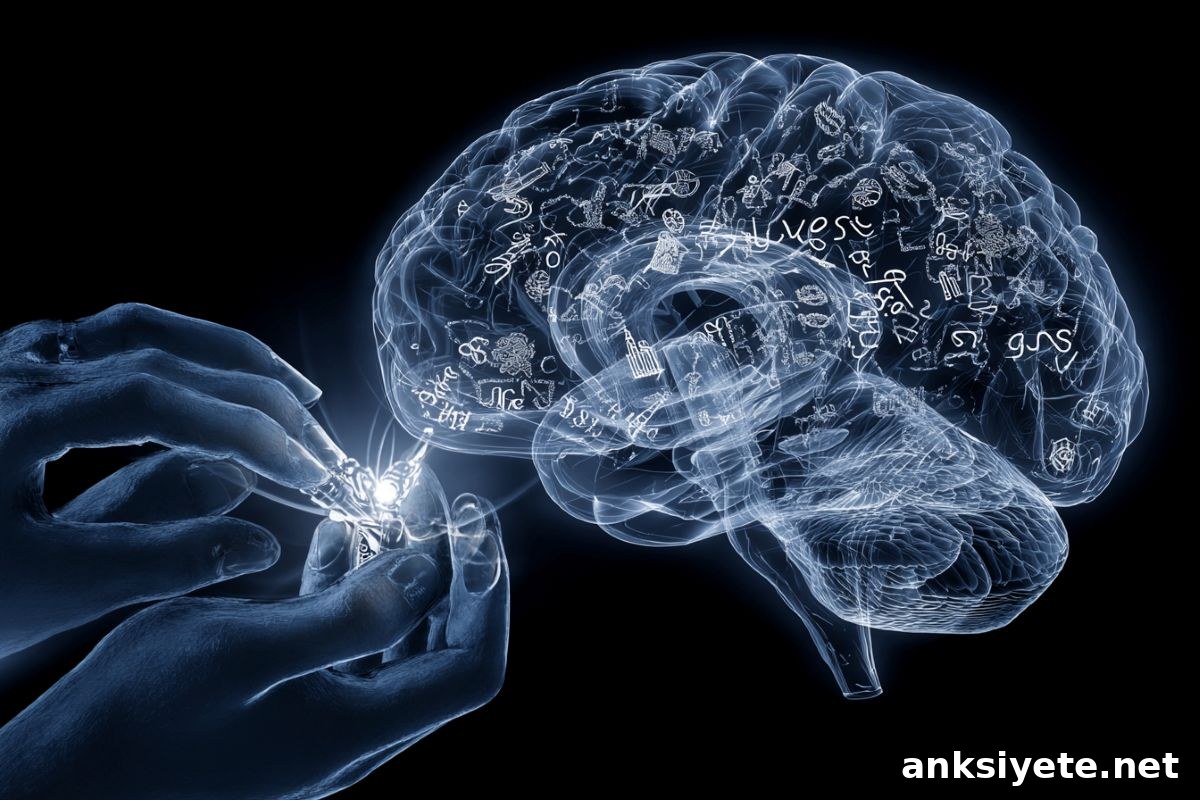
Summary: New research indicates the brain represents hand and tool actions using a compact “action alphabet” housed in the supramarginal gyrus. This region constructs complex, object-directed gestures — like turning a key or cutting with scissors — by recombining a limited set of basic movement patterns known as kinematic synergies.
Like letters forming words, these reusable movement components allow people to perform a vast variety of tool-use and object-directed actions. The discovery sheds light on how the motor system is organized and has direct implications for robotics, brain-machine interfaces, prosthetic design, and the diagnosis and treatment of movement disorders such as apraxia.
Key Facts
- Action Alphabet: Complex hand and tool actions are built from a small set of kinematic synergies.
- SMG Role: The supramarginal gyrus (SMG) serves as an assembly hub that recombines these synergies into goal-directed actions.
- Applications: Findings could improve prosthetics, inform robotics and brain–computer interface decoding, and help treat apraxia and other motor disorders.
Source: Georgetown University
Traditional views in neuroscience assume motor cortices are organized primarily by body part—that is, separate areas map to the hand, foot, face, and so on. An alternative, action-centered view proposes that some brain regions are organized by the type of action (for example, reaching or tool-use) regardless of which body part executes it.
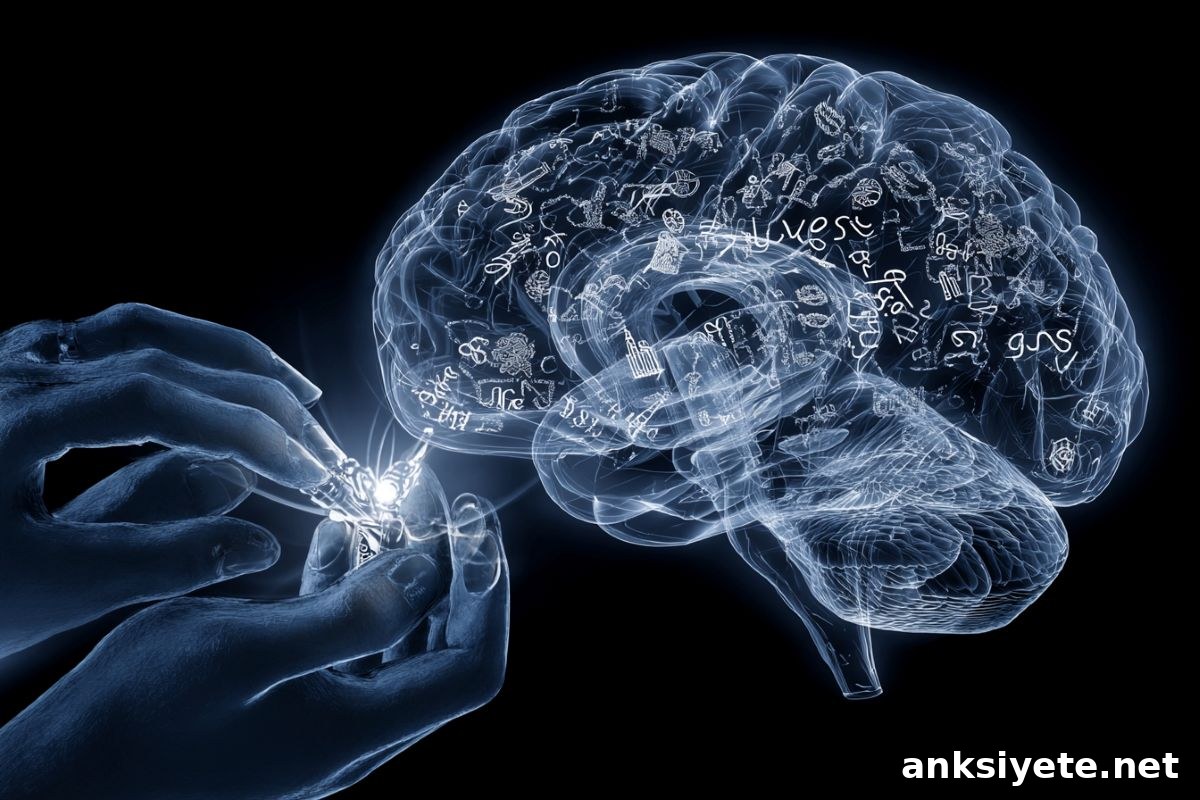
Researchers at Georgetown University investigated these competing ideas because understanding whether the motor system is organized by body part or by action-type has important consequences for rehabilitation after brain injury and for designing technologies that restore or augment movement.
Published August 19 in PNAS, the study, titled “Action-type mapping principles extend beyond evolutionarily-conserved actions, even in people born without hands,” tests whether action-type representations generalize across body parts and whether such organization depends on typical manual experience.
“If motor control is organized in part around actions rather than strictly by body part, the brain may be able to use that flexibility to adapt when a limb is lost,” said Ella Striem-Amit, PhD, assistant professor of neuroscience at Georgetown University School of Medicine and the study’s senior author.
To probe this question, the team used fMRI to compare brain activity while participants performed tool-use tasks with hands or feet. Critically, the study included volunteers who were born without hands and routinely use their feet to perform daily tasks and manipulate tools.
Results showed that higher-level motor areas within the tool-use network represent action-type information independently of the acting body part. In other words, regions such as the supramarginal gyrus responded to the kind of action being performed (for example, gripping or turning) whether it was executed by a hand or a foot.
“We found that certain brain regions are tuned to the type of action a person performs rather than to the specific body part they use,” explained Florencia Martinez Addiego, a graduate student in Striem-Amit’s lab who led the project.
Importantly, the same abstract, action-centered organization emerged even in people born without hands, indicating that manual sensorimotor experience is not strictly required for these higher-level representations to develop.
Not all motor areas behaved the same. The primary motor cortex, which is tightly somatotopic and mapped to specific body parts, remained body-part specific and did not reorganize to represent foot-based tool use even in lifelong foot users. “This suggests that some regions retain a stable body-centered layout while other regions demonstrate greater developmental flexibility,” said Yuqi Liu, a former postdoctoral fellow and co-lead of the study.
Overall, the findings reveal a hierarchical motor system: primary sensorimotor cortices encode concrete, body-part-specific details, while higher-level nodes encode abstract, action-type information that generalizes across effectors. This hierarchical, action-centered organization appears robust even without typical manual experience and extends beyond evolutionarily conserved actions to recent, culturally transmitted behaviors like tool use.
The results have practical implications. By identifying a more abstract action code in higher motor areas — particularly within the supramarginal gyrus — researchers can refine algorithms for brain–computer interfaces and design prosthetics and robotic systems that decode intended actions rather than only limb-specific signals. This approach may also inform therapies for apraxia and other disorders where action planning or sequencing is impaired.
Study participant Alvin Law, born without arms due to thalidomide exposure, uses his feet for daily tasks and values the potential of such research to improve technologies for people who lose limbs later in life. “I can’t imagine what it would be like to lose a limb,” he said. He hopes the study’s insights will contribute to restoring independence and quality of life through better assistive devices.
The Georgetown team includes first authors Florencia Martinez Addiego and Yuqi Liu, along with Kyungji Moon, Elizabeth Shytle, Lénia Amaral, Caroline O’Brien, Sriparna Sen, Maximilian Riesenhuber, and Jody C. Culham. Funding came from the Edwin H. Richard and Elisabeth Richard von Matsch Distinguished Professorship in Neurological Diseases and a Shanghai Youth Science and Technology Innovation Plan award. The authors report no personal financial interests related to the study.
About this neuroscience and movement research news
Author: Karen Teber
Source: Georgetown University Medical Center
Contact: Karen Teber – Georgetown University Medical Center
Image: The image is credited to Neuroscience News
Original Research: Closed access. “Action-type mapping principles extend beyond evolutionarily conserved actions, even in people born without hands” by Ella Striem-Amit et al., PNAS.
Abstract
Action-type mapping principles extend beyond evolutionarily conserved actions, even in people born without hands
How are actions represented within the motor system? Although sensorimotor organization is broadly somatotopic, higher-level motor areas encode abstract action-type information for reaching, grasping, and tool-use actions regardless of which body part performs them.
This study used fMRI to compare tool-use actions executed with hands or feet, and included participants born without hands to test whether manual experience is necessary for action-type organization. Analyses revealed a reliable dissociation: primary sensorimotor cortices maintained body-part-specific representations in all participants, while higher-level areas within the tool-use network encoded body-part-independent, abstract action information.
These results indicate a hierarchical motor system that generalizes across effectors and does not require lifelong manual experience to develop. The findings clarify the limits of cortical plasticity in congenital handlessness and support the use of abstract action codes for hierarchical brain–computer interfaces.