
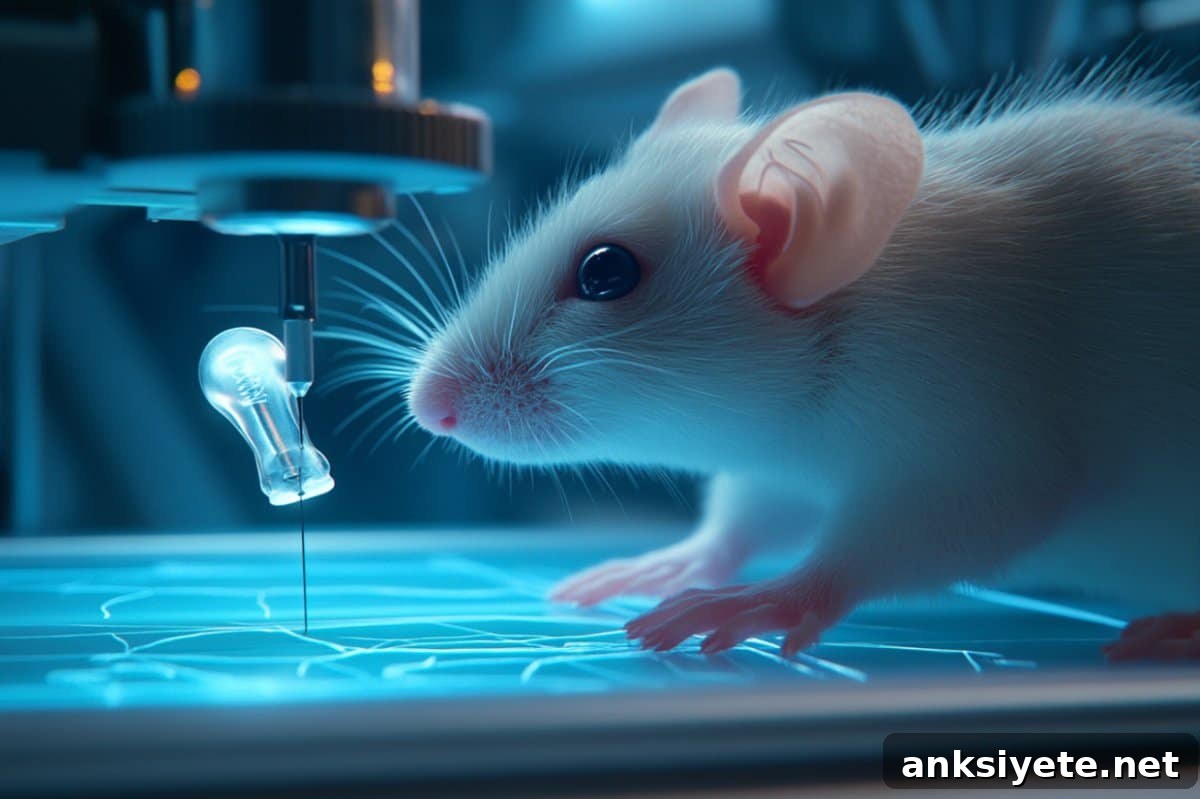
Summary: A new study demonstrates that mice can experience a sense of embodiment toward an artificial limb, much like humans in the classic rubber‑hand illusion. When a mouse’s real forelimb was hidden and both the real and a visible artificial limb were stroked in synchrony, mice visually tracked a threat directed at the artificial limb—evidence that they perceived it as part of their body.
This discovery establishes a robust animal model for investigating the neural basis of body ownership and prosthesis embodiment. The mouse model opens experimental paths that could accelerate development of advanced neuroprosthetics and improve treatments for conditions such as phantom limb pain and body‑representation disorders.
Key facts
- Rodent rubber‑hand analog: Head‑fixed mice were presented with a visible artificial forelimb while their real forelimb was hidden; synchronous visuo‑tactile stimulation produced measurable embodiment responses.
- Visual tracking indicates ownership: Mice fixated longer on a visible object threatening the artificial limb when tactile and visual cues were synchronized compared with asynchronous stimulation.
- Practical model for research: This is the first practical mouse model to quantify limb embodiment, enabling genetic, optogenetic and circuit‑level studies relevant to prosthetic integration.
Source: PLOS Biology
Study overview
Humans typically perceive their limbs as integral parts of the self and react defensively to threats against them. That embodied sense of ownership can break down after brain injury or amputation, sometimes leading to denial or rejection of body parts. For amputees, failing to embody a prosthesis reduces its daily use and may lead to abandonment, while successful embodiment often reduces phantom sensations and pain.
In the rubber‑hand illusion, synchronous brushing of a hidden real hand and a visible fake hand can make participants feel the fake hand is their own. Translating this powerful behavioral paradigm into an experimentally tractable animal model has been a longstanding challenge for researchers seeking to map the neural circuits that underlie body ownership.
To address this gap, Luc Estebanez and colleagues at CNRS adapted the rubber‑hand protocol for mice and automated measurement of behavioral responses. Head‑fixed mice were exposed to a 3D‑printed static replica of the right forelimb placed in a physiologically plausible position while their real forelimb remained hidden. The researchers applied either synchronous or asynchronous mechanically controlled brush strokes to both the concealed real limb and the visible replica over a brief pairing period.
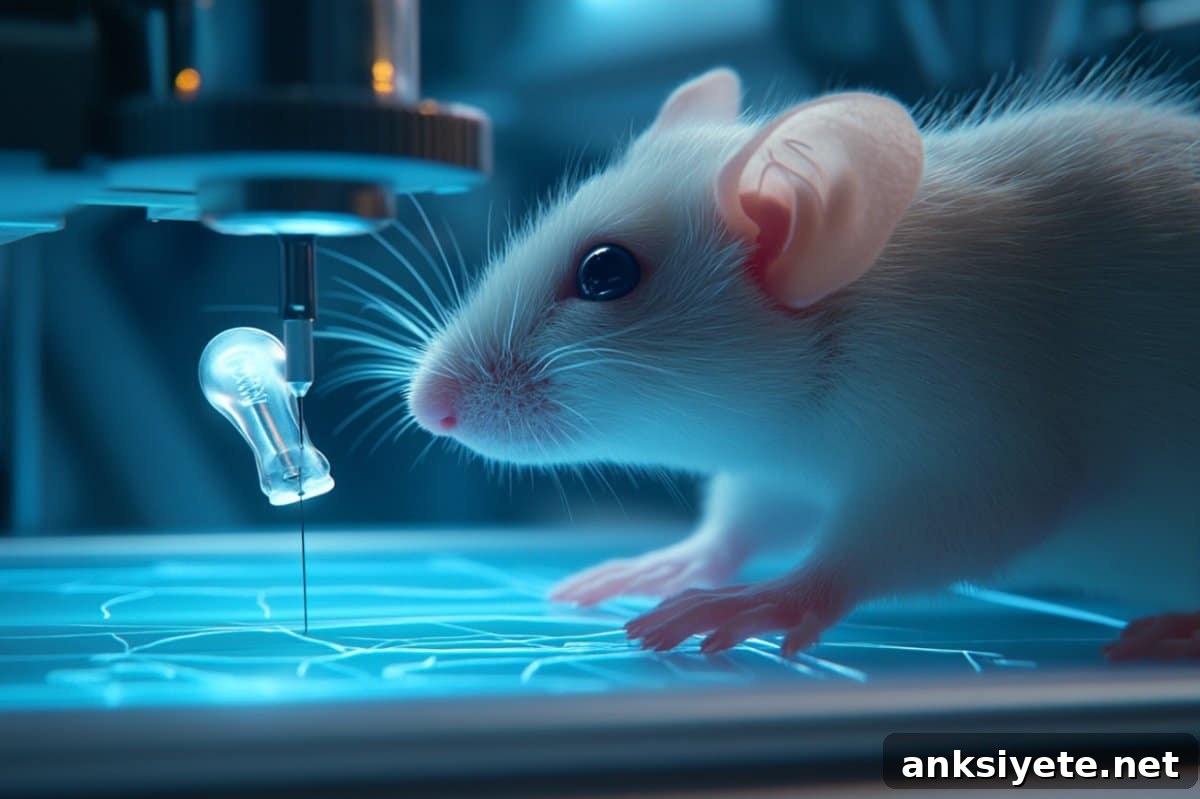
After the visuo‑tactile pairing, the team visually threatened the replica by dropping a sharp object toward it while tracking the animals’ gaze, pupil size and facial responses with high‑speed videography and automated analysis. When tactile and visual inputs were synchronous, mice reliably focused on the threatened replica for several seconds—consistent with perceiving it as part of their own body. Synchronous stimulation produced stronger responses than asynchronous stimulation, and a limb‑shaped replica evoked greater reactions than an abstract cube.
These results indicate that mice exhibit quantifiable behavioral markers of limb embodiment and that these markers align with the overt responses reported in human rubber‑hand studies. The protocol is fully automated and suitable for integration with genetic, anatomical and optogenetic manipulations to dissect the circuits that support body ownership.
Implications for neuroprosthetics and neuroscience
Establishing a mouse model of limb embodiment has multiple practical implications. It provides an experimentally accessible platform to map the neural pathways that generate the sense of bodily ownership and to test interventions that promote prosthesis integration. Such insights could guide design principles for neuroprosthetics that are more readily embodied by users and help develop therapies for disorders related to body representation and phantom limb pain.
More broadly, the findings add to growing evidence that rodents can display behavioral correlates of complex cognitive processes previously thought to be limited to higher mammals. The mouse rubber‑hand analog enables precise, high‑throughput investigations into how multisensory signals are combined to produce a coherent sense of self.
The authors summarize: “The rubber hand illusion is a staple of body‑representation research in humans, but until now there was no equivalent in mice. We show that limb embodiment can be reliably induced and measured in mice, opening new opportunities to understand the mechanisms of body ownership and to apply these insights to improve prosthetics.”
Funding
This research received support from multiple agencies and programs, including LE PRC Hermin (ANR), JCJC Mesobrain (ANR), PRC Expect (ANR), PRC PerBaCo (ANR), Fondation 3DS, 80|Prime 2020 (CNRS), MITI PRIME 2024 (CNRS), PRC MotorSense (ANR), RISE iNavigate (Horizon 2020), and OI hCODE (Université Paris‑Saclay). The funders had no role in study design, data collection and analysis, manuscript preparation, or the decision to publish.
About this neuroprosthetics and neuroscience research news
Author: Claire Turner
Source: PLOS Biology
Contact: Claire Turner – PLOS
Image credit: Neuroscience News
Original research: Open access. “Embodiment of an artificial limb in mice” by Luc Estebanez et al., PLOS Biology.
Abstract
Embodiment of an artificial limb in mice
Disorders of body ownership can arise from illness or injury, and better methods are needed to probe limb embodiment and develop neuroprostheses that integrate into a user’s body scheme. The rubber‑hand illusion demonstrates how congruent somatosensory and visual signals can induce powerful embodiment in humans. However, translating this protocol to animal models has been difficult, limiting understanding of the underlying neurophysiology.
Here, we show that the rubber‑hand illusion can be adapted to a mouse forelimb model using an automated videography‑based procedure. Head‑fixed mice viewed a visible 3D‑printed replica of their right forelimb while their own forelimb was hidden. Synchronous brushing of the hidden forelimb and the replica created visuo‑tactile associations. When the replica was visually threatened, automated tracking of gaze, pupil and facial expression revealed that mice focused their attention significantly more on the threatened replica after synchronous stimulation than after asynchronous stimulation. The pupillary response patterns matched expectations from human studies of the rubber‑hand illusion.
These results demonstrate that mice show quantifiable behavioral markers of artificial limb embodiment, establishing a model to probe the neural circuits of body ownership and to test strategies for improving prosthetic embodiment.