
Summary: New research overturns a longstanding assumption in neuroscience by showing that spontaneous and evoked synaptic signaling arise from distinct transmission sites within a synapse. Rather than sharing the same molecular machinery, these two modes follow separate developmental trajectories and regulatory rules, allowing the brain to balance adaptability and stability.
In the primary visual cortex, the study found that evoked transmissions—those triggered by sensory experience—continue to strengthen after visual input begins, while spontaneous transmissions plateau. This dual arrangement supports experience-dependent learning while maintaining steady baseline activity, a balance that is essential for healthy brain function and relevant to disorders such as autism and Alzheimer’s disease.
Key facts:
- Distinct transmission sites: Spontaneous and evoked neurotransmission are mediated by different synaptic sites.
- Divergent development: Evoked signaling strengthens with sensory experience; spontaneous signaling stabilizes.
- Clinical relevance: Disruption of these separate mechanisms could help explain synaptic dysfunction in neurological and psychiatric conditions.
Source: University of Pittsburgh
A new study from researchers at the University of Pittsburgh challenges a decades-old view by demonstrating that the brain uses separate synaptic transmission sites to support different forms of plasticity.
Published in Science Advances, the study clarifies how cortical circuits reconcile the need for stable ongoing activity with the flexibility required for learning and memory.
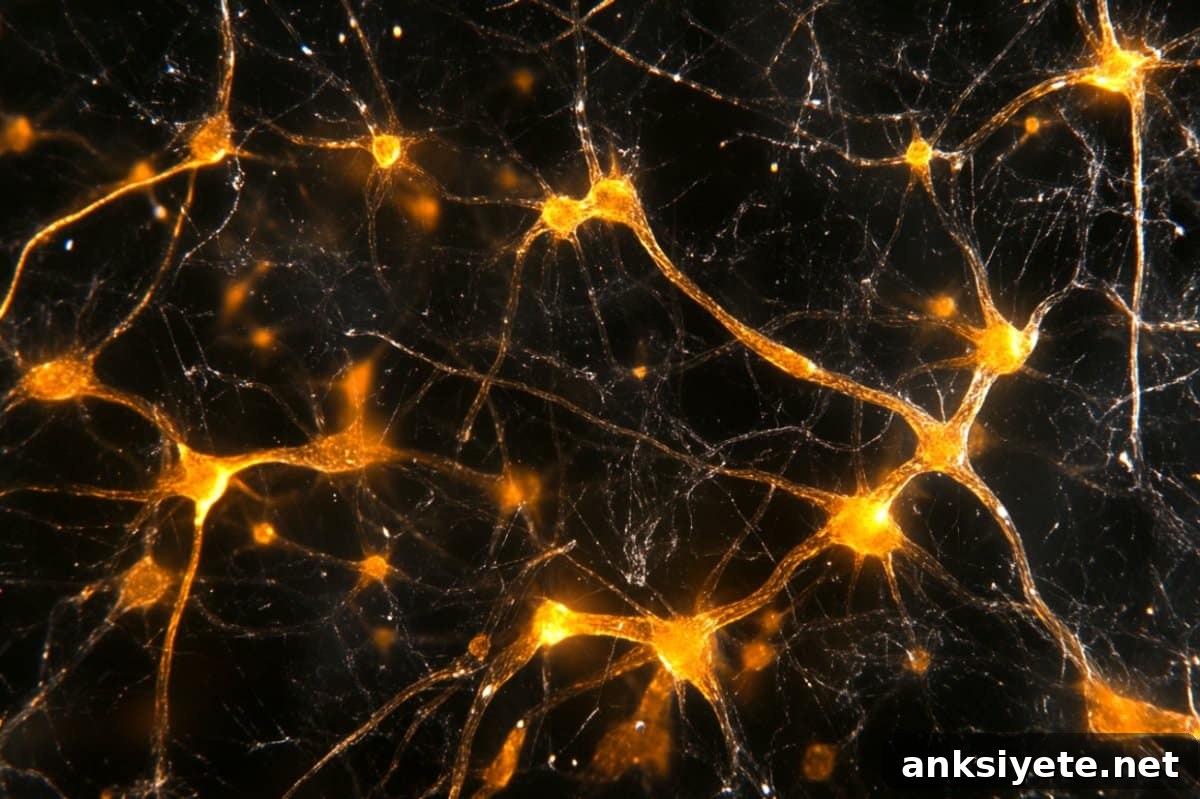
Neurons communicate through synaptic transmission: a presynaptic neuron releases neurotransmitters into the synaptic cleft and postsynaptic receptors detect those signals, producing electrical or biochemical responses in the receiving cell. There are two commonly observed modes of synaptic signaling—spontaneous (random) events and evoked responses driven by sensory input or neural activity—and they have long been assumed to originate from the same synaptic sites.
Using mouse visual cortex as a model system, the research team led by Oliver Schlüter, associate professor of neuroscience in the Kenneth P. Dietrich School of Arts and Sciences, discovered that the brain separates these modes into distinct transmission sites. Each site type follows its own timeline and responds differently to developmental and sensory-driven cues.
“We examined the primary visual cortex, where initial cortical processing of visual information occurs,” said Yue Yang, research associate in the Department of Neuroscience and first author of the study. “Instead of both signaling modes maturing in the same way, they diverged after eye opening.”
After visual experience begins, evoked transmissions—those linked to associative or Hebbian plasticity—are unsilenced and strengthened through incorporation of AMPA-type glutamate receptors at specific sites. In contrast, spontaneous miniature transmission remains largely stable, suggesting a homeostatic mechanism that preserves consistent background signaling.
To test this separation directly, the team applied a chemical agent that activates otherwise silent postsynaptic receptors. This manipulation selectively increased spontaneous activity while leaving experience-driven evoked responses unchanged, offering strong evidence that the two modes operate through independent synaptic populations.
Functionally, this organization allows cortical circuits to refine pathways that encode behaviorally relevant information while maintaining steady, background activity required for overall circuit stability. In other words, evoked signaling supports learning and adaptive changes, while spontaneous signaling helps preserve a baseline excitatory-inhibitory balance.
“Our results reveal a fundamental organizational strategy that keeps the brain both reliable and flexible,” Yang said. “By segregating signaling modes, the cortex can adapt specific connections without disturbing broader network homeostasis.”
These findings have broad implications. Abnormal synaptic signaling is implicated in a range of disorders, including autism spectrum disorders, Alzheimer’s disease, and conditions related to substance use. A clearer picture of how distinct transmission sites contribute to associative and homeostatic plasticity may help researchers pinpoint how and where synaptic regulation fails in disease.
“Understanding the normal separation and control of different synaptic signals is a critical step toward identifying the mechanisms that go awry in neurological and psychiatric disorders,” Yang added.
About this synaptic plasticity research news
Author: Brandie Jefferson
Source: University of Pittsburgh
Contact: Brandie Jefferson – University of Pittsburgh
Image: Image credited to Neuroscience News
Original Research: Open access.
Title: “Distinct transmission sites within a synapse for strengthening and homeostasis” by Oliver Schlüter et al., Science Advances
Abstract
Distinct transmission sites within a synapse for strengthening and homeostasis
At excitatory cortical synapses, miniature (spontaneous) transmission has been considered the unitary basis for evoked transmission, thought to occur at a single canonical site. Two broad forms of synaptic plasticity—associative (Hebbian) plasticity that adjusts synaptic weights and homeostatic plasticity that maintains excitatory balance—were therefore assumed to act at the same transmission sites.
This study identifies two distinct types of transmission sites in mouse visual cortex—termed silenceable and idle-able—that preferentially support evoked or miniature transmission, respectively. Each site type operates in a binary postsynaptic manner with different unitary amplitudes and underlying mechanisms.
During postnatal development, silenceable sites become unsilenced through AMPA-receptor insertion driven by associative plasticity, enhancing evoked transmission. At the same time, miniature transmission remains relatively constant, with AMPA-receptor state changes at idle-able sites balancing unsilencing by increasing idling behavior.
Thus, individual cortical spine synapses host two parallel, interacting transmission modes that predominantly contribute to either associative or homeostatic forms of plasticity, offering a circuit-level explanation for how the brain sustains stability while permitting experience-dependent change.