
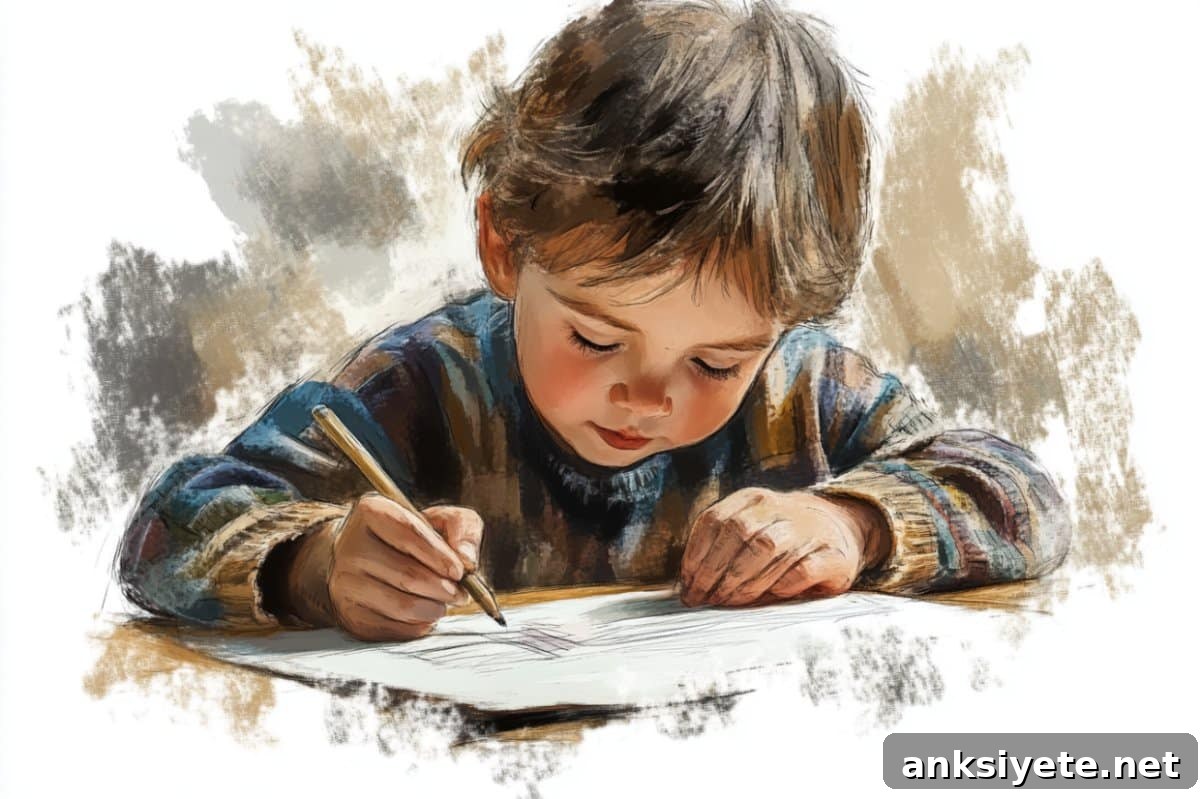
Summary: A new study shows that young children acquire letter shapes and word structures more effectively when they practice handwriting than when they learn by typing. Researchers taught 5- to 6-year-old prereaders a set of unfamiliar letters and invented pseudowords using either manual writing or keyboards and then tested their recognition, reproduction, and pronunciation.
Children who practiced by hand scored substantially higher on posttests of letter and word knowledge, especially for unfamiliar letter sequences. The findings emphasize the role of graphomotor movements in forming robust alphabetic and orthographic representations and support keeping handwriting as a core component of early literacy instruction.
Key facts
- Handwriting advantage: Children trained by hand learned new letters and pseudowords better than those trained on keyboards.
- Motor engagement matters: Tracing and forming letters by hand help imprint letter shapes and word structures in memory.
- Free copying is best: Within the handwriting groups, children who copied freely (without dotted guides) showed the strongest learning outcomes.
Source: University of the Basque Country
Background: Many classrooms now include digital tools and software designed to support reading and writing instruction. These programs typically require children to press keys rather than use pencil and paper, reducing opportunities for manual letter formation.
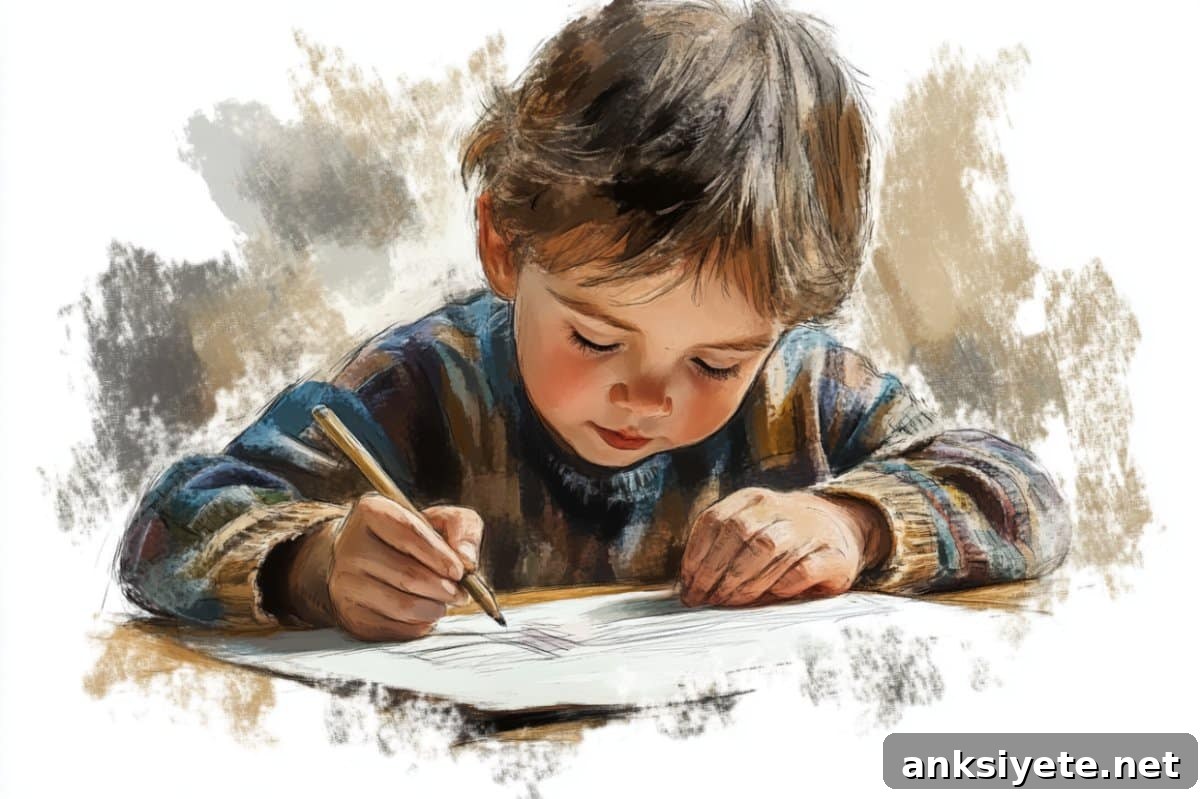
To evaluate the educational impact of replacing handwriting with typing, researchers at UPV/EHU compared manual and keyboard-based training in a controlled experiment. They set out to determine whether reduced hand movement and lower visual variability of typed letters affect how children learn letters and word structures.
“As children write less and less by hand, we wanted to explore how that shift affects alphabetic and orthographic learning,” said researcher Joana Acha. “Specifically, we asked whether learning letters and encoding word structure develops differently after manual practice versus keyboard use.”
The study focused on 5- to 6-year-olds because this is a key period when children begin to develop reading and writing skills. Fifty children with basic reading comprehension were taught nine letters taken from the Georgian and Armenian alphabets and 16 pseudowords created by combining those letters. Using unfamiliar symbols ensured the children were learning from scratch rather than relying on prior knowledge.
Participants were divided into two main groups: one trained by hand and the other using keyboards. The design isolated the contribution of graphomotor action—how hand movements involved in forming letters influence memory and recognition. When typing, children do not trace letter shapes in the same way, so the graphomotor contribution is reduced compared with handwriting.
After training, children completed three types of posttests assessing naming, writing, and visual identification of both the trained letters and pseudowords. Across all tasks, children who learned through handwriting—either free copying or tracing—performed better than those who learned by typing. The difference was most pronounced for the pseudowords: many children trained on the computer failed to reproduce the correct letter sequences.
“Our results support the idea that graphomotor activity plays a central role in memorizing letter shapes and word structure,” Acha explained. “Hand movements help build stronger alphabetic and orthographic representations than typing alone.”
Role of variability in learning
The researchers also examined how visual variability of letter forms affects learning. Each main group (handwriting and typing) was split into two subgroups. Within the handwriting condition, some children practiced by tracing dotted guides (low variability), while others copied freely on a blank page (high variability). In the typing condition, some children typed using a single consistent font, while others practiced with multiple fonts to increase visual variability.
Results showed that manual practice led to better learning overall, and within the handwriting groups, free copying (greater variability) produced the best outcomes. The findings suggest that after initial guided practice, encouraging children to form letters freely helps consolidate precise, transferable motor patterns and visual-orthographic representations.
“Tracing can help at first to guide movement, but once children develop basic fine motor control it is beneficial to progress to free writing,” Acha said. “Overall, the evidence indicates that handwriting should remain a priority in early literacy, with digital devices used as a complementary tool rather than a replacement.”
About this learning and writing research news
Author: Encarni Miguel
Source: University of the Basque Country
Contact: Encarni Miguel – University of the Basque Country
Image: Image credited to Neuroscience News
Original research (open access):
“The impact of handwriting and typing practice in children’s letter and word learning: Implications for literacy development” by Joana Acha et al., Journal of Experimental Child Psychology. dx.doi.org/10.1016/j.jecp.2025.106195
Abstract
The impact of handwriting and typing practice in children’s letter and word learning: Implications for literacy development
Recent studies indicate that replacing handwriting with typing can impede the earliest stages of reading acquisition. Two main explanations are reduced graphomotor engagement and lower visual variability of letter forms when typing. Earlier work largely focused on letter recognition alone, whereas the present experiment evaluated multiple learning outcomes.
Fifty prereaders learned nine unfamiliar letters and 16 pseudowords across four training conditions: hand-copying, tracing, typing with multiple fonts, and typing with a single font. Posttests measured naming, writing, and visual identification of the learned items.
Children trained by hand—whether copying or tracing—showed higher accuracy across all posttests than those trained by typing, supporting the graphomotor hypothesis. The study highlights the importance of handwriting experience for building alphabetic and orthographic knowledge and suggests caution in fully replacing pencil-and-paper practice with digital devices during early reading instruction.