
Summary: Although ketamine and dexmedetomidine act through different molecular pathways, both disrupt the timing of brain waves in a consistent way that reliably produces unconsciousness. A new animal study from the Picower Institute at MIT shows a shared signature of anesthetic-induced unconsciousness: increased phase locking at low frequencies—especially between the two hemispheres—accompanied by disruption of local cortical communication.
These results indicate that phase alignment of cortical oscillations, not only the power of those waves, may be a practical and generalizable marker of unconsciousness. The researchers suggest that tracking phase shifts could allow anesthesiologists to monitor and adjust drug dosing in real time regardless of which anesthetic is used.
Key facts
- Shared neural signature: Ketamine and dexmedetomidine both induce similar changes in the phase relationships of brain waves that correlate with loss of consciousness.
- Phase locking pattern: Anesthetics increase low-frequency phase locking across hemispheres while reducing phase alignment between nearby regions within a hemisphere.
- Clinical implication: Monitoring cortical phase alignment could improve intraoperative monitoring and enable closed-loop dosing systems that maintain the desired level of unconsciousness.
Source: Picower Institute at MIT
Diverse molecular actions, convergent brain effects
Ketamine and dexmedetomidine produce anesthesia through distinct cellular and molecular mechanisms, yet in practice they achieve the same endpoint: reliable loss of consciousness. The new study, led by graduate student Alexandra Bardon with senior author Earl K. Miller and co-author Emery N. Brown at the Picower Institute, investigated how these two drugs alter electrical activity in the prefrontal cortex of nonhuman primates to identify common circuit-level changes that accompany anesthesia.
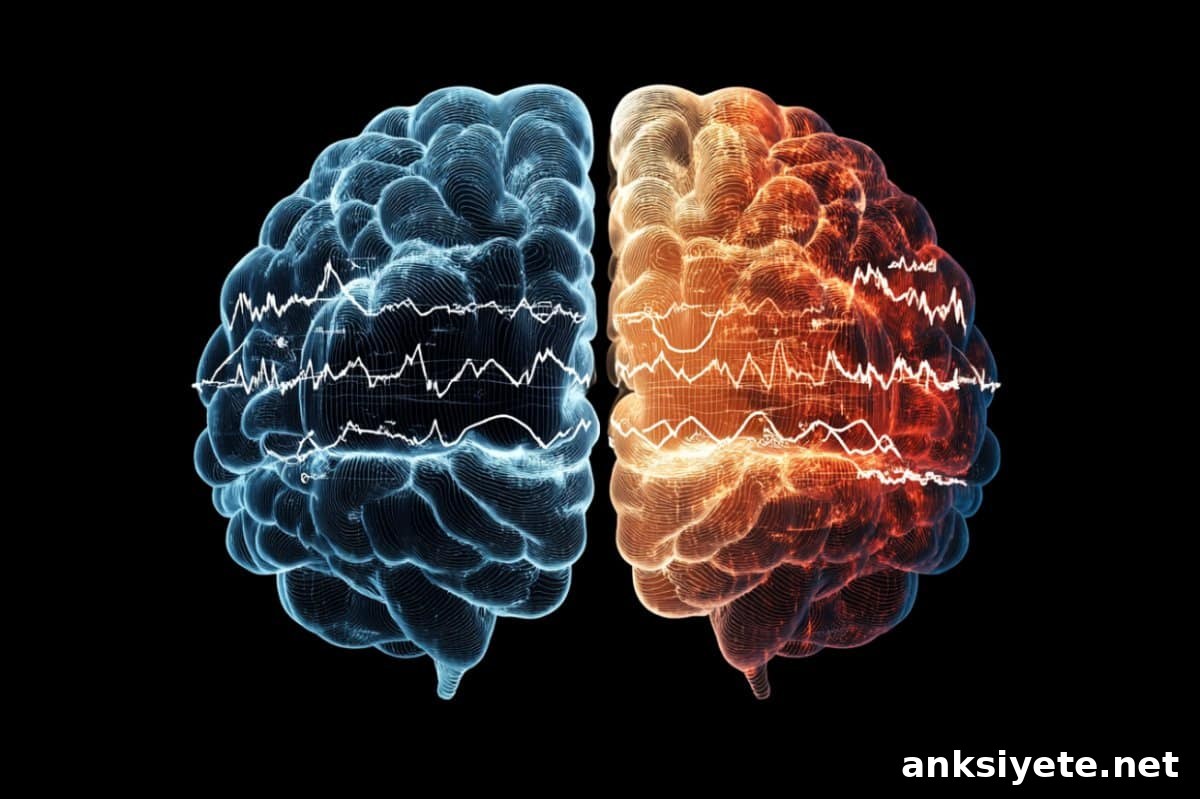
Their central observation is that both drugs produce characteristic changes in the timing—or phase—of brain oscillations. When oscillations in local cortical networks are in phase, peaks and troughs align so neurons can coordinate and share information needed for attention, perception and reasoning. When that phase alignment breaks down, local communication degrades and conscious cognitive functions collapse, producing unconsciousness.
By focusing on phase relationships rather than only on oscillatory power, the team identified consistent patterns that accompanied the transition from wakefulness to anesthetic-induced unresponsiveness. “If you look at the way phase is shifted in our recordings, you can barely tell which drug it was,” said Miller, underscoring that different molecular routes can converge on similar network dynamics.
Phase locking: local disruption, long-range alignment
Across both drugs, the researchers recorded a marked increase in phase locking at low frequencies after animals lost consciousness. Phase locking here means the phase relationships among signals became more stable over time. Crucially, the pattern depended on distance: nearby subregions within a hemisphere—specifically dorsolateral versus ventrolateral prefrontal areas—lost phase alignment, while homologous regions across the two hemispheres became more tightly aligned.
This combination—reduced local coherence together with increased interhemispheric alignment—represents a clear departure from the waking brain, where local regions often coordinate flexibly and the two hemispheres are not rigidly synchronized. The team notes that anesthetics drive broad shifts in phase structure that differ qualitatively from wakeful activity and likely underlie loss of responsiveness.
Distance and traveling waves
Distance between recording sites strongly influenced phase changes. Even across a single 2.5-millimeter electrode array, low-frequency oscillations shifted by 20–30 degrees. Extrapolating to the roughly 20-millimeter separation between dorsolateral and ventrolateral arrays implies nearly a 180-degree offset, effectively inverting wave timing across those regions. These observations are consistent with traveling low-frequency waves sweeping across cortex, a phenomenon the authors previously observed with other anesthetics such as propofol.
The study raises follow-up questions: Do additional anesthetics produce the same phase signature? What is the exact role of traveling waves in producing disordered local communication? And how does anesthetic-induced unconsciousness differ from sleep, which also shows increased slow-wave power but is not identical to anesthesia?
The authors propose that if other drugs share this phase-alignment pattern, clinicians could use phase-based measures to tune anesthetic depth across different agents, and engineers could develop closed-loop controllers that adjust dosing based on objective neural markers of unconsciousness.
Paper and authors
The study “Convergent effects of different anesthetics on changes in phase alignment of cortical oscillations” appears in Cell Reports. In addition to Bardon, Brown and Miller, contributing authors include Jesus Ballesteros, Scott Brincat, Jefferson Roy, Meredith Mahnke, and Yumiko Ishizawa.
Funding
Research support came from the U.S. Department of Energy, the National Institutes of Health, the Simons Center for the Social Brain, the Freedom Together Foundation, and the Picower Institute for Learning and Memory.
About this neuroscience and consciousness research news
Author: David Orenstein
Source: Picower Institute at MIT
Contact: David Orenstein – Picower Institute at MIT
Image: The image is credited to Neuroscience News
Original research: Open access.
Article: “Convergent effects of different anesthetics on changes in phase alignment of cortical oscillations” by Alexandra Bardon et al., Cell Reports.
Abstract
Convergent effects of different anesthetics on changes in phase alignment of cortical oscillations
Many anesthetics produce loss of consciousness despite acting through diverse molecular and circuit mechanisms. To probe convergent effects, the study examined how anesthetic doses of ketamine and dexmedetomidine alter bilateral oscillations in the prefrontal cortex of nonhuman primates. Both drugs increased phase locking within ventrolateral and dorsolateral prefrontal cortex, both within and across hemispheres. Yet the detailed pattern varied: neighboring subregions within a hemisphere showed decreased phase alignment, a change that local analyses suggest may reflect distance-dependent phenomena such as large traveling waves, while homologous areas across hemispheres became more synchronized. These results indicate that distinct anesthetics induce strong and characteristic patterns of cortical phase alignment that differ from waking activity and may represent a common feature driving loss of responsiveness.