
Summary: Researchers report that a single low oral dose of methylene blue can enhance short-term memory and sustained attention, as shown by increased brain activity on functional MRI.
Source: RSNA
A new randomized, double-blind, placebo-controlled study published in Radiology finds that a single oral low dose of methylene blue increases MRI-measured activity in brain regions involved in short-term memory and attention.
Methylene blue is an FDA-recognized medication used for methemoglobinemia and as a surgical stain. Preclinical studies in animals previously demonstrated that low doses can enhance long-term contextual memory and extinction memory. However, until now, the neural mechanisms behind these effects and the drug’s impact on human short-term memory and sustained attention had not been clearly established.
“While memory-enhancing effects of methylene blue were observed in rodents decades ago, the underlying human neuronal changes and effects on short-term and attention tasks have not been studied,” said Timothy Q. Duong, Ph.D., of the University of Texas Health Science Center at San Antonio. His team designed the first multimodal functional MRI study of methylene blue in healthy human volunteers.
Twenty-six healthy adults aged 22 to 62 participated in a randomized, double-blind, placebo-controlled clinical trial approved by a local ethics committee. Participants completed functional MRI (fMRI) scans while performing sustained-attention and short-term memory tasks before and one hour after receiving either a single low oral dose of methylene blue or a placebo. Researchers also measured mean cerebral blood flow and cerebrovascular reactivity.
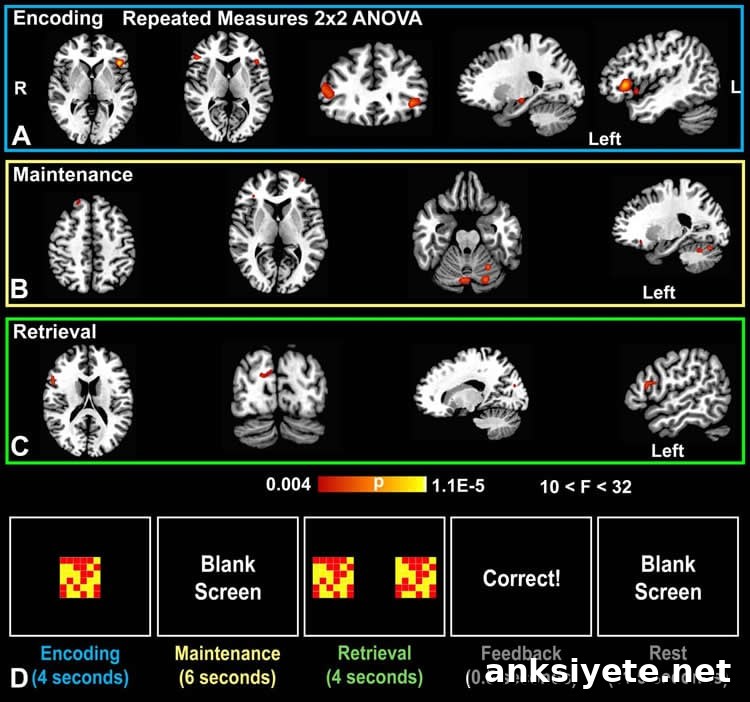
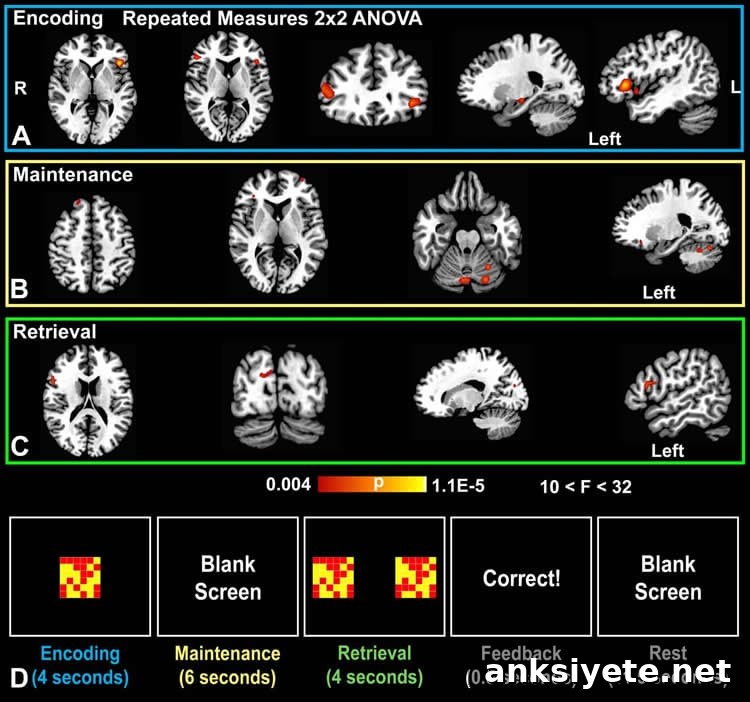
During a psychomotor vigilance task designed to measure sustained attention, methylene blue increased fMRI response in the bilateral insular cortex, a region associated with integrating emotional, cognitive, and sensory information. For short-term memory tasks, methylene blue produced stronger functional responses in the prefrontal cortex (involved in working memory and executive processes), the parietal lobe (sensory integration and attention), and the occipital cortex (visual processing).
Behaviorally, the study reported that methylene blue was associated with a 7 percent increase in correct responses during memory retrieval compared with placebo. Mean cerebral blood flow and cerebrovascular reactivity were assessed to help distinguish direct neuronal effects from vascular changes.
These findings indicate that a single low oral dose of methylene blue can modulate functional brain networks that support sustained attention and short-term memory, producing measurable changes on multimodal fMRI and modest improvements in memory retrieval performance in healthy adults.
Dr. Duong emphasized the translational potential of the results: “This work establishes a foundation for future trials testing whether methylene blue may help healthy aging adults, people with cognitive impairment, dementia, or other conditions where enhanced memory or attention may be beneficial.”
Funding: National Institutes of Health / National Center for Advancing Translational Sciences.
Source and reporting: Linda Brooks, RSNA. Image adapted from the RSNA press release.
Original research: “Multimodal Randomized Functional MR Imaging of the Effects of Methylene Blue in the Human Brain,” by Pavel Rodriguez, Wei Zhou, Douglas W. Barrett, Wilson Altmeyer, Juan E. Gutierrez, Jinqi Li, Jack L. Lancaster, Francisco Gonzalez-Lima, and Timothy Q. Duong. Radiology. Published online June 28, 2016. DOI: 10.1148/radiol.2016152893
Abstract
Multimodal Randomized Functional MR Imaging of the Effects of Methylene Blue in the Human Brain
Purpose
To investigate neural correlates of enhanced sustained attention and short-term memory after oral administration of methylene blue in healthy adults.
Materials and Methods
This prospective, HIPAA-compliant, randomized, double-blinded, placebo-controlled clinical trial enrolled 26 healthy subjects (ages 22–62). Functional MRI was performed while subjects completed a psychomotor vigilance task (assessing sustained attention) and delayed match-to-sample tasks (assessing short-term memory) before and 1 hour after administration of low-dose methylene blue or placebo. Cerebrovascular reactivity was evaluated using a carbon dioxide challenge. A 2 × 2 repeated-measures analysis of variance tested drug (methylene blue vs placebo) and time (before vs after) interactions, with cluster-corrected P < .05 considered significant.
Results
Methylene blue increased fMRI response in the bilateral insular cortex during the psychomotor vigilance task (Z = 2.9–3.4; P = .01–.008) and enhanced functional response during short-term memory tasks in prefrontal, parietal, and occipital regions (Z = 2.9–4.2; P = .03–.0003). The drug was associated with a 7% improvement in correct responses during memory retrieval (P = .01).
Conclusion
A single low oral dose of methylene blue can increase functional MRI activity in brain networks supporting sustained attention and short-term memory and can improve memory retrieval in healthy adults.
You are welcome to share this summary of the research findings. Please attribute the original study and RSNA as the source when doing so.