
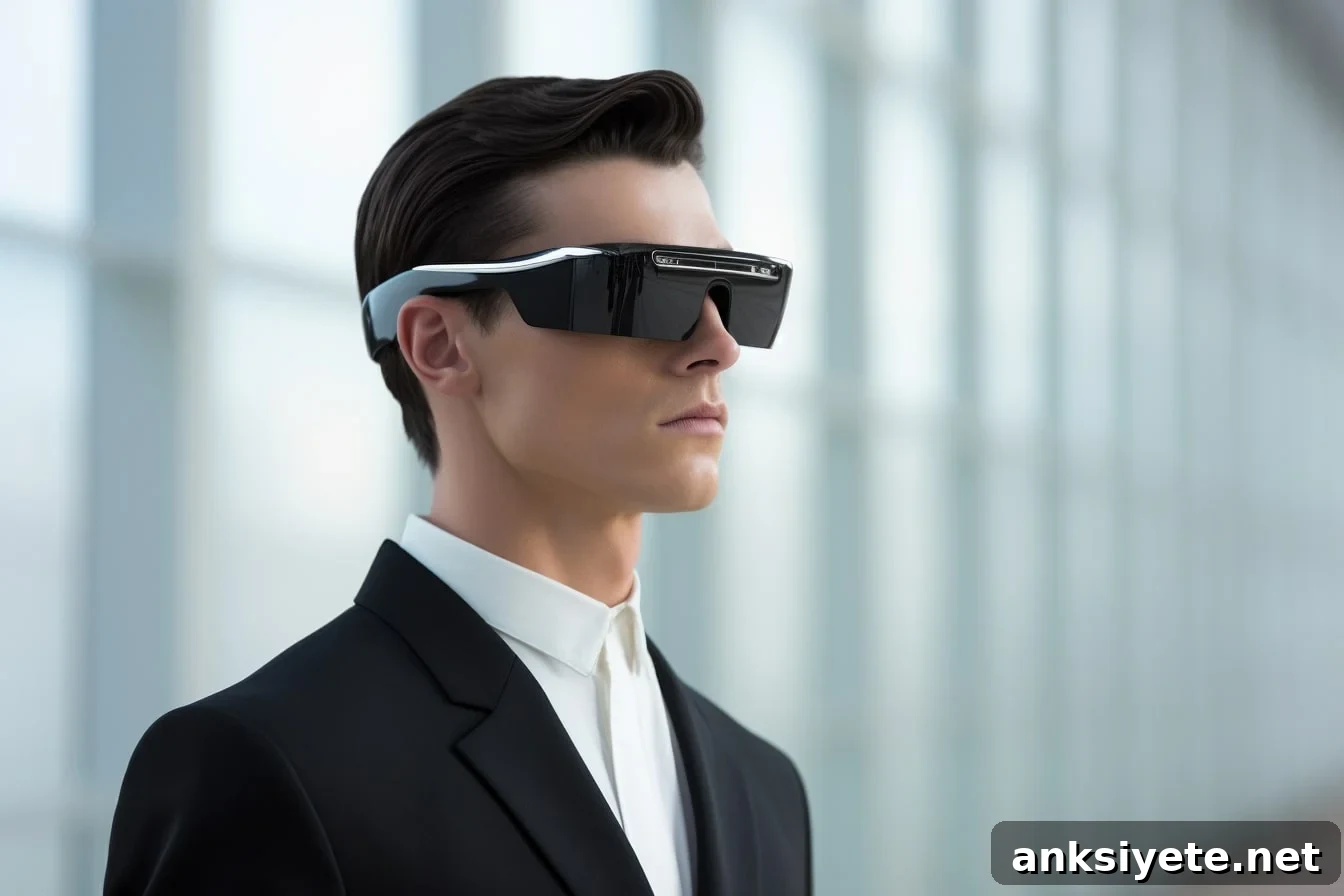
Summary: Researchers examined how augmented reality (AR) smart glasses affect interactions between wearers and the people they encounter, revealing changes in comfort, control, and social dynamics.
The study shows that while AR eyewear can reduce anxiety for the person wearing the device, it can create discomfort, uncertainty, and a sense of disempowerment for those being observed. Non-wearers expressed concern about covert recording and about losing control over how their appearance is presented when filters are applied. The research team offers practical design recommendations intended to make AR glasses more socially considerate and ethically robust.
Key Facts:
- The research observed five paired interactions in which one person wore Snap Inc.’s AR Spectacles with custom filters that altered the non-wearer’s appearance.
- Non-wearers reported feeling disempowered and uneasy, primarily due to worries about unauthorized recordings and a lack of control over modified appearances.
- The study proposes design interventions—such as visible recording indicators and more transparent lenses—to improve trust, clarity, and social comfort around AR smart glasses.
Source: Cornell University
Someone wearing augmented reality (AR) or “smart” glasses could be recording or altering your image in real time, creating a power imbalance that affects conversations and social presence, according to Cornell researchers.
Most prior research on AR glasses has emphasized the wearer’s experience. Researchers at Cornell’s Ann S. Bowers College of Computing and Information Science, together with collaborators at Brown University, shifted the focus to the dyadic interaction—the relationship between the person wearing AR glasses and the person opposite them—to understand how this technology shapes shared social encounters.
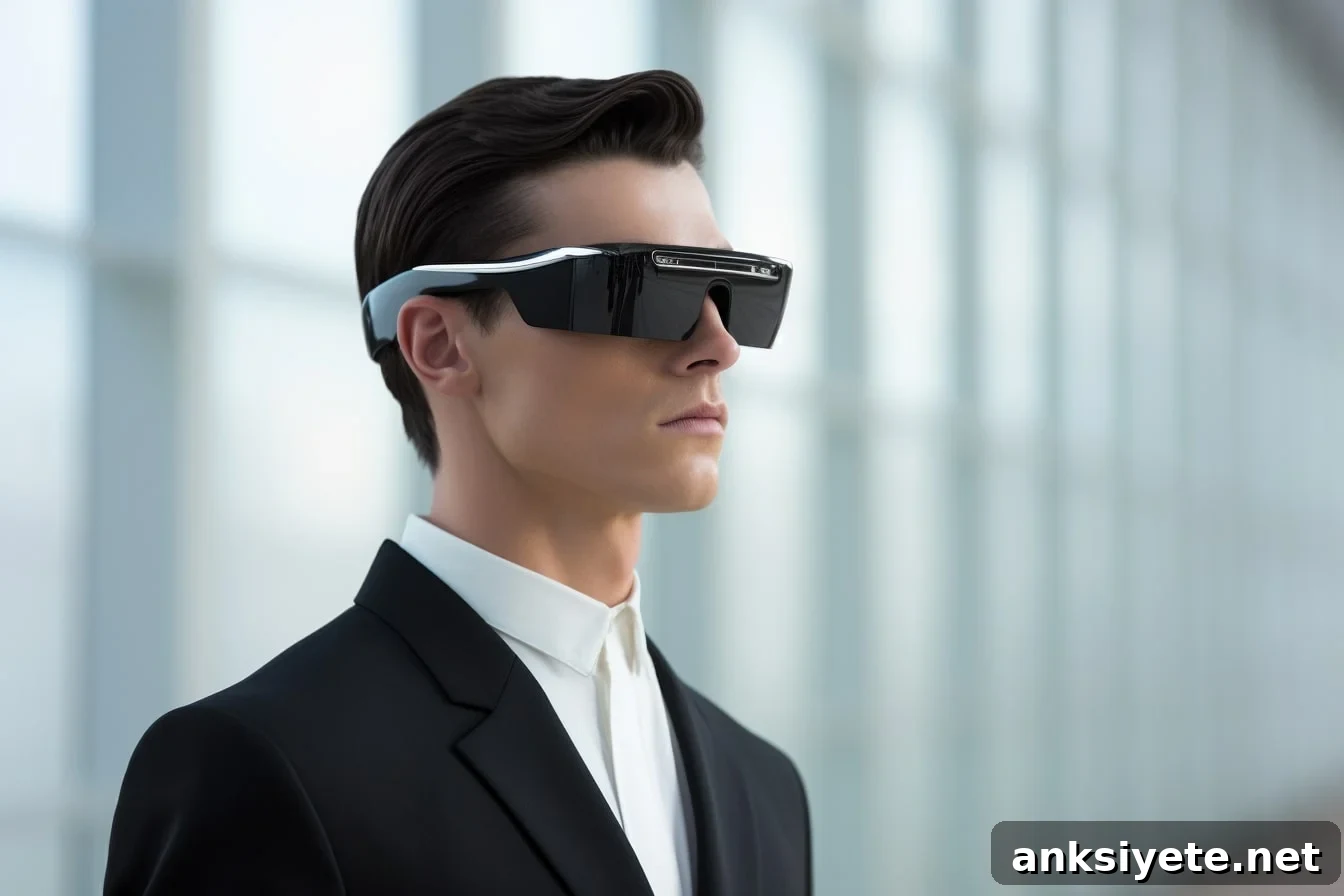
The researchers found a clear asymmetry: wearers often felt more relaxed and entertained by playful filters and visual overlays, while the people being viewed felt uncertain and occasionally violated. The contrast highlights how AR can reshape the interpersonal power dynamics of ordinary conversations.
Doctoral student Jenny Fu presented the results in the paper “Negotiating Dyadic Interactions through the Lens of Augmented Reality Glasses,” delivered at the 2023 ACM Designing Interactive Systems Conference. Fu and co-author Malte Jung worked with collaborators at Brown University and an independent extended-reality designer to run a controlled, qualitative study of paired interactions.
In the study, five pairs of participants completed a collaborative desert-survival discussion. Each pair included a wearer and a non-wearer. The wearer used a loaned prototype of Snap Inc.’s Spectacles—an AR device with a built-in camera and five bespoke filters that could alter the non-wearer’s face into a deer, cat, bear, clown, or a pig-bunny hybrid.
After the activity, pairs participated in a guided design session and interviews to reflect on the interaction and suggest improvements. Wearers reported that the filters reduced their nervousness and made the task more enjoyable. Non-wearers, however, described feeling excluded from decision-making and unsure about what the wearer could see or record.
Non-wearers highlighted two main concerns: uncertainty about whether they were being recorded without consent, and discomfort with automated alterations to their appearance. The darkened lenses common in AR headsets also interfered with direct eye contact and other nonverbal cues, degrading the quality of conversation and leaving non-wearers unsure where the wearer was looking.
Some non-wearers resisted passively accepting the situation: a few asked the wearer what they were seeing, while others physically moved their faces or bodies to try to avoid or disrupt the filters. These acts of negotiation allowed them to reclaim some agency and demonstrated that non-wearers can influence their presence in mixed-reality encounters. “I think that’s the biggest takeaway I have from this study: I’m more powerful than I thought I was,” Fu noted.
To foster fairer interactions, participants suggested concrete design changes. Recommended features include a visible recording indicator light to signal when video capture is active, projection or shared displays that reveal what the wearer sees, and more transparent lenses that preserve eye contact and nonverbal communication. The authors also advise that designers test headsets in realistic social settings and involve non-wearers in participatory design sessions so the perspectives of all affected parties shape product development.
Fu emphasizes treating the video interactions themselves as a source of design insight: studying how people respond and negotiate can guide improvements that protect privacy, ensure consent, and support natural social engagement in mixed-reality environments.
Funding: This work received support from the National Science Foundation.
About this neurotech and psychology research news
Author: Becka Bowyer
Source: Boston University
Contact: Becka Bowyer – Boston University
Image: The image is credited to Neuroscience News
Original Research: The findings were presented at the 2023 ACM Designing Interactive Systems Conference.