
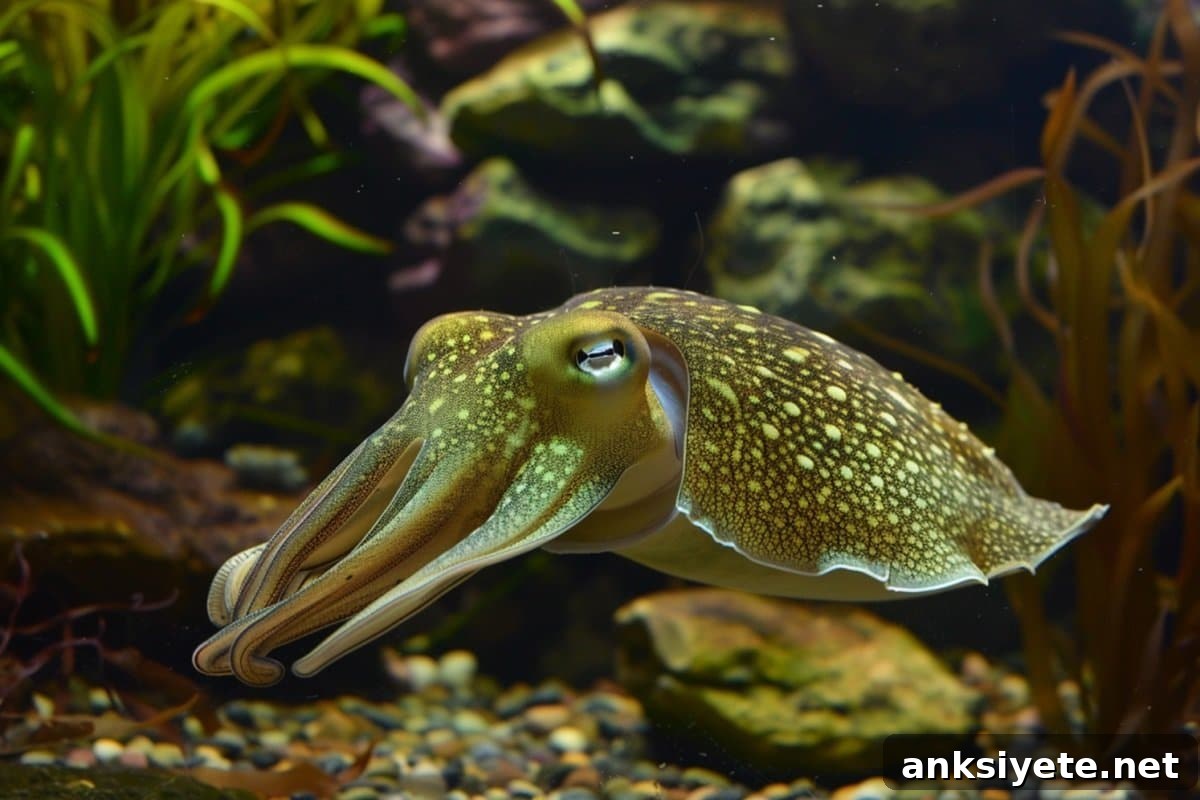
Summary: Researchers have found that common cuttlefish can form false memories in a way that parallels humans. By exposing cuttlefish to events that shared overlapping visual and olfactory cues, scientists induced the animals to behave as if they remembered shrimp in a tube where no shrimp had been present. This work suggests cuttlefish reconstruct past events from separate sensory elements rather than storing them as continuous “film” memories.
The study shows that cuttlefish encode different features of an experience—what they saw, smelled, or encountered—separately, and then reassemble those features when recalling the event. When those elements are recombined incorrectly or when misleading information overlaps with a true memory, a false memory can form. Individual cuttlefish differed in how easily they developed false memories, indicating variation in memory processing across animals.
Key facts
- Cuttlefish are capable of forming false memories by reconstructing separate sensory details.
- Researchers used visual patterns and odors to create overlapping cues that misled the animals.
- There is notable individual variation among cuttlefish in susceptibility to false memories.
Source: Cell Press
Memory does not always store an event as a single, unbroken record. Instead, sensory features of an experience—visual, olfactory, spatial, and temporal cues—are encoded separately. Recalling an event requires reconstructing those pieces. When reconstruction is imperfect or when features from different events overlap, the brain can assemble a memory that did not actually occur. New research published on July 17 in the journal iScience provides evidence that cuttlefish exhibit a similar reconstructive memory process and can therefore form false memories.
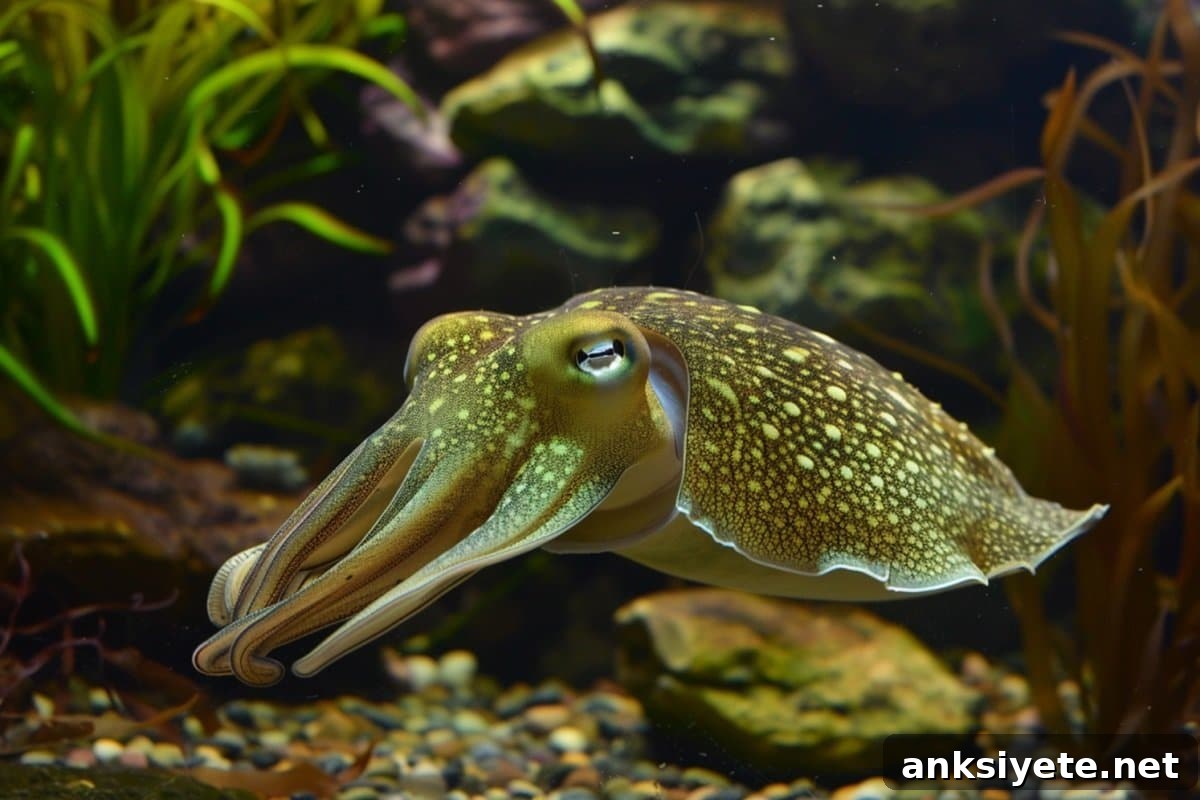
“Forming false memories is different from making memory errors,” said Christelle Jozet-Alves of the University of Caen in Normandy, France. The team’s results indicate that cuttlefish do not store events like continuous film footage. Instead, they reconstruct past events by associating the separate features that were present during the original experience.
Cuttlefish are notable among invertebrates for demonstrating episodic-like memory—they can remember specific past events. The mechanisms behind their episodic-like recall, however, were unclear. To test whether cuttlefish rely on reconstructive processes, Jozet-Alves and colleagues designed an experiment intended to produce false memories.
Researchers presented cuttlefish with three distinct tubes: one containing the animals’ preferred food, shrimp; one containing a less-preferred food, crab; and one that was empty. Each tube had a distinct visual pattern. Later, the animals were shown two of those tubes—the shrimp tube and the empty tube—again, but this time the contents were not visible. Visual patterns and odors were used to create overlapping cues between trials with the aim of misleading the animals.
The key test asked whether cuttlefish would later behave as if an empty tube contained shrimp after it had been presented again alongside the shrimp tube under conditions that encouraged feature overlap. When given a choice between the empty tube and the crab tube, with tube contents concealed, the cuttlefish more often than expected chose the empty tube. Their behavior suggested they remembered shrimp in that tube even though none had been there—evidence consistent with the formation of visual false memories.
Interestingly, the misleading manipulations appeared to affect visual memory more than olfactory memory: the study found evidence for visually driven false memories but did not demonstrate the same effect for scent-based cues. The researchers propose that storing memories as smaller, recombinable building blocks could reduce cognitive costs while enabling flexible recombination of features to imagine future possibilities. At the same time, the team observed unexpected individual differences in how readily false memories formed.
“What was surprising was that the susceptibility to form false memories seems different between individuals,” Jozet-Alves said. Some cuttlefish were largely unaffected by the misleading exposure, while others did form false memories. This variability resembles patterns seen in humans, where susceptibility to false memories varies both across and within individuals.
The researchers note that further work is needed to understand why some cuttlefish are more resistant to false memory formation than others and whether factors such as age, attention, or emotional state influence this susceptibility. Future studies could examine how these factors modulate reconstructive memory processes in cephalopods.
About this memory research news
Author: Kristopher Benke
Source: Cell Press
Contact: Kristopher Benke – Cell Press
Image: The image is credited to Neuroscience News
Original Research: Open access.
False memories in cuttlefish by Christelle Jozet-Alves et al., iScience
Abstract
False memories in cuttlefish
Highlights
- Episodic-like memory in cuttlefish is consistent with reconstructive processes.
- Visual misleading events impaired memory retrieval and produced false memories.
- When not misled, roughly 80% of the cuttlefish remembered a previous event in the tested conditions.
Summary
Episodic memory operates through reconstruction: the constituent features of an event are encoded and stored separately, then reassembled during retrieval. Even with source-monitoring mechanisms that help determine whether a detail was seen or smelled, mistakes can occur—especially when different events share many features. Overlapping cues increase the difficulty of discriminating sources, which can lead to false recollections.
The common cuttlefish is known to remember what happened, where, and when—demonstrating episodic-like memory. To test whether that memory relies on reconstructive processes similar to humans, researchers developed a protocol intended to encourage false memory formation. Their results indicate that cuttlefish can form visual false memories but did not show comparable olfactory false memories. These findings provide initial evidence that reconstructive memory processes may exist in cephalopods.