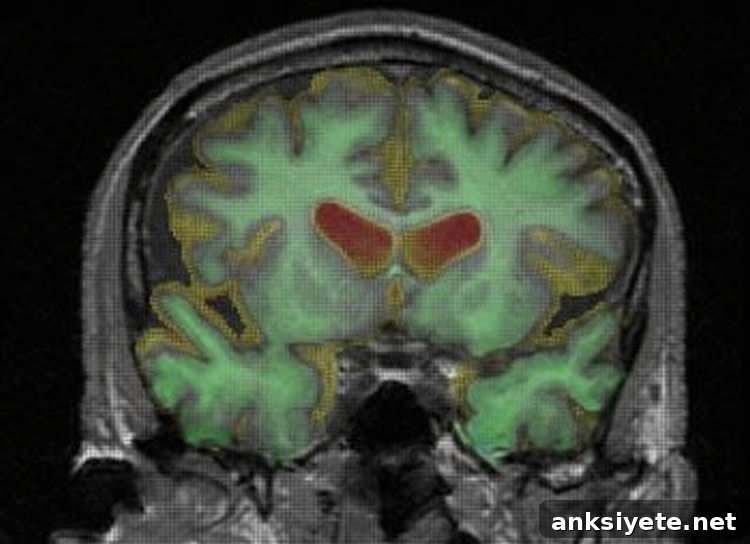
Summary: Scientists have designed a new protein to help reveal why nerve cells die in people with Alzheimer’s disease.
Source: University of Sussex.
Designer protein created at the University of Sussex offers a clearer way to study how Amyloid‑beta leads to nerve cell death in Alzheimer’s disease
Researchers at the University of Sussex have engineered a novel protein that closely mimics the size and shape of the Alzheimer’s‑associated Amyloid‑beta (Aβ) peptide but lacks its characteristic tendency to aggregate into toxic clumps. This new variant provides a controlled laboratory tool to distinguish the harmful effects of aggregated Aβ from those of single, non‑aggregated molecules.
In Alzheimer’s disease, Amyloid‑beta proteins—especially the Aβ1‑42 form—can self‑assemble into elongated amyloid fibrils and form sticky aggregates between neurons. These aggregates have long been associated with neuronal loss and cognitive decline, but until now it has been difficult to separate the contribution of aggregation itself from other properties of the peptide.
The Sussex team designed a variant of Aβ1‑42 that differs by only two amino acids from the native sequence. Those small changes prevent the peptide from self‑assembling into oligomers or fibrils, and the modified protein does not show the neurotoxicity observed with natural Aβ. In cell models the variant remained non‑toxic, and in functional assays it did not impair synaptic activity the way aggregated Aβ does. In animal experiments reported in the same study, only the native Aβ1‑42 caused measurable memory deficits, while the variant did not.
Because the designed peptide retains physical similarities to Aβ1‑42 without aggregating or harming neurons, it fills an important gap as a closely matched control for laboratory studies. Scientists can now use this non‑toxic variant to pinpoint which structural and assembly features of Amyloid‑beta trigger neuronal dysfunction and degeneration.
Dr Karen Marshall, who led the research, explained: “Understanding how the brain protein Aβ causes neuron death in Alzheimer’s patients is essential if we want to develop effective treatments. Our results show that the ability of Aβ to assemble into larger species is critical for its toxicity. If we can stop or reverse that aggregation, we may be able to slow the progression of symptoms.”
The research team is working with the Sussex Innovation Centre, the university’s business incubation hub, to explore how this new laboratory reagent can be made widely available to the Alzheimer’s research community and to investigate potential commercial pathways for distribution.
Professor Louise Serpell, senior author and co‑director of the Dementia Research Group at the University of Sussex, commented: “This new tool will help researchers uncover the mechanisms behind Alzheimer’s disease and accelerate work to identify therapeutic targets.” Peter Lane, Innovation Support Manager at the Sussex Innovation Centre, added that the centre is committed to ensuring the protein is accessible to researchers so its benefits can be broadly realized.
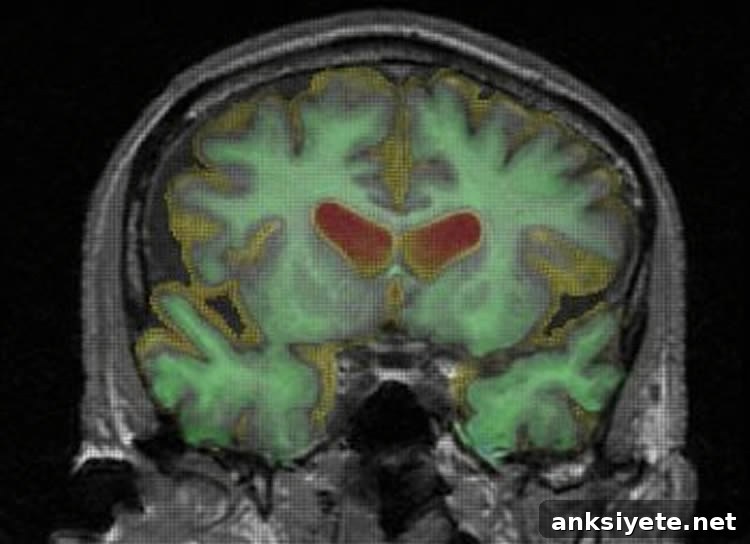
Source: Lynsey Ford – University of Sussex
Image source: Adapted from the University of Sussex press materials
Original research: Full open‑access study titled “A critical role for the self‑assembly of Amyloid‑β1‑42 in neurodegeneration” by Karen E. Marshall, Devkee M. Vadukul, Liza Dahal, Alina Theisen, Milena W. Fowler, Youssra Al‑Hilaly, Lenzie Ford, György Kemenes, Iain J. Day, Kevin Staras and Louise C. Serpell, published in Scientific Reports (published online July 22, 2016; DOI: 10.1038/srep30182).
Key takeaways:
- Amyloid‑beta (Aβ1‑42) aggregation is strongly linked to neuronal toxicity and cognitive deficits associated with Alzheimer’s disease.
- The University of Sussex team created a variant peptide differing by two amino acids that does not self‑assemble and is non‑toxic to neurons.
- This variant provides a closely matched control for experiments, enabling researchers to isolate the pathological effects of Aβ aggregation.
- The new tool may accelerate identification of strategies to block aggregation and protect neurons, a potential avenue toward slowing disease progression.
Abstract
A critical role for the self‑assembly of Amyloid‑β1‑42 in neurodegeneration
Amyloid‑β1‑42 (Aβ1‑42) is central to Alzheimer’s disease pathology. To define the relationship between peptide sequence, assembly and neuronal toxicity, the authors rationally designed a variant of Aβ1‑42 (vAβ1‑42) that differs in only two amino acids. Unlike native Aβ1‑42, the variant does not self‑assemble, is not toxic to neuronal cells, and does not disrupt synaptic function in the same assays. In an animal model, only the native Aβ1‑42 produced memory deficits. These findings highlight how small sequence changes determine the ability of the peptide to form toxic assemblies and provide a much‑needed non‑toxic control peptide for cellular and in vivo studies of Alzheimer’s disease mechanisms.
“A critical role for the self‑assembly of Amyloid‑β1‑42 in neurodegeneration” by Karen E. Marshall et al., Scientific Reports. Published online July 22, 2016. DOI: 10.1038/srep30182