
Summary: Researchers have identified a critical connection between the Angiogenin (ANG) gene and several age-related neurodegenerative conditions, including frontotemporal dementia (FTD), motor neuron disease (MND), and Parkinson’s disease. Mutations in ANG slow the transition of stem cells into mature nerve cells, producing developmental abnormalities that may prime neurons for degeneration later in life.
The study also shows that the normal, healthy form of ANG helps protect neurons from stress and degeneration, while mutant forms make cells more vulnerable to damage and early death. These findings create new avenues for early detection and intervention, and point to potential gene-based therapies to reduce disease risk long before symptoms appear.
Key Facts:
- The Angiogenin (ANG) gene influences how neural stem cells develop into specialized neurons.
- Mutations in ANG delay stem cell differentiation, causing neurodevelopmental defects observable in lab-grown brain tissue.
- Understanding ANG’s protective role opens possibilities for early screening, neuroprotective strategies, and gene therapy to prevent or slow neurodegenerative disease.
Source: University of Bath
New findings about a gene linked to dementia and other age-related brain disorders offer hope for interventions years before disease onset.
The gene Angiogenin (ANG) has been associated with multiple neurodegenerative diseases commonly seen in older adults, such as frontotemporal dementia (FTD), motor neuron disease (MND), and Parkinson’s disease. Researchers at the University of Bath have now shown that ANG, in its normal form, helps regulate the pace at which undifferentiated stem cells become specialized neurons during brain development.
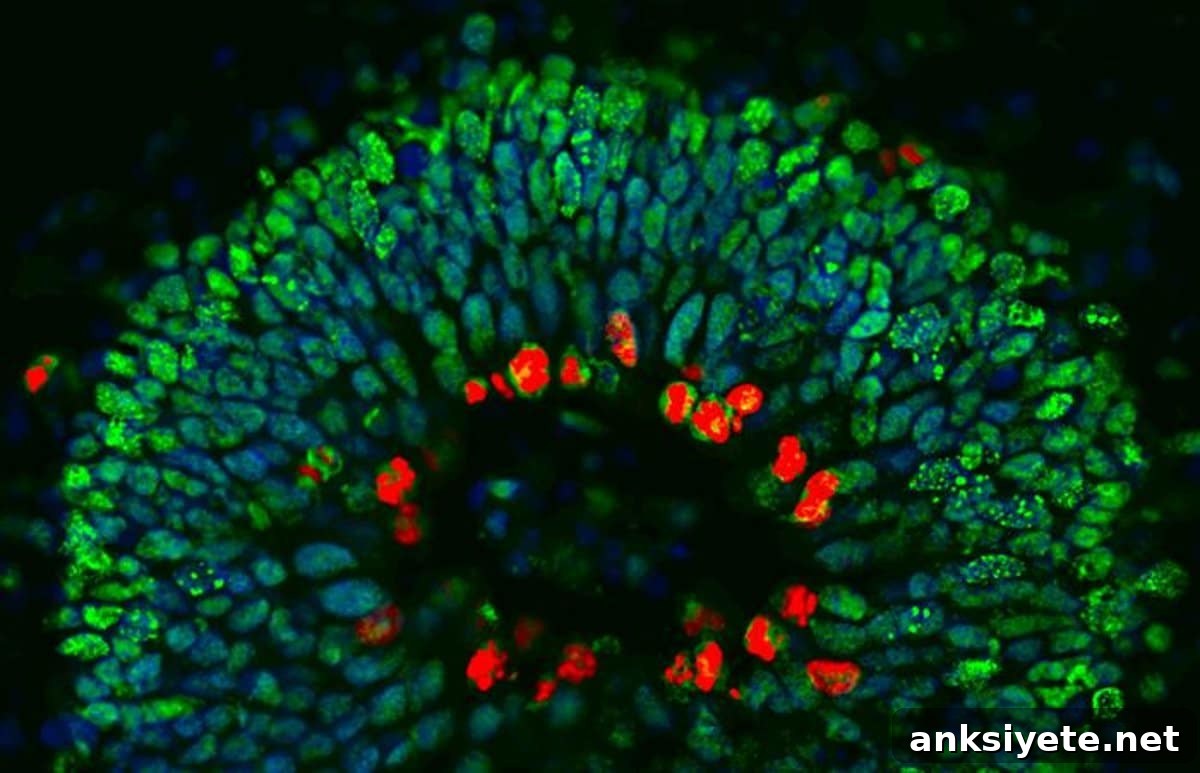
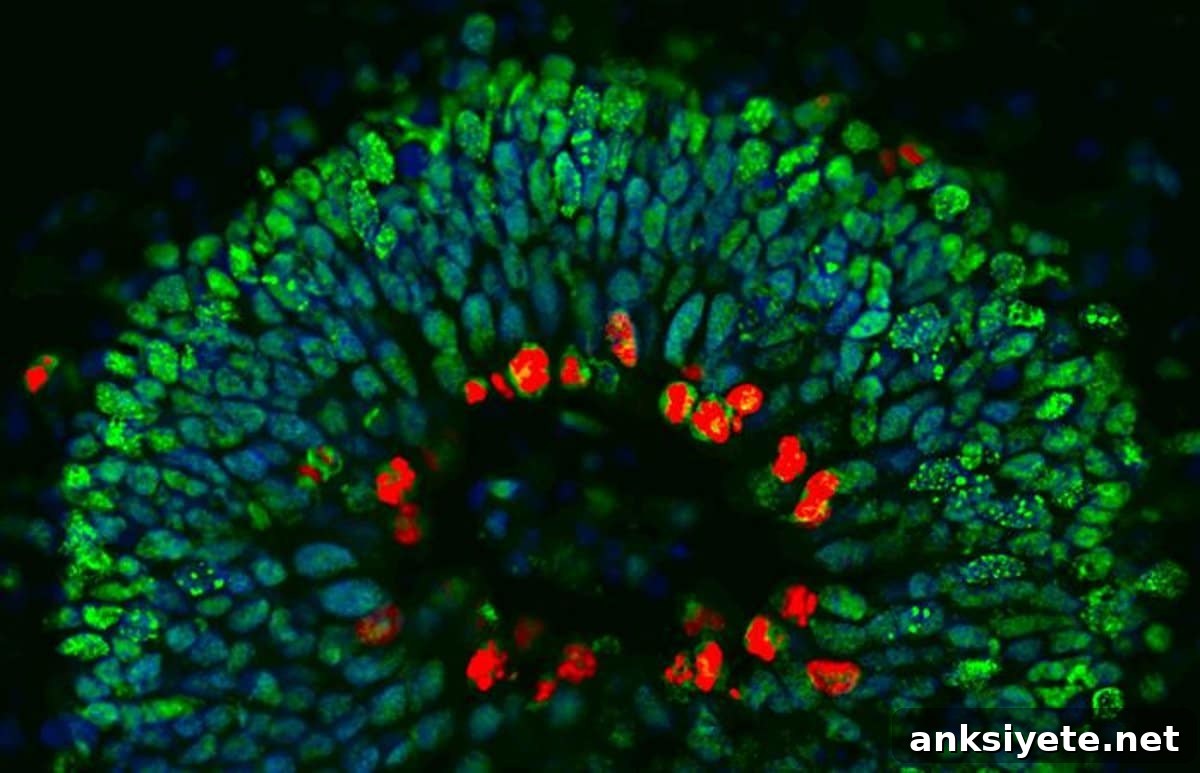
When ANG carries disease-associated mutations, neural stem cells remain in an undifferentiated state longer than normal. In laboratory models, that delay produced clear neurodevelopmental abnormalities in neurons as they matured, suggesting that problems early in development may increase vulnerability to degeneration later in life.
“These observations suggest that neuronal degeneration could be primed by defects arising during early brain development,” said Dr Vasanta Subramanian of the Department of Life Sciences, who led the research. The study appears in the Journal of Pathology.
Prior work from the same team showed wild-type ANG protects mature neurons from damage and functional decline. In contrast, mutant ANG increases neuronal susceptibility to stress—a factor that accumulates with aging—and accelerates cell death. Together, these results underscore ANG’s dual role in both protecting mature neurons and regulating progenitor cell behavior.
Mini-brains grown in the lab
To investigate these effects, the team studied members of a family affected by FTD and MND. Genetic testing identified relatives who carried ANG mutations and others who did not. Researchers reprogrammed skin fibroblasts from these individuals into induced pluripotent stem cells (iPSCs) and generated cortical organoids—commonly called “mini-brains”—to model human neural development in three dimensions.
Organoids from individuals carrying ANG mutations displayed pronounced developmental abnormalities, including persistent neural rosette structures and altered patterns of neural progenitor self-renewal and differentiation. These patterns indicate a shift toward later-born neuron types and reveal a heightened vulnerability of cortical neurons to stress, particularly when mutations in ANG coexist with mutations in TARDBP (the gene encoding TDP-43).
Importantly, some of the dysfunctions observed in mutant organoids and neurons were reduced when treated with wild-type ANG protein, supporting the idea that restoring ANG function could be protective.
“This work points to a future where genetic screening could identify people at risk and where early-intervention gene therapies or protective treatments might correct developmental defects before clinical symptoms appear,” Dr Subramanian said. She added that further research is needed to clarify the precise cellular mechanisms by which ANG supports neural progenitor dynamics and neuronal resilience.
The project received funding from the National Centre for the Replacement, Refinement and Reduction of Animals in Research (NC3Rs), BRACE, and the Wellcome Trust VIP award. Supporters note the value of human cell–based organoid models in reducing reliance on animal models while delivering insights into neurodegeneration.
Chris Williams, CEO of BRACE, emphasized the potential impact: understanding how Angiogenin contributes to FTD and related disorders could help develop treatments to slow or prevent disease progression, particularly for conditions that affect people in middle age. Dr Jessica Eddy of NC3Rs highlighted that the organoid models continue to provide valuable data more than a decade after initial funding to develop human alternatives for ALS research.
About this neurodegeneration and genetics research news
Author: Chris Melvin
Source: University of Bath
Contact: Chris Melvin – University of Bath
Image: Credit to Ross Ferguson and Vasanta Subramanian
Original Research: Open access. “Neural stem cell homeostasis is affected in cortical organoids carrying a mutation in Angiogenin” by Vasanta Subramanian et al., Journal of Pathology.
Abstract
Neural stem cell homeostasis is affected in cortical organoids carrying a mutation in Angiogenin
Mutations in Angiogenin (ANG) and in TARDBP, which encodes the 43 kDa transactive response DNA binding protein TDP-43, are linked to amyotrophic lateral sclerosis and frontotemporal dementia (ALS-FTD). ANG is known to be neuroprotective and to influence stem cell dynamics in other tissues such as the haematopoietic system.
The authors reprogrammed skin fibroblasts from members of an ALS-FTD family—individuals carrying mutations in ANG alone, mutations in both TARDBP and ANG, and a family member with neither mutation—into iPSCs and generated cortical organoids and stage-wise neuronal differentiations. Using these models, they assessed how FTD-associated variants affect neural precursor cell behavior, neuronal differentiation, and stress responses.
They report prominent neurodevelopmental defects in organoids with ANG mutations, characterized by persistent abnormal rosettes and increased self-renewal of neural precursors, alongside a bias toward later-born neuronal fates. Cortical neurons derived from patient iPSCs showed heightened sensitivity to stress, which was most pronounced in cells carrying mutations in both ANG and TARDBP. These organoid and neuron models recapitulate features of frontotemporal lobar degeneration observed in patients.
Notably, many dysfunctions improved after treatment with wild-type ANG. The findings indicate that, beyond its role in mature neuron stress responses, ANG contributes to neural progenitor dynamics and neurogenesis—suggesting that subtle developmental defects may influence disease susceptibility and onset.