
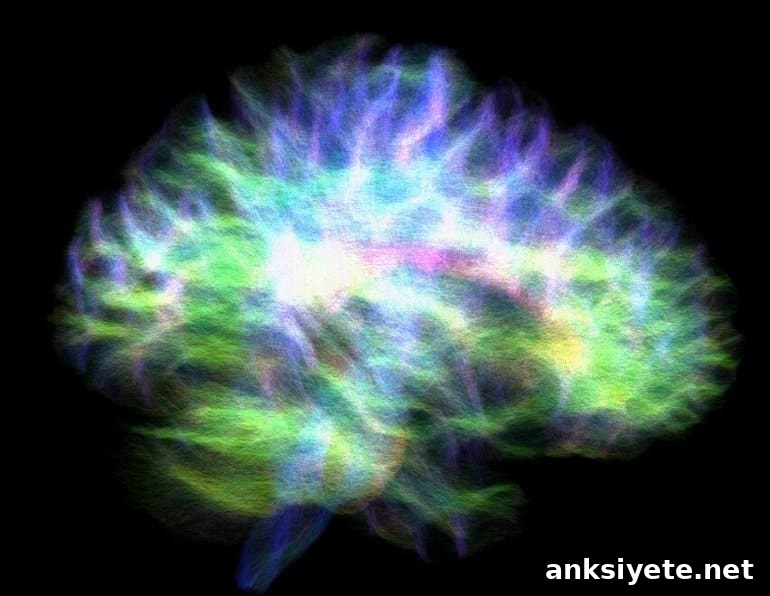
Summary: Researchers have produced the most detailed in vivo map to date of the neural pathways linking the hippocampus with the rest of the human brain. The new map offers fresh perspectives on how memory, imagination, and visual processing are integrated in the human brain.
Source: University of Sydney
The most detailed map yet made of the hippocampus’ connections to the cerebral cortex has been created by researchers at the University of Sydney, and it may change how we understand human memory and related cognitive functions.
“We were surprised to find fewer connections between the hippocampus and frontal cortical regions than expected, and stronger links with early visual processing areas,” said Dr. Marshall Dalton, a Research Fellow in the School of Psychology at the University of Sydney. “This makes sense in light of the hippocampus’ role not only in memory but also in imagination and constructing mental imagery.”
The hippocampus, a seahorse-shaped structure deep inside the brain, is central to forming memories and transferring information from short-term to long-term storage. Beyond its classic memory functions, it also contributes to navigation, imagining future or fictitious experiences, constructing vivid mental scenes, visual perception, and decision-making.
To assemble the map, Dr. Dalton and colleagues Dr. Arkiev D’Souza, Dr. Jinglei Lv, and Professor Fernando Calamante used high-quality MRI data from the Human Connectome Project (HCP). They applied a custom tractography pipeline and track-density imaging techniques to trace white matter pathways from across the cortex to their termination points within the hippocampus — achieving a level of anatomical detail not previously possible in living humans.
A highly detailed anatomical roadmap
“We focused on white matter pathways — the brain’s communication highways — and developed a new approach to map how the hippocampus connects with the cortical mantle in fine detail,” said Dr. Dalton. “The result is a precise map of which cortical regions directly connect to the hippocampus and where along the anterior–posterior axis those connections land.”
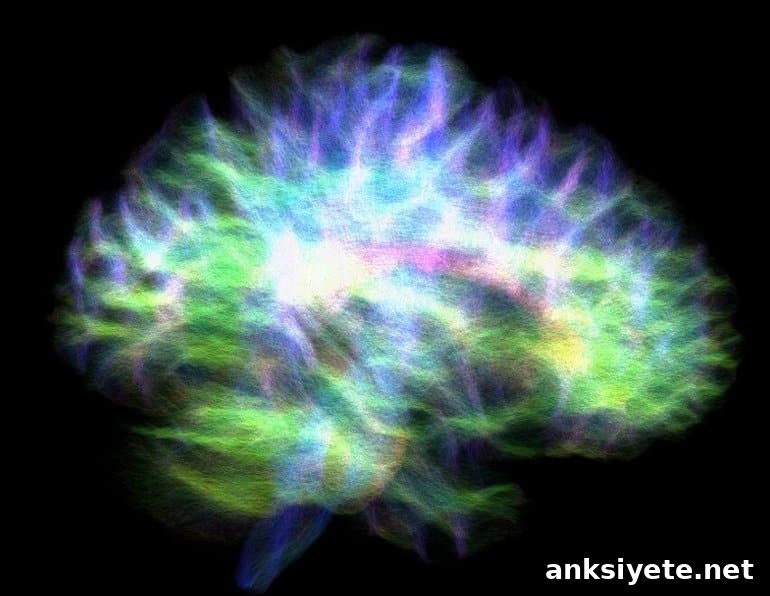
Previous MRI studies were limited by technical constraints that only allowed broad, coarse descriptions of hippocampal connections. By contrast, this study’s tailored methods made it possible to localize where different cortical areas connect within the hippocampus in vivo — a milestone for human neuroanatomy.
Surprising patterns and implications
The new map largely corroborates decades of findings from post-mortem tract tracing in non-human primates, but it also revealed unexpected patterns: relatively fewer connections to frontal cortical areas and stronger connectivity with primary and early visual regions than anticipated. These differences could reflect genuine species-specific organizational changes, limitations of MRI tractography, or a combination of both.
If the patterns are real, they might help explain cognitive differences between humans and other primates. For example, some primate species, including chimpanzees, outperform humans on certain short-term memory and rapid visual recognition tasks. Changes in hippocampal connectivity as the human neocortex expanded could have shifted the balance of inputs and outputs, supporting uniquely human abilities such as complex visualization, imagination, and creative thought.
Dr. Dalton emphasized the limits of current methods: tract tracing in non-human primates can reveal connectivity at the cellular level, which MRI cannot yet match. Nevertheless, the high-resolution in vivo mapping achieved here marks a major advance in charting human hippocampal anatomy and sets the stage for further work to resolve which findings reflect biology and which reflect methodological sensitivity.
About this brain mapping research news
Author: Press Office
Source: University of Sydney
Contact: Press Office – University of Sydney
Image: The image is credited to Marshall Dalton/ University of Sydney
Original Research: Open access. “New insights into anatomical connectivity along the anterior-posterior axis of the human hippocampus using in vivo quantitative fibre tracking” by Marshall Dalton et al. eLife.
Abstract
New insights into anatomical connectivity along the anterior–posterior axis of the human hippocampus using in vivo quantitative fibre tracking
The hippocampus supports multiple cognitive functions, including episodic memory, and mounting evidence points to functional differences along its anterior–posterior axis. However, the anatomical basis for these functional specializations in humans has remained unclear.
Using track-density imaging and a tractography pipeline tailored to detect streamline endpoints within the hippocampus, the researchers systematically mapped anatomical connectivity between the cortical mantle and different segments of the anterior–posterior hippocampal axis. They identified the cortical regions most strongly connected to the hippocampus, examined how those connections vary along the axis, and localized where within the hippocampus those cortical inputs and outputs terminate.
The findings reveal both graded connectivity patterns and discrete areas of dense extrinsic input, demonstrating that the hippocampus is a heterogeneous structure with region-specific cortical affiliations. These results improve our ability to map human hippocampal anatomy in vivo and advance our understanding of the neural architecture that supports hippocampal-dependent memory and related cognitive functions.