
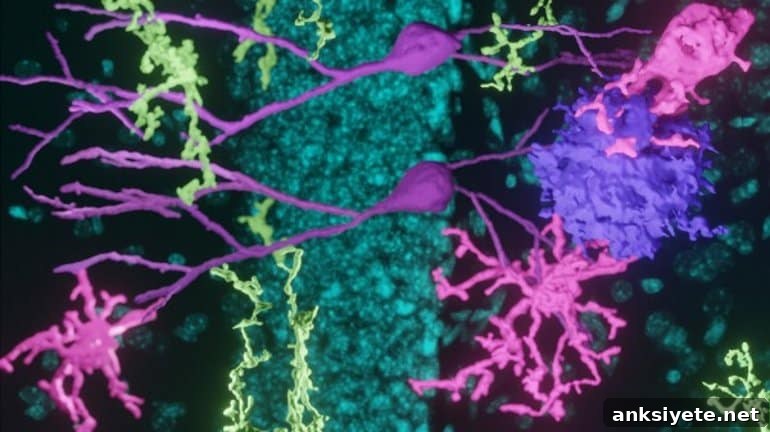
Summary: Stimulating the supramammillary nucleus (SuM) in the hypothalamus boosted the generation and function of adult-born hippocampal neurons in mouse models of Alzheimer’s disease. Those improved neurons helped reverse both memory deficits and mood-related symptoms in the affected mice.
Source: UNC
In the adult human brain, the hippocampus continues to produce new neurons—known as adult-born neurons (ABNs)—throughout life. This ongoing process, called adult hippocampal neurogenesis (AHN), contributes to memory formation and emotional regulation. In Alzheimer’s disease (AD), AHN is disrupted, leading to fewer and poorer-quality ABNs, which may contribute to both cognitive decline and affective symptoms such as anxiety and depression.
Because AHN supports memory and mood, restoring or enhancing this process has emerged as a potential strategy to ease symptoms in people with AD. New research from the UNC School of Medicine, published in Cell Stem Cell, shows that targeted stimulation of the hypothalamic supramammillary nucleus (SuM) can strengthen hippocampal neurogenesis in AD mouse models and produce measurable behavioral improvements.
The research team applied a two-step approach. First, they used patterned optogenetic stimulation of the SuM to promote the generation and development of ABNs in the hippocampus. Next, they selectively increased the activity of these SuM-enhanced ABNs using chemogenetic methods. Optogenetics uses light-sensitive proteins to control specific neurons with light, while chemogenetics uses engineered receptors activated by otherwise inert compounds to change cell activity.
Crucially, neither step alone produced the full therapeutic effect: stimulating SuM without subsequently activating the modified ABNs, or activating ABNs that had not been primed by SuM stimulation, did not restore behavior in AD mice. The combination—raising ABN number and quality through SuM stimulation, then increasing the activity of those enhanced ABNs—was required to rescue both cognitive and affective deficits.
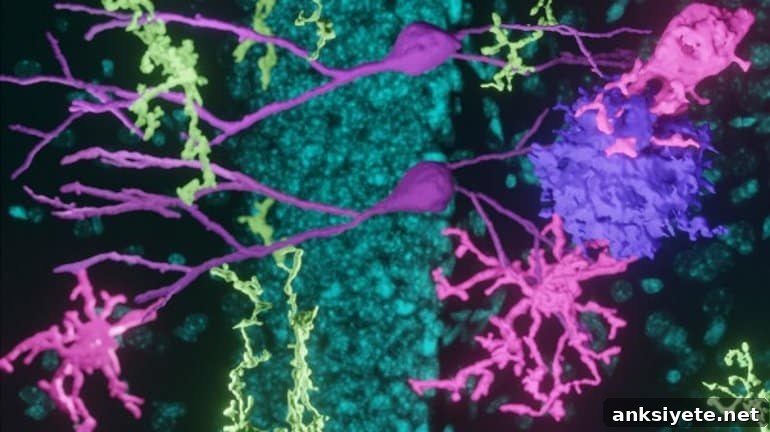
Molecular analyses of hippocampal tissue revealed that activation of SuM-enhanced ABNs triggered intracellular signaling pathways associated with synaptic plasticity and neural communication. At the same time, pathways linked to microglial phagocytosis were engaged, suggesting improved clearance of amyloid plaques by non-neuronal immune cells in the brain. Together, these changes offer a mechanistic explanation for how a relatively small number of modified ABNs can exert substantial benefits in the diseased AD brain.
“It has been an open question whether AHN can be meaningfully enhanced in Alzheimer’s-affected brains to improve function,” said senior author Juan Song, PhD, associate professor of pharmacology and a Jeffrey Houpt Distinguished Investigator at the UNC School of Medicine. “By manipulating a modest population of ABNs through a combination of SuM stimulation and targeted activation, we show that these neurons can be improved even in the presence of AD pathology—and that these improved ABNs contribute to the restoration of behavior and hippocampal function.”
The findings highlight an activity-dependent model in which quality, quantity, and activity of adult-born neurons must be addressed together for therapeutic benefit. They also point to specific signaling pathways and cellular processes that could be targeted by future drug development efforts to mimic the effects of SuM-enhanced ABNs without invasive interventions.
“We are keen to understand the precise mechanisms by which these enhanced ABNs influence both neuronal circuits and immune cells in the hippocampus,” Song added. “The next steps include translating these mechanistic insights into pharmacological strategies that replicate the beneficial outcomes we observed, with the long-term goal of creating highly targeted therapies for Alzheimer’s disease and related dementias.”
Funding: The National Institutes of Health supported this work through grants R01MH111773, R01MH122692, RF1AG058160 and R01NS104530 to Juan Song, and R21AG071229 and R01GM133107 to co-author Xian Chen, PhD, professor of biochemistry and biophysics at the UNC School of Medicine.
About this Alzheimer’s disease research news
Author: Mark Derewicz
Source: UNC
Contact: Mark Derewicz – UNC
Image: The image is credited to Song Lab, UNC School of Medicine
Original Research: Open access. “Activation of hypothalamic-enhanced adult-born neurons restores cognitive and affective function in Alzheimer’s disease” by Juan Song et al., published in Cell Stem Cell.
Abstract
Activation of hypothalamic-enhanced adult-born neurons restores cognitive and affective function in Alzheimer’s disease
Highlights
- Patterned optogenetic stimulation of the SuM enhances hippocampal neurogenesis in Alzheimer’s models.
- Chemogenetic activation of SuM-enhanced ABNs rescues memory and mood-related deficits in AD mice.
- Activation of SuM-enhanced ABNs promotes hippocampal synaptic plasticity and activity.
- Activation of SuM-enhanced ABNs increases microglial phagocytosis of amyloid plaques.
Summary
Alzheimer’s disease is characterized by progressive memory loss and emotional disturbances, alongside impaired adult hippocampal neurogenesis. Whether AHN can be enhanced in an impaired AD brain to restore cognitive and affective functions has remained unclear. This study demonstrates that patterned optogenetic stimulation of the hypothalamic supramammillary nucleus (SuM) enhances AHN in two widely used AD mouse models (5×FAD and 3×Tg-AD). Importantly, subsequent chemogenetic activation of those SuM-enhanced ABNs rescues memory and emotional behaviors. By contrast, SuM stimulation alone or activation of unmodified ABNs does not recover these deficits.
Quantitative phosphoproteomic analyses indicate activation of pathways tied to synaptic plasticity and microglial-mediated plaque clearance after acute chemogenetic activation of SuM-enhanced ABNs. Together, these results establish that a coordinated, activity-dependent enhancement of adult-born neurons can meaningfully influence both neuronal circuit function and disease-related pathology, offering a promising direction for future therapeutic development.