
Researchers from the UC Davis MIND Institute and Agilent Laboratories report that Prader-Willi syndrome — a genetic disorder often associated with an insatiable appetite and a high risk of morbid obesity — is linked to the loss of specific non-coding RNAs. This loss disrupts the regulation of circadian and metabolic genes, alters energy expenditure, and produces distinct metabolic changes during sleep.
The study was led by Janine LaSalle, professor in the UC Davis Department of Medical Microbiology and Immunology and a MIND Institute investigator, and is published in the journal Human Molecular Genetics.
Children with Prader-Willi syndrome frequently experience poor nighttime sleep and daytime sleepiness. “Parents have to secure food because children may search for food at night and sometimes break into other homes to eat,” LaSalle explained. The new findings show that these behaviors stem from the loss of a long non-coding RNA that normally helps balance brain energy use during sleep.
Prader-Willi syndrome shows a complex clinical course. Infants often have low muscle tone and difficulty feeding, yet later develop an insatiable appetite and disrupted sleep patterns that can lead to severe obesity if calorie intake is not strictly controlled. The current study used a mouse model engineered to lack a specific long non-coding RNA to investigate how this genetic loss affects metabolism and sleep-related processes.
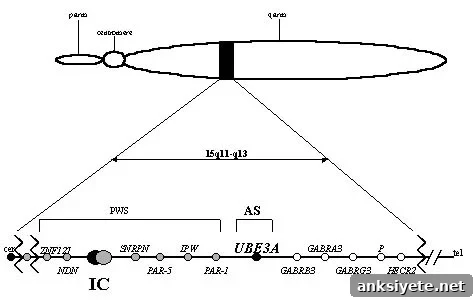
The researchers focused on the SNORD116 region of chromosome 15, known to produce small nucleolar (sno) RNAs and a long non-coding RNA called 116HG. This long non-coding RNA does not code for protein; instead, it forms a distinct “cloud” within neuronal nuclei where it associates with proteins and genes involved in diurnal metabolism. Contrary to the team’s expectation that the RNA cloud would promote transcription, they discovered the opposite: the 116HG RNA dampens gene activity.
LaSalle described the cloud’s function as acting like a decoy that sequesters active transcription factors away from genes, thereby reducing their expression. When the snoRNAs and 116HG are missing, this regulatory cloud disappears. As a result, genes that should be suppressed during sleep become active, producing altered patterns of circadian and metabolic gene expression.
In nocturnal mice, the RNA cloud normally expands during the animals’ sleep phase (daytime), reducing the expression of energy-use genes, and then recedes during the active phase, allowing those genes to be expressed. Mice engineered without the 116HG locus lacked this regulatory mechanism and showed increased energy expenditure during sleep, a metabolic imbalance that helps explain sleep disruption and altered appetite regulation in Prader-Willi.
The findings offer a clearer molecular explanation for why children with Prader-Willi syndrome have disturbed sleep and impaired satiety. They also have potential clinical implications: understanding the role of diurnal metabolism in the disorder could change therapeutic strategies. For example, treatments such as growth hormone, commonly prescribed for short stature in Prader-Willi, may unintentionally affect other metabolic aspects of the disease. The timing of medication administration might also be important if diurnal gene regulation is a central feature of the condition.
Study authors and funding
Co-authors on the study include Weston T. Powell, Rochelle L. Coulson, Florence K. Crary, Spencer S. Wong, Robert A. Ach and Dag H. Yasui (UC Davis), and Peter Tsang and N. Alice Yamada (Agilent Laboratories). The research was supported by National Institutes of Health grants F31NS073164 and 1R01NS076263 and by the Prader-Willi Foundation.
Contact: Phyllis Brown – UC Davis Medical System
Source: UC Davis Medical System press release
Image source: Genetic map of the 15q11-q13 region (public domain).
Original research: “A Prader-Willi locus lncRNA cloud modulates diurnal genes and energy expenditure” by Weston T. Powell et al., Human Molecular Genetics, published online June 13, 2013. DOI: 10.1093/hmg/ddt281