Summary: Researchers report that listening to music while exercising shifts brainwave patterns, reducing focused attention on bodily sensations but increasing energy, arousal and enjoyment.
Source: Brunel University
Headphones are now a familiar sight in gyms and on running routes, and many studies have shown that music can transform the exercise experience.
Early work, including influential commentary from Brunel University London’s Costas Karageorghis in 2012, compared music’s effects to a harmless performance enhancer—masking fatigue and promoting positive feelings. What remained unclear was how music alters brain activity during real-world exercise, because traditional monitoring equipment is easily disrupted by movement.
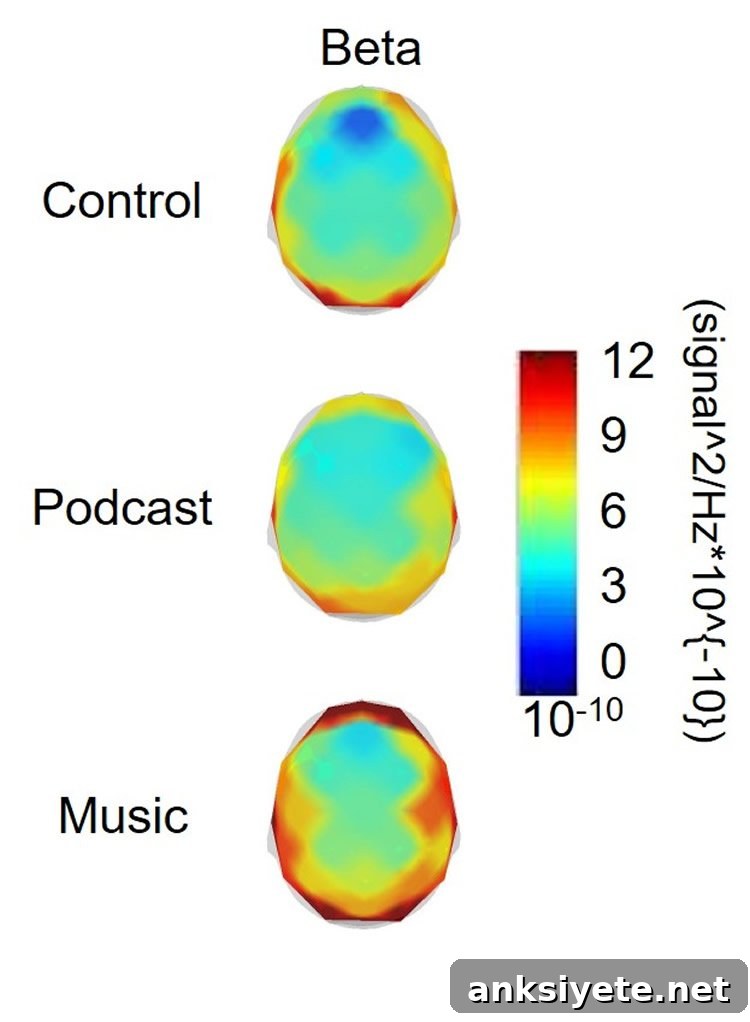
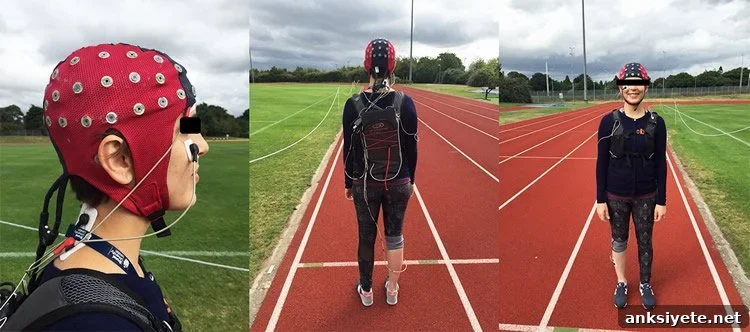
To address that gap, researchers employed a portable electroencephalogram (EEG) system with interference shielding to record brain activity during an outdoor walking task. This setup allowed reliable measurement of different frequency bands—lower-alpha, upper-alpha, sensorimotor rhythm and beta—while participants walked in a natural environment and listened to one of three auditory conditions: music, a spoken podcast, or no audio.
Twenty-four participants walked 400 meters at their own pace on an outdoor track. Each person completed three conditions in randomized order: a six-minute segment of “Happy” by Pharrell Williams (music), a six-minute TED Radio Hour talk (podcast), and silence (control). Immediately after each bout, researchers recorded perceptual and affective measures: where attention was focused, perceived exertion, feelings of pleasure (valence), arousal (energy), and enjoyment. Simultaneous EEG recordings captured the brain’s electrical response across the designated frequency bands.
Results showed a clear pattern: music prompted greater enjoyment and higher arousal compared with silence and with the podcast. Specifically, participants reported about 28% more enjoyment when walking to music than in silence, and about 13% more enjoyment than when listening to the podcast. The podcast increased enjoyment relative to silence but did not significantly alter perceived exertion or broader affective responses.
EEG data provided insight into the underlying brain mechanisms. During the music condition there was an up-regulation of beta-band activity in frontal and fronto-central cortical regions. This beta increase correlated with more dissociative attention—walkers were less focused on internal bodily sensations and more distracted by the music—while simultaneously experiencing a more positive emotional state and increased arousal.
According to Marcelo Bigliassi, psychophysiologist at Brunel University, “Using portable EEG in an ecologically valid outdoor task allowed us to explore how music affects the brain during real-life exercise. Music appears to increase beta activity and foster a more positive emotional state, which can make exercise feel more pleasurable.”
Practical implications: for people who struggle to stay motivated during physical activity, selecting suitable music may make movement more enjoyable and less dominated by sensations of effort. The findings suggest that thoughtfully chosen tracks could help recreational exercisers and novices maintain engagement in exercise programs by shifting attention and enhancing mood.
Source: Hayley Jarvis — Brunel University
Publisher: Organized by NeuroscienceNews.com
Image source: Images credited to the study researchers
Original research: “The Way You Make Me Feel: Psychological and cerebral responses to music during real-life physical activity,” published in Psychology of Sport and Exercise. DOI: 10.1016/j.psychsport.2018.01.010
Brunel University. Brainwaves show how exercising to music changes attention and enjoyment. NeuroscienceNews. (2018, February 17).
Abstract
The Way You Make Me Feel: Psychological and cerebral responses to music during real-life physical activity
Background: The brain mechanisms that explain how auditory stimuli influence psychological responses during physical activity are not well established in realistic settings. This study aimed to examine how two different auditory conditions—music and spoken podcast—affect subjective responses and brain activity during an outdoor walking task.
Methods: Twenty-four participants walked 400 meters at a self-selected pace under three randomized conditions: control (silence), podcast, and music. After each walk participants reported perceptual outcomes (state attention and perceived exertion) and affective outcomes (valence, arousal, and enjoyment). Portable EEG equipment recorded brain electrical activity, which was decomposed into lower-alpha, upper-alpha, sensorimotor rhythm and beta bands using Fast Fourier Transform analyses.
Results: Music increased beta-band activity, promoted dissociative attention (less focus on internal bodily cues), enhanced positive affect and arousal, and increased perceived enjoyment more than control and podcast conditions. The podcast produced a modest enjoyment increase compared with silence but did not change perceived exertion or broader affective responses.
Conclusions: Changes in beta frequencies appear to underlie the positive shift in emotional state that music can induce during light physical activity, allowing participants to disengage from internal sensory signals and attend to task-irrelevant, pleasant stimuli. The portable EEG approach proved effective for measuring brain activity during real-world, light-intensity exercise and for minimizing movement-related electrical artefacts.