
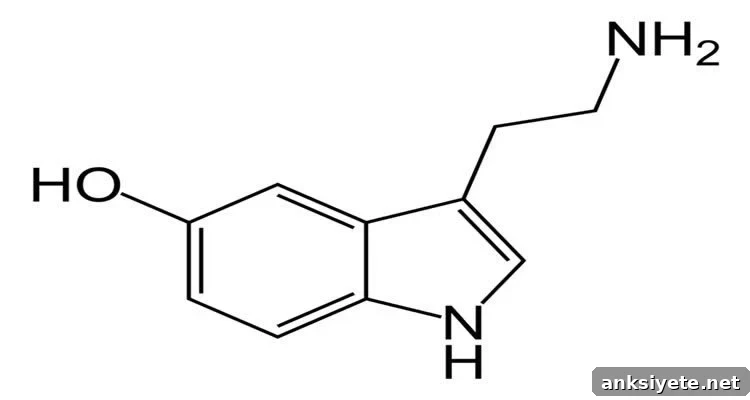
Summary: Researchers report that levels of serotonin produced in the gut are doubled in people with obesity. The findings suggest human obesity may be associated with an increased capacity to produce and release serotonin from the intestine.
Source: University of Adelaide.
Gut Serotonin Linked to Obesity: Human Study Reveals Elevated Levels
Serotonin, often known for its role in mood regulation, also influences metabolism and energy balance. New human data from a multi-institutional team in South Australia strengthens evidence that gut-derived serotonin contributes to higher blood glucose, increased fat mass and may drive obesity and related metabolic problems.
Researchers at Flinders University, the South Australian Health and Medical Research Institute (SAHMRI) and the University of Adelaide report that gut serotonin concentrations are roughly doubled in obese people compared with lean controls. This study, published in the International Journal of Obesity as “Augmented capacity for peripheral serotonin release in human obesity,” identifies an increased capacity to produce and secrete serotonin from the proximal small intestine as a feature of human obesity.
Why gut serotonin matters
Although serotonin is widely associated with brain function and mood, more than 90% of the body’s serotonin is produced in the gut by hormone-producing enterochromaffin (EC) cells. Gut-derived serotonin does not cross into the brain to affect mood, but it does act locally and systemically to regulate metabolic processes—including hepatic glucose production, lipolysis and thermogenesis—processes that influence body weight and glycemic control.
Animal studies had already implicated gut serotonin in promoting obesity and dysglycemia, but evidence in humans was limited. The current human study links elevated circulating serotonin to higher body mass index (BMI) and poorer glycemic markers, supporting the idea that peripheral serotonin is an important metabolic regulator in people.
Key findings from the human study
The research included measurements of plasma serotonin (5-HT) in obese and control participants before and during intraduodenal glucose infusion, functional assessment of duodenal EC cells, analysis of tryptophan hydroxylase-1 (TPH1) expression in intestinal tissue, and direct measurement of serotonin content in primary EC cells from the duodenum and colon.
Major observations included:
- Plasma serotonin concentrations were approximately twofold higher in obese participants compared with lean controls both at baseline and during glucose infusion.
- Higher circulating serotonin correlated positively with BMI and with HbA1c, a marker of long-term blood glucose control.
- Obese individuals had about twice the density of EC cells in the duodenum at baseline and showed greater EC-cell activation in response to glucose.
- Expression of TPH1, the enzyme responsible for serotonin synthesis in peripheral tissues, was elevated in the duodenum of obese participants and correlated with BMI.
- The serotonin content per EC cell in duodenum and colon was similar between groups, indicating that the increased circulating serotonin derives from a larger number of active EC cells and increased synthetic capacity rather than higher serotonin per cell.
Implications for treatment and research
These results identify gut-derived serotonin as a likely contributor to the pathogenesis of obesity and dysglycemia in humans. With evidence that obese individuals have an augmented capacity to produce and release serotonin from the proximal small intestine, researchers suggest that targeting intestinal EC cells or the pathways that control peripheral serotonin synthesis and release could offer new therapeutic strategies for obesity and type 2 diabetes.
Professor Damien Keating (NHMRC Research Fellow, Flinders University and SAHMRI) highlighted the potential for translating this discovery into interventions that reduce circulating serotonin. Associate Professor Richard Young (University of Adelaide) noted that obese individuals secrete excess serotonin from the upper gut both at rest and after nutrient stimulation, opening possibilities to modulate that release for metabolic benefit.
Collaborations and funding
The study was carried out by a large international team with collaborators from the pharmaceutical industry and academic institutions, including Pfizer, SAHMRI, the University of Adelaide and the NHMRC Centre of Research Excellence in Translating Nutritional Science to Good Health, alongside researchers from Flinders University’s College of Medicine and Public Health. The project forms part of an ARC Linkage-supported collaborative effort to investigate the peripheral intestinal serotonin system and its roles in human metabolic control.
Source: University of Adelaide
Publisher: Organized by NeuroscienceNews.com.
Image Source: NeuroscienceNews.com image is in the public domain.
Original Research: Abstract in International Journal of Obesity.
DOI: 10.1038/s41366-018-0047-8
Abstract (edited summary)
Background/objectives: Animal data indicate an important role for serotonin derived from intestinal EC cells in controlling glucose production, fat breakdown and thermogenesis and in promoting obesity and dysglycemia. Human evidence was limited despite links between elevated plasma serotonin and obesity.
Subjects/methods: The study measured plasma serotonin before and during intraduodenal glucose infusion in non-diabetic obese and control subjects, assessed activation of duodenal EC cells, quantified TPH1 expression in duodenum and colon, and measured serotonin content in primary EC cells.
Results: Plasma serotonin was twice as high in obese participants at baseline and during glucose infusion, and correlated with BMI and HbA1c. Duodenal EC-cell density and glucose-induced EC-cell activation were both increased in obesity. Duodenal TPH1 expression was higher in obese individuals and related to BMI. Serotonin content per EC cell was similar between groups.
Conclusions: Human obesity is associated with an increased capacity to synthesize and release serotonin from the proximal small intestine, which strongly links to higher body mass and impaired glycemic control. Gut-derived serotonin is likely an important driver in the development of human obesity and dysglycemia.
University of Adelaide. “Obesity Trigger Identified Within Human Gut.” NeuroscienceNews, 22 March 2018.
Note: The published article in the International Journal of Obesity is an accepted manuscript that may undergo editing and formatting before final publication.