Biologists at the University of York have uncovered new cellular mechanisms that may drive progression of an aggressive form of dementia.
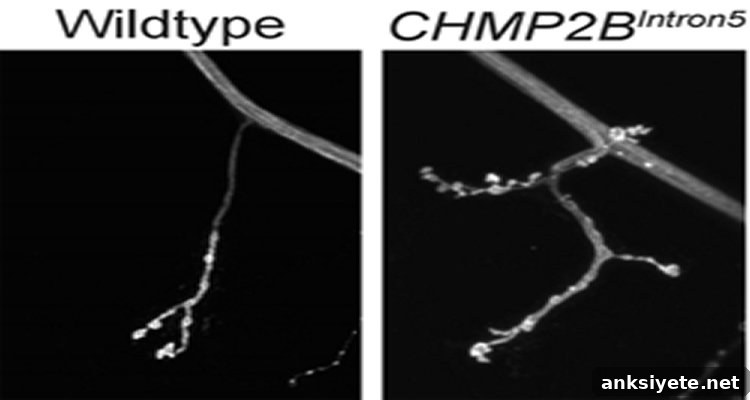
In collaboration with scientists from the University of Massachusetts Medical School and the University of Puerto Rico, the research team investigated how synapses — the specialized connections that allow neurons to communicate — are affected by mutations in the CHMP2B protein that are linked to Frontotemporal Dementia (FTD). Their experiments revealed previously unrecognized signalling pathways that promote excessive synaptic growth, a change that could contribute to the early stages of neurodegeneration. Notably, these signals are normally associated with immune responses and had not been shown previously to regulate synaptic growth.
Frontotemporal Dementia is one of the most common forms of early-onset dementia, often beginning in patients during their fifties. It primarily damages the frontal and temporal lobes of the brain and leads to progressive loss of neurons. Clinically, FTD frequently manifests as changes in personality, loss of social inhibition, and difficulties with language — both in producing speech and in comprehension. Because FTD affects behaviour, communication and executive function, discovering the molecular steps that drive the disease is critical for developing targeted treatments.
The researchers focused on a disease-associated mutation in CHMP2B known as CHMP2B-Intron5. Initial work was performed in Drosophila melanogaster (fruit flies), a well-established genetic model for studying neuronal development and degeneration. Using Drosophila allowed the scientists to observe how altered CHMP2B function changed synaptic architecture and to identify genetic and biochemical modifiers of that process. Key findings from the fly model were then validated in mammalian neurons, strengthening the relevance of the results to human disease.
The study highlights a set of molecular players — including Rab8, POSH and TAK1 — that work together to regulate synaptic growth. When CHMP2B is mutated, these regulators appear to misdirect normal signalling, producing an overgrowth of synaptic terminals. Overgrown or dysregulated synapses can disrupt neural circuits and may set the stage for subsequent neuronal loss and cognitive decline. Identifying these intermediate steps in disease progression offers tangible targets for therapeutic intervention: drugs or genetic therapies that restore balanced synaptic signalling could, in principle, slow or halt the cascade that leads to dementia symptoms.
Dr Sean Sweeney, senior author and faculty member in the Department of Biology at the University of York, commented: “These findings shed light on the events occurring in neurons as dementia takes hold. The more we know about the steps that occur in disease progression, the more opportunities we have to intervene with potential therapies.”
Lead author Dr Ryan West added: “We hope that this work helps to tease apart complex molecular processes occurring in neurons and identify how these can go wrong in neurodegenerative diseases, such as Frontotemporal Dementia.”
Dr Clare Walton, Research Manager at Alzheimer’s Society, acknowledged the importance of the study: “We know less about the underlying causes of frontotemporal dementia than some other kinds of dementia so research like this is a vital step towards developing treatments for the condition. Further research will be needed to determine whether this mechanism plays a similar role in humans.” She also noted the broader value of supporting early-career researchers, saying: “Alzheimer’s Society is dedicated to supporting and training new scientific talent like Ryan to generate novel research ideas that will help us find the answers to all types of dementia.”
Contact: David Garner – University of York
Source: University of York press release
Image Source: The image is adapted from the University of York press release and is credited to the researchers
Original Research: Abstract for “Rab8, POSH, and TAK1 regulate synaptic growth in a Drosophila model of frontotemporal dementia” by Ryan J.H. West, Yubing Lu, Bruno Marie, Fen-Biao Gao, and Sean T. Sweeney, published in Journal of Cell Biology. Published online March 23, 2015. doi:10.1083/jcb.201404066