Findings could help shed light on Alzheimer’s, Parkinson’s, ALS and other diseases.
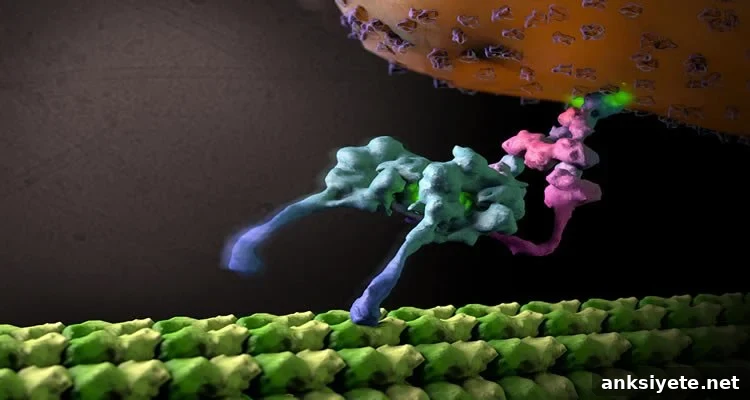
A research team led by scientists at The Scripps Research Institute (TSRI) has revealed the first complete structural view of a crucial cellular motor that transports cargo and performs essential tasks inside cells. The work clarifies how the dynein-dynactin complex is organized and how it associates with microtubules to drive directional transport—knowledge that has important implications for understanding neurodegenerative diseases.
The dynein-dynactin assembly is a large, multi-subunit molecular motor that has long resisted full structural characterization because of its size, compositional complexity and flexibility. In the new study, TSRI investigator Gabriel C. Lander and colleagues, in collaboration with Trina A. Schroer’s laboratory at Johns Hopkins University, captured detailed structural snapshots of the intact dynein-dynactin complex bound to microtubules.
Unprecedented structural detail
Dynein and dynactin normally work together on microtubules to carry out vital cellular activities such as intracellular transport of organelles and RNAs, and to participate in cell division. The dynein-dynactin motor is also essential for neuronal development and maintenance. Defects in this transport system have been linked to neurodegenerative conditions including Alzheimer’s, Parkinson’s, Huntington’s disease and amyotrophic lateral sclerosis (ALS). In addition, several viruses exploit the dynein-dynactin pathway to move within host cells.
“This work gives us critical insights into the regulation of the dynein motor and establishes a structural framework for understanding why defects in this system have been linked to diseases such as Huntington’s, Parkinson’s, and Alzheimer’s,” said Gabriel Lander.
To build the structural picture, Schroer’s group produced purified dynein and dynactin complexes. Because these proteins are highly conserved across species—from yeast to mammals—the purified complexes closely reflect the native assemblies found in cells. Using electron microscopy (EM) combined with advanced image-processing methods, Lander, Saikat Chowdhury and colleagues generated two-dimensional images that revealed subunit organization and structural details not previously observed.
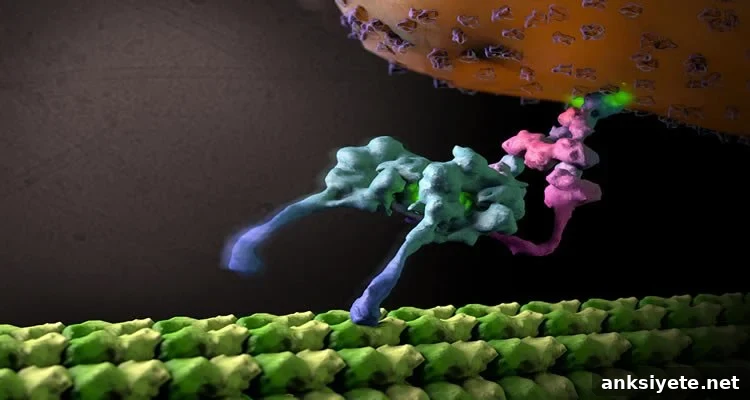
Chowdhury and Lander then developed a purification and imaging strategy that preserved dynein and dynactin assembled together on a microtubule. These images are the first clear snapshots showing the orientation of the complete dynein-dynactin complex as it interacts with the microtubule “railway” used for intracellular transport.
“This is the first snapshot of how the whole dynein-dynactin complex looks and how it is oriented on the microtubule,” said Saikat Chowdhury, a research associate in the Lander laboratory and first author of the study. The structural data clarify how dynein and dynactin fit together, how they recruit cargo adaptors, and how they cooperate to move cargoes consistently in a single, minus-end-directed direction along microtubules.
Pushing the limits of molecular imaging
Beyond mapping the overall architecture, the study establishes a structural framework for interpreting how mutations or disruptions in dynein-dynactin components could lead to transport failure and contribute to neurodegenerative processes. The authors emphasize that a detailed structural understanding of this motor system is relevant both for basic cell biology and for medical research into diseases where intracellular transport is compromised.
Lander and Chowdhury plan to extend these results by producing higher-resolution, three-dimensional reconstructions of the dynein–dynactin–microtubule assembly. They intend to apply electron tomography and related EM techniques to resolve finer structural features and to visualize cargo-binding interfaces and regulatory elements in greater detail.
“The EM facility at TSRI is the best place in the world to push the limits of imaging complicated molecular machines like these,” said Lander, noting the facility’s capabilities for high-resolution structural studies of dynamic assemblies.
The paper, titled “Structural organization of the dynein–dynactin complex bound to microtubules” (doi:10.1038/nsmb.2996), lists Saikat Chowdhury, Stephanie A. Ketcham, Trina A. Schroer and Gabriel C. Lander as authors and was published online in Nature Structural & Molecular Biology on March 9, 2015. Stephanie A. Ketcham of the Schroer laboratory is a co-author.
Funding for the research was provided by the Damon Runyon Cancer Research Foundation (DFS-#07-13), the Pew Scholars program, the Searle Scholars program and the National Institutes of Health (DP2 EB020402-01, GM44589).
Contact: Press Office – Scripps Research Institute
Source: Scripps Research Institute press release
Image source: Lander lab, The Scripps Research Institute (adapted from the institute press release)
Original research: Abstract for “Structural organization of the dynein–dynactin complex bound to microtubules” by Saikat Chowdhury, Stephanie A. Ketcham, Trina A. Schroer and Gabriel C. Lander in Nature Structural & Molecular Biology. Published online March 9, 2015; doi:10.1038/nsmb.2996