
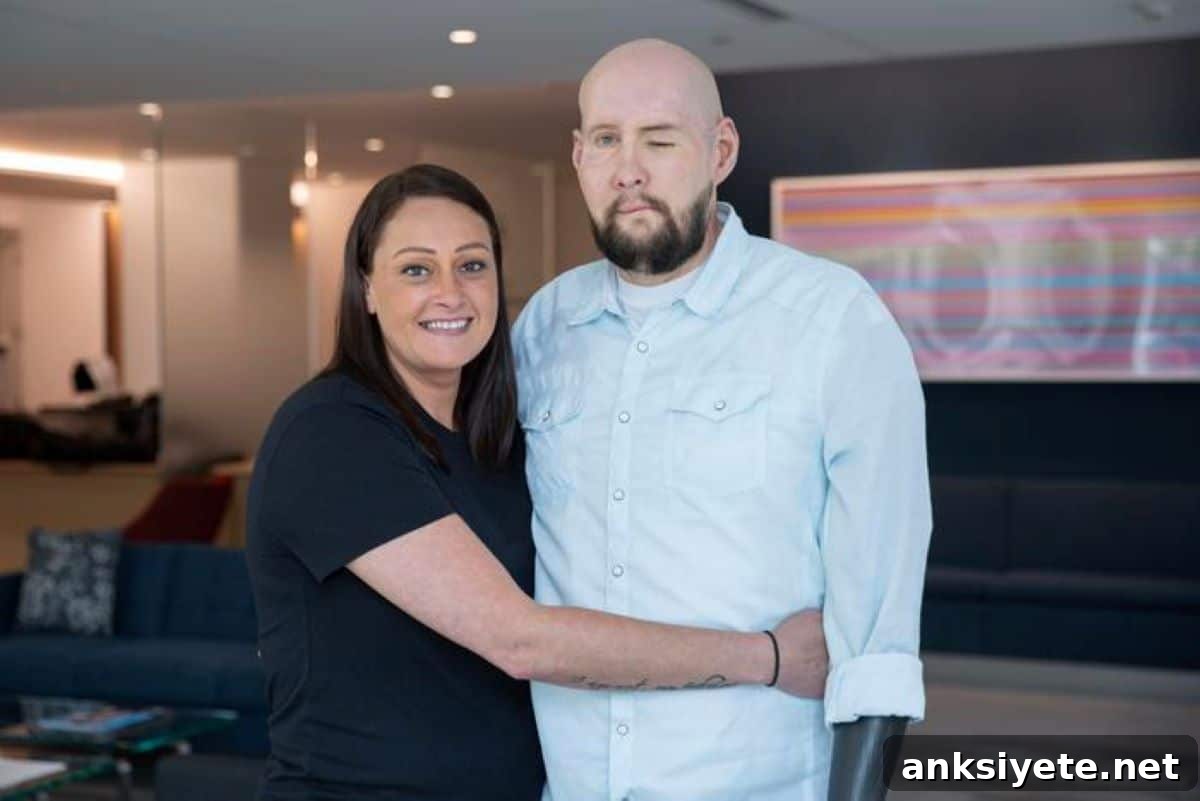
Summary: A surgical team at NYU Langone Health performed the world’s first combined face and whole-eye transplant in 2023, a milestone that advances the field of transplant surgery and vascularized composite allotransplantation (VCA). The complex operation, carried out on a military veteran with severe facial and ocular injuries, required more than 140 specialists and introduced novel microvascular techniques to restore blood flow to both the transplanted face and eye.
Using an innovative microvascular bypass approach, surgeons were able to reestablish circulation to the transplanted eye and surrounding facial tissues, ensuring tissue viability immediately after surgery. While restoring vision was not the explicit objective of this operation, the procedure demonstrates that whole-eye transplantation can be performed in conjunction with face transplant surgery and sets the stage for future research aimed at vision recovery and improved functional outcomes.
Key facts
- NYU Langone Health surgeons completed the first combined face and whole-eye transplant in 2023.
- Surgeons employed an inventive microvascular bypass technique to restore blood flow to the transplanted eye and face.
- This milestone advances the feasibility of eye transplantation and offers new directions for restoring function in complex VCA cases.
Background and significance
Vascularized composite allotransplantation differs from traditional organ transplantation because it involves multiple tissue types—skin, muscle, nerves, blood vessels and sometimes bone—transplanted together as a single functional unit. These complex grafts demand precise surgical planning and meticulous vascular reconstruction to maintain tissue viability. Demonstrating that an entire eye can be transplanted and perfused successfully alongside a full facial transplant addresses one of the major technical barriers in this field and broadens the scope of what VCA can achieve.
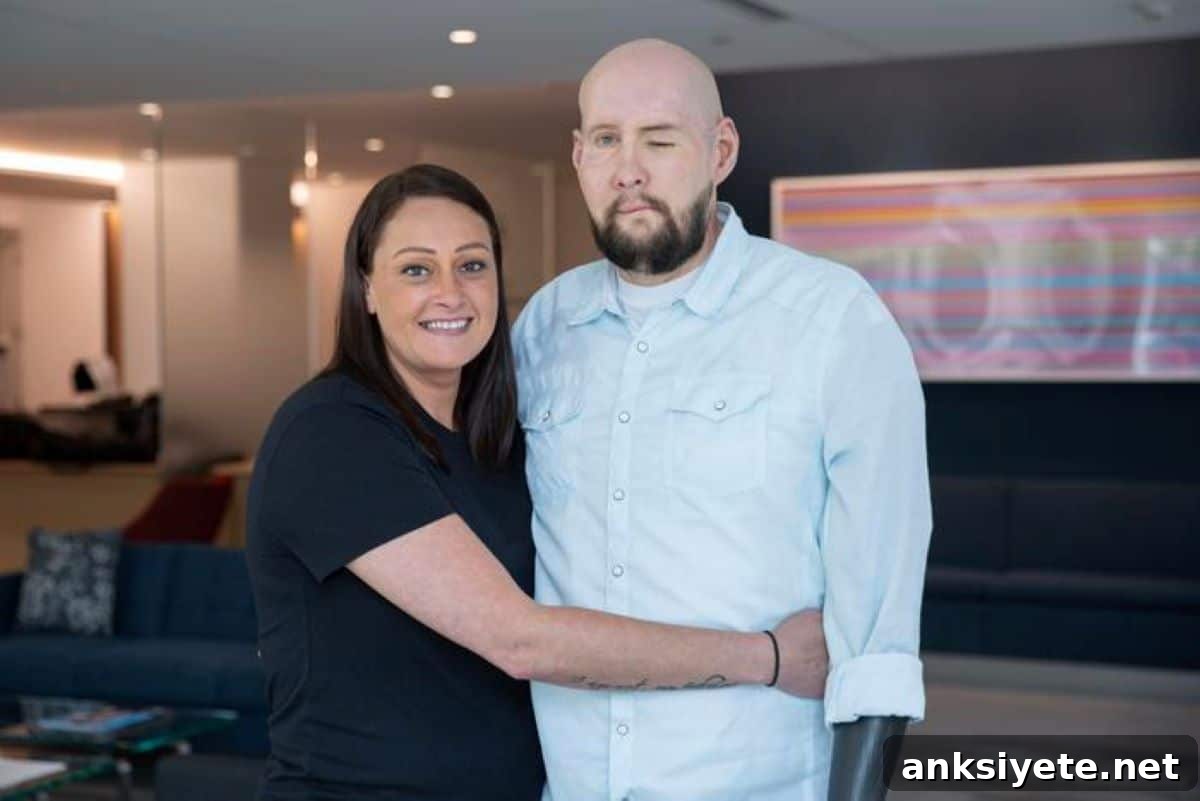
The patient and the team
The recipient, Aaron James, a 46-year-old military veteran from Arkansas, sustained extensive facial and ocular damage in a high-voltage electrical injury. The multidisciplinary effort was led by Eduardo D. Rodriguez, MD, FACS, director of the face transplant program at NYU Langone Health, and included more than 140 medical professionals from surgical, anesthetic, nursing, and rehabilitative specialties. Such a large coordinated team was essential to manage the many technical and perioperative facets of combined face and whole-eye transplantation.
Microvascular innovation
A central technical achievement was the development and application of a microvascular bypass to supply blood to the transplanted eye. Surgeons mobilized the superficial temporal artery and vein and rotated them to connect to the ophthalmic artery and vein of the grafted eye. This configuration minimized retinal ischemia—the period during which the retina is without blood supply—and restored circulation to both the face and the eye simultaneously. Postoperative perfusion tests indicated good blood flow to retinal and periocular tissues, an encouraging finding for graft survival.
Surgical achievements and outcomes
- Reduced ischemia: The bypass strategy limited the duration of interrupted blood flow to the transplanted eye, decreasing the risk of ischemic injury.
- Restored perfusion: Objective measures confirmed restored circulation to the retina and adjacent tissues after surgery.
- Precision techniques: Patient-specific cutting guides and meticulous alignment preserved delicate ocular and facial structures, supporting graft integration and function.
Clinicians emphasize that the primary goal was to secure a well-vascularized, viable eye and face graft. Although this operation did not aim to restore vision immediately, it proves that whole-eye transplantation can be integrated into comprehensive facial reconstruction workflows. This technical success opens research pathways for evaluating neural integration, long-term graft stability, immunologic considerations, and potential strategies for recovering visual function in future cases.
Bruce E. Gelb, MD, FACS, associate professor in the department of surgery at NYU Grossman School of Medicine, noted that the procedure shows whole-eye transplant feasibility when combined with sophisticated microsurgical techniques. The authors stress that careful patient counseling was part of the preoperative process; Aaron James understood that preserving a vascularized eye was the immediate objective rather than restoring sight.
Co-authors of the report include Sachin Chinta, BS; Alay Shah, MD; David Tran, MD; and Daniel J. Ceradini, MD. The authors report no disclosures.
About this neurosurgery and transplantation research news
Author: Sheila Evans
Source: American College of Surgeons
Contact: Sheila Evans – American College of Surgeons
Image credit: Haley Ricciardi/NYU Langone Health
Original research presentation: Findings will be presented at the ACS Clinical Congress 2024.