
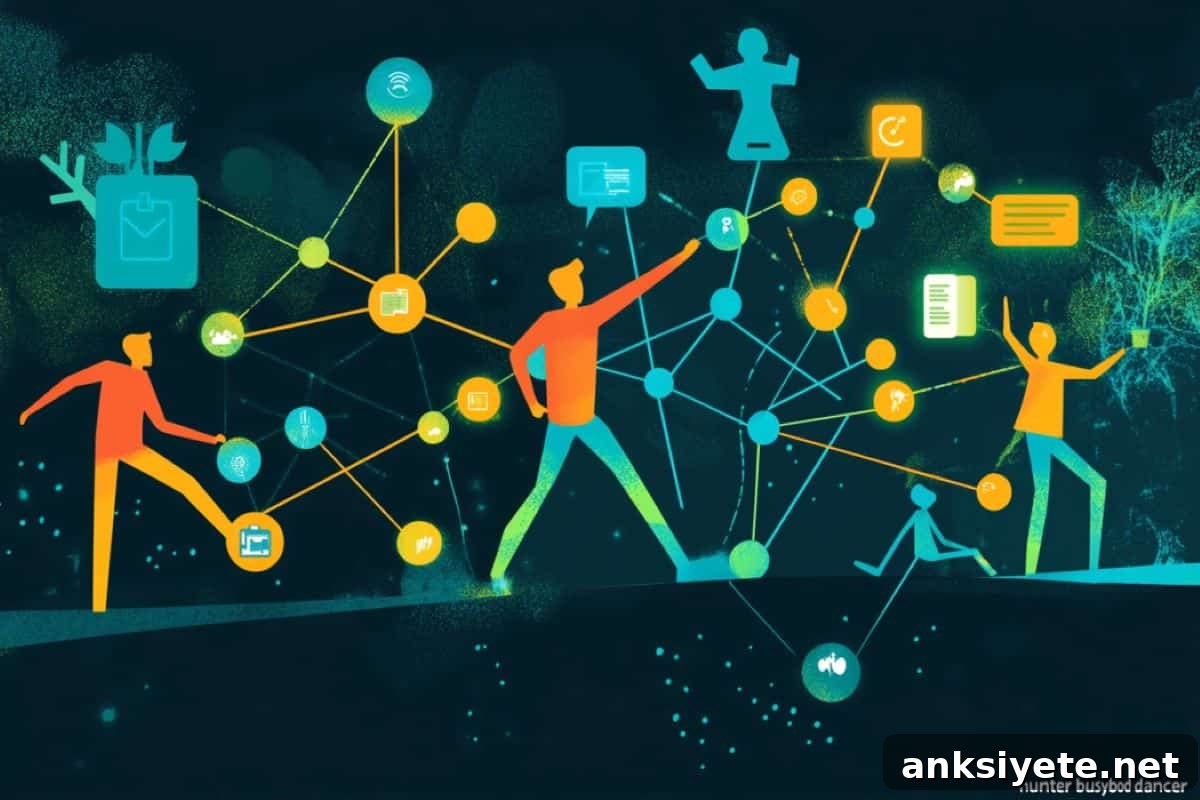
Summary: A large-scale analysis of Wikipedia browsing behavior identifies three distinct curiosity styles— the focused “hunter,” the broad-ranging “busybody,” and the creative “dancer.” Examining data from 482,760 mobile Wikipedia readers across 50 countries, researchers found that cultural and societal factors, including gender equality and education access, are associated with different browsing patterns. More egalitarian societies show a tendency toward exploratory browsing, while societies with greater inequalities show more targeted, goal-driven searches.
The research suggests these curiosity styles shape how people learn and engage with information. Understanding these patterns could inform personalized education strategies and influence how artificial intelligence systems model curiosity-driven learning.
Key Facts:
- Countries with greater gender equality and broader access to education tend to show more exploratory, “busybody” browsing behavior.
- The “dancer” style reflects creative, cross-domain connections and represents an interdisciplinary mode of information-seeking.
- Recognizing curiosity styles may help tailor educational methods and guide the design of AI systems that emulate human curiosity.
Source: University of Pennsylvania
Everyone who has fallen down a Wikipedia rabbit hole knows the experience: you start with a single fact and, before long, you’re exploring a string of related and unrelated topics. That common behavior is one of several identifiable curiosity styles the researchers describe in this study.
Dani Bassett of the University of Pennsylvania and a team of collaborators analyzed the mobile Wikipedia browsing records of 482,760 readers across 50 countries. They identified people who habitually jump between many loosely related topics—a pattern the team calls the “busybody.”
Busybody browsing is characterized by frequent transitions to new topics with little obvious connection. By contrast, the “hunter” pursues a clear goal: searching purposefully for specific facts, building a tightly connected mental model, or solving a concrete problem.
In a paper published in Science Advances, the authors report clear differences in browsing structures between countries with higher versus lower levels of educational access and gender equality. In places with greater inequality, readers tend to browse more intentionally and narrowly—more hunter-like—whereas in countries with greater equality, browsing is broader and more exploratory—more busybody-like.
“We don’t yet know the exact causes behind these differences, but the patterns are robust and suggestive,” Bassett says. “These findings can help scientists better understand the varied manifestations of curiosity across cultures.”
This international study builds on an earlier laboratory-based investigation led by David Lydon-Staley, when a small group of participants in Philadelphia browsed Wikipedia for 15 minutes a day over three weeks. That initial research revealed the hunter and busybody styles and helped the team develop methods to detect curiosity-driven navigation in larger, naturalistic datasets.
Partnering with Martin Gerlach at the Wikimedia Foundation provided access to more than two million browsing records. Applying and extending their methods allowed the researchers to detect curiosity styles across 14 language editions of Wikipedia and 50 countries or territories.
The three hunches
The team proposes three hypotheses to explain why curiosity styles vary with measures of societal equality.
First, structural inequalities—such as patriarchal systems and restricted access to knowledge—may constrain how people search for information, encouraging goal-oriented, hunter-like behaviors.
Second, the purpose of visiting Wikipedia may differ across societies. In settings with higher equality, people might use the site more for leisure or intellectual exploration, while in less egalitarian contexts users may seek targeted information for work or practical needs.
Third, demographic differences among Wikipedia users—age, gender, socioeconomic status, or educational attainment—could shape observed browsing patterns. Variation in who uses the platform may contribute to national differences in curiosity styles.
Making connections
A notable discovery in this research is the validation of a third curiosity style: the “dancer.” This style had been hypothesized by Perry Zurn through a historical and philosophical review of texts and is now observed in large-scale browsing data.
The dancer navigates information in a deliberate, creative way—making purposeful leaps that bridge disparate domains to generate new ideas. Unlike the busybody’s seemingly random exploration, the dancer’s movements reveal an underlying choreography of connections across fields.
This creative mode of discovery highlights how curiosity can be interdisciplinary and constructive. Bassett notes that recognizing different curiosity styles matters for education: assessment and teaching practices that favor one style may disadvantage learners who think differently.
“A learner with a hunter’s focused curiosity might struggle under methods optimized for busybody exploration, and vice versa,” Bassett explains. “Accounting for individual curiosity styles could make learning experiences more effective and inclusive.”
Where curiosity may lead next
The researchers plan to explore additional questions about how and why curiosity styles vary. One intriguing avenue is temporal dynamics—do people browse more hunter-like at certain times of day and more busybody-like at others?
Shubhankar Patankar, a doctoral student at Penn Engineering and coauthor, highlights the relevance of these findings to artificial intelligence. “Incorporating human-like notions of curiosity into AI systems is an active research area,” he says. Understanding the diversity of human curiosity could guide the development of AI that better supports exploration and learning.
The team also aims to distinguish intrinsic curiosity from extrinsic motivations—whether users are driven by personal interest or by external demands such as work—and to extend analyses to other digital platforms where exploration and learning occur.
“Wikipedia is a unique online environment: free of commercial advertising and aimed at open knowledge sharing,” Lydon-Staley notes. “This raises broader questions about how online design and commercial incentives shape the directions our curiosity takes outside of Wikipedia.”
Dani S. Bassett is the J. Peter Skirkanich Professor at the University of Pennsylvania, with primary appointment in Bioengineering and secondary appointments across physics, electrical and systems engineering, and medicine. Martin Gerlach is a senior research scientist at the Wikimedia Foundation. David Lydon-Staley is an assistant professor of communication at the Annenberg School for Communication, Penn. Shubhankar Patankar is a Ph.D. student at Penn Engineering. Dale Zhou is now a postdoctoral researcher at the University of California, Irvine. Perry Zurn is an associate professor of philosophy at American University.
Funding: This research was supported by the George E. Hewitt Foundation for Medical Research, the Center for Curiosity, and the National Institutes of Health (Grant K01 DA047417).
About this learning and neuroscience research news
Author: Nathi Magubane
Source: University of Pennsylvania
Contact: Nathi Magubane, University of Pennsylvania
Image: The image is credited to Neuroscience News
Original Research: Open access. “Architectural styles of curiosity in global Wikipedia mobile app readership” by Dani Bassett et al., Science Advances.
Abstract
Architectural styles of curiosity in global Wikipedia mobile app readership
Curiosity-driven information-seeking is a core human trait, but much of what we know comes from small, Western samples. This study analyzes 482,760 readers of Wikipedia’s mobile app across 14 languages and 50 countries or territories to examine naturalistic information-seeking behavior.
By mapping the knowledge networks readers build while moving through Wikipedia articles, the researchers replicate two previously identified curiosity styles—the nomadic “busybody” and the goal-directed “hunter”—and provide evidence for a third style, the creative “dancer.”
The analysis reveals global associations between the structure of these knowledge networks and population-level measures such as spatial navigation, education, mood, well-being, and inequality. These findings deepen our understanding of how cultural and geographical contexts shape different modes of curiosity in the digital age.