
Summary: Researchers report that socially contagious itching appears to be hardwired in the brain.
Source: WUSTL
Researchers discover why mice scratch in response to other mice scratching
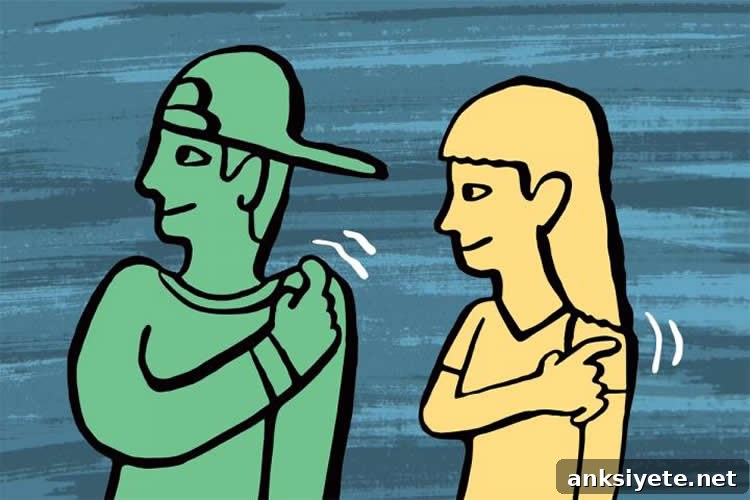
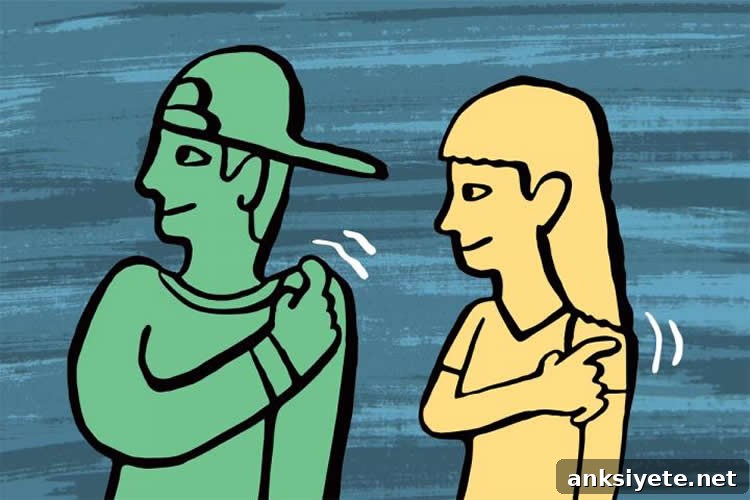
Certain actions such as yawning and scratching are socially contagious: when one individual performs them, others often follow. A team at Washington University School of Medicine in St. Louis has identified neural mechanisms that explain contagious scratching in mice, showing that the behavior is driven by a specific brain circuit rather than conscious decision or empathy.
Using behavioral experiments, the scientists showed that a mouse will begin scratching after seeing another mouse scratch. The researchers then traced the activity in the brain to identify the chemical signals and neural region responsible for this response. Their findings, published March 10 in Science, illuminate how socially contagious behaviors are transmitted and triggered in the brain.
“Itching is highly contagious,” said principal investigator Zhou-Feng Chen, PhD, director of the Washington University Center for the Study of Itch. “Sometimes even mentioning itching will make someone scratch. Many people thought it was all in the mind, but our experiments show it is a hardwired behavior and is not a form of empathy.”
In the study, a mouse was placed in an enclosure and shown a video of another mouse scratching. Within seconds, the observing mouse began to scratch as well. The researchers were initially surprised because mice are not known for strong visual acuity—they typically rely on smell and touch—yet the animals were able to see the video and recognize the scratching action.
Investigations of brain activity revealed a central role for the suprachiasmatic nucleus (SCN), a hypothalamic region better known for regulating circadian rhythms. The SCN showed elevated activity when mice observed scratching behavior, whether in the video or from nearby littermates. The researchers found that this SCN activity led to the release of gastrin-releasing peptide (GRP), a chemical messenger previously identified by Chen’s group as important for transmitting itch signals from skin to spinal cord.
To probe causality, the team used multiple approaches to block either GRP or the receptor it binds to (GRPR) within the SCN. When GRP signaling in the SCN was disrupted, mice no longer displayed contagious scratching after seeing conspecifics scratch. Importantly, these mice still responded normally to direct itch-inducing stimuli, indicating that the manipulation specifically affected the contagious component rather than general sensory-driven scratching.
Further experiments demonstrated that artificially activating the GRP-expressing neurons in the SCN could elicit scratching, while chemogenetic inhibition of these neurons prevented contagious scratching. Together, those results indicate that GRP-GRPR signaling in the SCN is both necessary and sufficient to transmit contagious itch information.
“The mouse doesn’t see another mouse scratching and then think it might need to scratch, too,” Chen explained. “Instead, its brain begins sending out itch signals using GRP as a messenger.” He emphasized that this form of contagious scratching appears to be innate and outside the animal’s voluntary control.
Chen added, “We’ve been able to show that a single chemical and a single receptor are all that’s necessary to mediate this particular behavior. The next time you scratch or yawn in response to someone else doing it, remember it’s really not a choice nor a psychological response; it’s hardwired into your brain.”
Yu YQ, Barry DM, Hao Y, Liu XT, Chen ZF. Molecular and neural basis of contagious itch behavior in mice. Science, March 10, 2017.
Funding: The work was supported by the National Institute on Drug Abuse, the National Institute of Arthritis and Musculoskeletal and Skin Diseases, and the National Institute on Neurological Disorders and Stroke of the National Institutes of Health (NIH), with grant numbers 1R01 AR056318-06, R21 NS088861-01A1, R01 NS 094344, R01 DA037261-01A1, R56 AR064292-01A1, 5T32 DA007261-23. Additional support came from a W.M. Keck Fellowship, the Hope Center Viral Vectors Core at Washington University School of Medicine, and the M.R. Bruchas Lab.
Source: Jim Dryden, Washington University School of Medicine
Molecular and neural basis of contagious itch behavior in mice
Socially contagious itch is common in humans, but whether rodents show similar behavior had been unclear. Using an untrained behavioral paradigm, researchers observed that mice scratched after watching another mouse scratch. Neural mapping revealed increased activity in the suprachiasmatic nucleus (SCN) of mice that displayed contagious scratching. Ablation of the gastrin-releasing peptide receptor (GRPR) or of GRPR-expressing neurons in the SCN abolished contagious scratching; chemogenetic inhibition of SCN GRP neurons produced the same effect. Conversely, activation of SCN GRP/GRPR neurons induced scratching. These findings demonstrate that GRP-GRPR signaling in the SCN is necessary and sufficient for transmitting contagious itch signals, with implications for understanding neural circuits that govern socially contagious behaviors.
Reference: Yao-Qing Yu, Devin M. Barry, Yan Hao, Xue-Ting Liu, and Zhou-Feng Chen. Published in Science, March 10, 2017.