
Summary: Reduced activation of the LEF1 gene is more common in people with bipolar disorder who do not respond to lithium treatment.
Source: Salk Institute
Lithium remains the clinical gold standard for stabilizing mood in bipolar disorder (BD), yet up to two-thirds of patients do not achieve full symptom remission with lithium. Researchers at the Salk Institute have identified altered gene activity—specifically reduced LEF1 expression—as a likely contributor to lithium nonresponse, and a potential biomarker and therapeutic target for treatment-resistant BD.
A study led by Salk Professor and President Rusty Gage, published in Molecular Psychiatry on January 4, 2021, demonstrates that decreased activation of the LEF1 gene disrupts normal neuronal regulation and leads to hyperexcitability in neurons, a cellular trait associated with bipolar disorder. These findings point to LEF1 and its downstream pathway as a focus for new drug development and for screening tools that could predict lithium responsiveness.
“Only about one-third of patients experience full remission of symptoms with lithium,” says Renata Santos, co-first author and Salk collaborator. “We aimed to uncover the molecular mechanisms that underlie lithium resistance. In neurons derived from nonresponders, LEF1 levels were deficient. Importantly, we were able to increase LEF1 and reactivate its target genes, indicating a viable route for therapeutic intervention.”
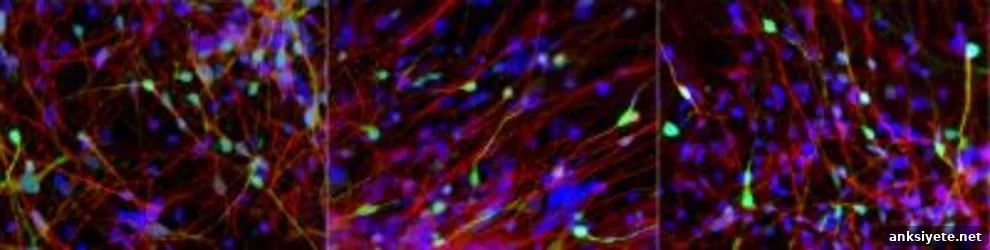
This study builds on prior observations that neurons from lithium nonresponders are larger, more easily stimulated (hyperexcitable), and exhibit altered potassium currents. Using induced pluripotent stem cell (iPSC) techniques, researchers converted blood cells from three groups—lithium responders, lithium nonresponders, and people without bipolar disorder (controls)—into dentate gyrus–like neurons. They then compared gene expression profiles and electrophysiological behavior across the groups.
Among the gene expression differences observed, LEF1 emerged as one of the most significantly reduced in nonresponder-derived neurons. LEF1 normally acts in partnership with beta-catenin to activate a transcriptional program that regulates neuronal activity through the Wnt/β-catenin signaling pathway. In neurons from control subjects and lithium responders, lithium treatment promotes beta-catenin stabilization and its interaction with LEF1, which in turn activates genes that help modulate excitability. In nonresponders, however, LEF1 expression is too low for this interaction to occur effectively, rendering lithium unable to restore normal activity levels.
The team tested valproic acid (VPA), a medication commonly prescribed to patients who do not respond to lithium, and observed that VPA increased LEF1 expression and activated downstream Wnt/β-catenin target genes. Furthermore, experimentally reducing LEF1 expression in control neurons caused those cells to become hyperexcitable, while VPA treatment reduced hyperexcitability in nonresponder neurons. These findings establish a causal link between LEF1 expression and neuronal excitability and suggest that therapies boosting LEF1 activity—or selectively activating relevant downstream genes—might overcome lithium resistance.
“Silencing LEF1 produced hyperexcitable neurons, whereas valproic acid raised LEF1 levels and reduced excitability,” says Shani Stern, co-first author and Salk visiting scientist. “This causal relationship supports LEF1 as a promising target for drug development aimed at lithium-nonresponsive bipolar disorder.”
Beyond treatment development, LEF1 also holds promise as a biomarker to predict lithium responsiveness. Currently, clinicians must observe a full course of lithium therapy, which can take many months to a year, to determine if a patient will respond. Measuring LEF1 activity in patient-derived cells could provide a faster, more personalized way to guide treatment decisions and avoid prolonged ineffective therapy.
The research team plans follow-up studies to broaden understanding of BD-related neural circuitry and identify additional therapeutic strategies. Next steps include examining other brain cell types such as astrocytes and GABAergic neurons, screening for further genes that could help nonresponders, and searching for drugs that selectively upregulate LEF1 or its relevant downstream targets. As Carol Marchetto, co-corresponding author and Salk collaborator, notes: “LEF1 functions vary across tissues, so therapeutic approaches must be targeted—either activating LEF1 in specific cell types or focusing on downstream genes critical for lithium nonresponse.”
Other authors on the study include Sara B. Linker, Ana P. D. Mendes, Lynne Randolph-Moore, Vipula Racha, Yeni Kim, Maxim N. Shokhirev, and Galina Erikson of Salk; John R. Kelsoe of the University of California San Diego; Anne G. Bang of the Sanford Burnham Prebys Medical Discovery Institute; and M. Alda of Dalhousie University.
Funding: This work was supported by the National Institutes of Health, the Chapman Foundation and the Helmsley Charitable Trust, the National Cancer Institute, the National Cooperative Reprogrammed Cell Research Groups, the JPB Foundation, Annette C. Merle-Smith, the Robert and Mary Jane Engman Foundation, and the Zuckerman STEM Leadership Program.
About this bipolar disorder research news
Source: Salk Institute
Contact: Salk Communications – Salk Institute
Image: The image is credited to the Salk Institute.
Original Research: Closed access. “Deficient LEF1 expression is associated with lithium resistance and hyperexcitability in neurons derived from bipolar disorder patients” by Renata Santos, Sara B. Linker, Shani Stern, Ana P. D. Mendes, Maxim N. Shokhirev, Galina Erikson, Lynne Randolph-Moore, Vipula Racha, Yeni Kim, John R. Kelsoe, Anne G. Bang, M. Alda, Maria C. Marchetto & Fred H. Gage. Molecular Psychiatry
Abstract
Deficient LEF1 expression is associated with lithium resistance and hyperexcitability in neurons derived from bipolar disorder patients
Bipolar disorder (BD) affects about 2% of the global population and is characterized by alternating depressive and manic episodes. Lithium is a first-line long-term mood stabilizer, but only a subset of patients benefit. Using iPSC-derived dentate gyrus–like neurons from lithium-responsive (LR) and lithium-nonresponsive (NR) patients, prior work showed neuronal hyperexcitability that lithium reversed only in LR neurons. This study identifies specific molecular differences in NR neurons: pronounced impairment of the Wnt/β-catenin signaling pathway, including significantly reduced LEF1 expression. Lithium acts upstream by inhibiting GSK-3β, allowing β-catenin to form a nuclear complex with TCF/LEF1 that activates Wnt target genes. Reduced LEF1 may therefore explain lithium resistance in NR neurons. Treatment with valproic acid (VPA), which acts downstream of GSK-3β, upregulated LEF1 and Wnt/β-catenin targets, increased β-catenin/TCF/LEF1 transcriptional activity, and lowered neuronal excitability in NR neurons. Conversely, knocking down LEF1 in control neurons induced hyperexcitability, supporting a causal role for LEF1 in regulating neuronal activity. These results suggest LEF1 is a promising target for developing new treatments and predictive tools for bipolar disorder.