
Individual differences in pain perception may be linked to brain structure.
A study published in the journal Pain by researchers at Wake Forest Baptist Medical Center reports a clear relationship between brain anatomy and how intensely people experience pain. The research suggests that variations in grey matter volume in specific brain regions correspond with individual differences in pain sensitivity.
“We found that individual differences in the amount of grey matter in certain regions of the brain are related to how sensitive different people are to pain,” said Robert Coghill, Ph.D., professor of neurobiology and anatomy at Wake Forest Baptist and senior author of the study.
The human brain contains both grey matter, which primarily processes information, and white matter, which supports communication between regions. This study focused on grey matter anatomy and its association with pain sensitivity measured in healthy volunteers.
Researchers tested 116 healthy participants to evaluate pain sensitivity. Each participant rated the intensity of pain when a small area of skin on the arm or leg was heated to 120 degrees Fahrenheit. Following the sensory testing, participants underwent MRI scans to capture detailed images of brain structure and quantify grey matter volume across regions.
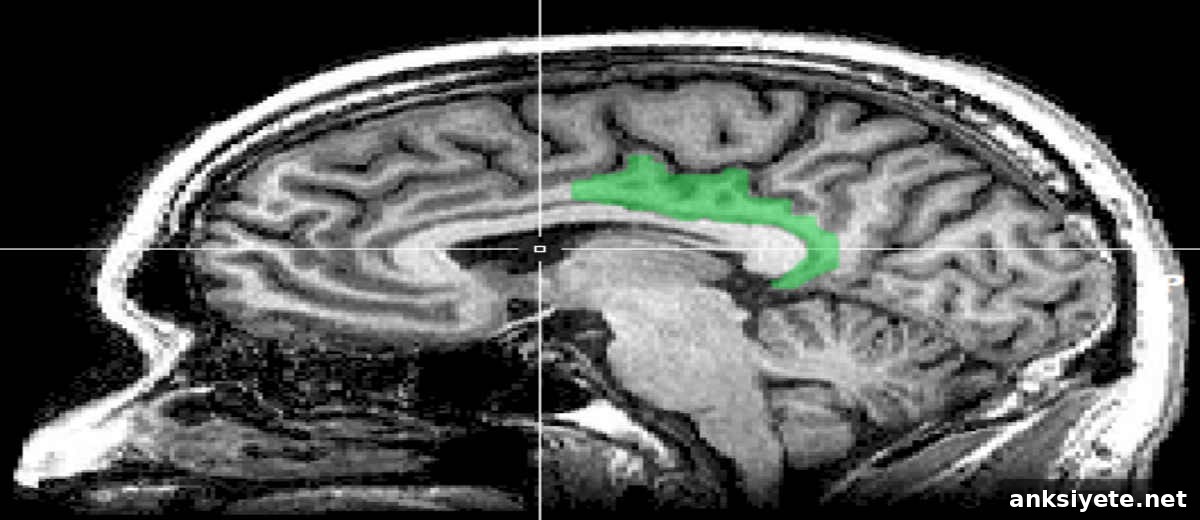
Nichole Emerson, B.S., a graduate student in the Coghill lab and first author of the study, summarized the main result: “Subjects with higher pain intensity ratings had less grey matter in brain regions that contribute to internal thoughts and control of attention.” Those key regions included the posterior cingulate cortex, the precuneus and portions of the posterior parietal cortex.
The posterior cingulate cortex and precuneus are central nodes of the default mode network (DMN), a set of interconnected regions active during internally focused thought such as daydreaming, mind-wandering and self-referential processing. The study’s findings suggest that the structure of DMN regions may influence how the brain prioritizes internal vs. external information, including painful stimuli.
“Default mode activity may compete with brain activity that generates an experience of pain, such that individuals with high default mode activity would have reduced sensitivity to pain,” Coghill explained. In other words, greater structural capacity in DMN regions could support stronger internally directed processing that attenuates the brain’s pain response.
Regions in the posterior parietal cortex are strongly involved in attention and the allocation of mental resources. The authors note that people better able to maintain focused attention may also be better at limiting how much pain they experience. Structural differences in these attention-related areas may therefore influence an individual’s ability to modulate pain.
Beyond identifying correlations between grey matter and pain sensitivity, the researchers emphasize the clinical potential of these structural markers. “These kinds of structural differences can provide a foundation for the development of better tools for the diagnosis, classification, treatment and even prevention of pain,” Coghill said. Detecting anatomical differences could eventually help guide personalized pain management strategies.
Study funding and contributors
The study was supported by the National Institutes of Health (grants NS039426 and DA020168) and by the U.S.-Israel Binational Science Foundation (grant 2009097).
Co-authors of the study include Fadel Zeidan, Ph.D.; Oleg Lobanov, Ph.D.; Morten Hadsel, Ph.D.; Katherine Martucci, Ph.D.; Alexandre Quevedo, Ph.D.; and Christopher Starr, Ph.D., all of Wake Forest Baptist; Hadas Nahman-Averbuch, M.S.; Yelena Granovsky, Ph.D.; and David Yarnitsky, Ph.D., of the Technion Faculty of Medicine, Haifa, Israel; and Irit Weissman-Fogel, Ph.D., of the University of Haifa.
Contact and source information
Contact: Marguerite Beck – Wake Forest Baptist Medical Center
Source: Wake Forest Baptist Medical Center press release
Image credit: Geoff B Hall (public domain)
Original research: Abstract for “From cue to meaning: Brain mechanisms supporting the construction of expectations of pain” by Oleg V. Lobanov, Fadel Zeidan, John G. McHaffie, Robert A. Kraft, and Robert C. Coghill in Pain. Published online September 19, 2013. DOI: 10.1016/j.pain.2013.09.014
#neurology, #pain