
Summary: A new study investigates how professional musicians prioritize visual (sight-reading) versus auditory (playing by ear) information when learning new music and how those priorities shape their practice and memory strategies.
Source: Acoustical Society of America.
Musicians’ brains may be classifiable by how they prioritize sight versus sound when learning new pieces.
Playing an instrument engages the brain in a complex, parallel process: reading notation, planning musical interpretation, locating keys or strings, coordinating finger and foot movements, and adjusting tone and dynamics in real time. Within these tasks, individual musicians emphasize different information channels. Some rely primarily on visual cues from the score (sight readers), while others depend on auditory cues and internalized sound (playing by ear). New research presented by Eriko Aiba from the University of Electro-Communications explores whether these observable differences reflect distinct brain strategies.
Aiba’s interest in the topic stems from long experience with the piano and a simple observation: professional musicians vary in the cognitive strategies they use. At the 172nd Meeting of the Acoustical Society of America, she presented findings that probe how visual and auditory modalities are prioritized during music learning and performance.
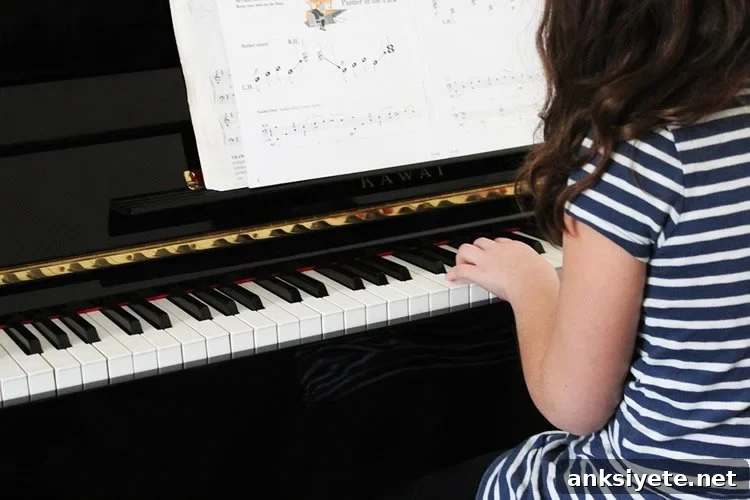
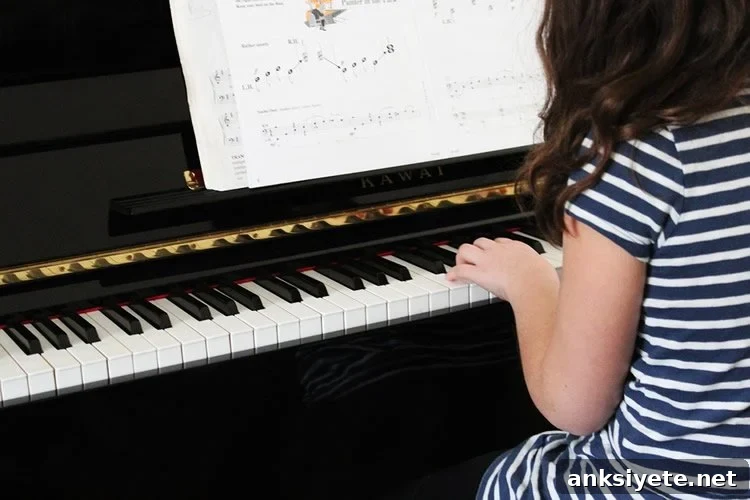
Her work highlights how demanding musical performance is for the human brain. For a pianist, reading a score is only one part of the task. The performer must simultaneously plan phrasing and dynamics, search the keyboard for notes, coordinate fingerings, control pedal use, and adjust touch to shape tone. That combination of sensory input, motor planning, and auditory feedback creates a highly integrated processing challenge that professional musicians repeatedly meet through practice and specialized strategies.
One clear result from Aiba’s tests is the strong link between the ability to play by ear and rapid memorization. In controlled practice sessions, some pianists who relied primarily on auditory information were able to memorize nearly two pages of complex music after a brief, 20-minute practice interval. This suggests auditory memory and internal sonic representation can support fast, robust encoding of musical structure following short-term practice.
At the same time, Aiba emphasizes that each musician develops an individualized approach. Even when several pianists appear to play the same piece in a similar way, their internal strategies can differ. Some combine visual and motor cues, others combine auditory and motor cues, and some rely mainly on visual or auditory channels. Despite these individual differences, many musicians share common elements in how they integrate sensory, motor, and memory processes.
Beyond pianists and musicians, these findings have broader implications for how experts in other domains acquire and retain complex skills. Professions that demand intensive, daily practice—such as sports, surgery, or language instruction—also require high levels of sensory-motor integration and modality prioritization. Understanding individual differences in modality preferences could improve how training programs are designed for diverse learners.
Aiba points out that identifying and validating individual differences scientifically is challenging. Simple observation that “strategies vary by individual” is not enough; rigorous testing is needed to categorize learners based on how they weigh visual and auditory information. Her research proposes that professional musicians can be grouped by their modality prioritization—whether they primarily rely on visual processing, auditory processing, or an integrated multimodal approach.
The implications extend to language learning as well. Some language learners benefit from saying phrases aloud repeatedly—combining auditory input with motor practice—while others memorize written forms through repeated writing, coupling visual and motor systems. Others prefer silent reading, which relies more on visual processing. All are learning the same content, but their brains process and encode information differently depending on the strategy that best suits them.
Future work will aim to map these modality-based strategies more precisely and reveal how the brain selects and refines the most efficient approach for an individual. Understanding these mechanisms could lead to personalized training methods for music, language, and other skilled activities, improving learning efficiency by matching instruction to each person’s cognitive strengths.
Source: Acoustical Society of America.
Image credit: NeuroscienceNews.com image used for illustrative purposes.
Original research presentation: The findings were presented at the 172nd Meeting of the Acoustical Society of America in Honolulu, Hawaii.
Acoustical Society of America. “How Do Musicians’ Brains Work While They Play?” NeuroscienceNews. December 4, 2016. (Original presentation at the 172nd Meeting of the Acoustical Society of America.)