
Memories are difficult to form, often fragile, and influenced by many factors—including changes in different classes of nerve cells. In the common fruit fly, a widely used model for studying human memory, these changes occur across multiple regions of the brain.
Researchers at the Florida campus of The Scripps Research Institute (TSRI) have identified a specific subset of neurons where certain forms of memory are encoded. This more precise mapping of memory-associated cells could eventually help scientists pinpoint disease-affected neurons in the human brain with comparable specificity.
“What we found is that while many neurons respond to sensory input, only a distinct subclass actually encodes the memory,” said Seth Tomchik, a TSRI biologist who led the study, published online March 27, 2014, in the journal Current Biology.
The team focused on dopaminergic neurons—cells that respond to the neurotransmitter dopamine. Dopaminergic neurons play roles in a variety of behaviors and processes that include learning, motivation, addiction and metabolic regulation. To study memory formation, the researchers observed how large groups of these neurons reacted when an odor was paired with an aversive stimulus, such as a mild electric shock.
Using imaging methods to monitor live flies, the scientists tracked changes in neuronal activity and the dynamics of intracellular signaling molecules. This approach allowed them to map activation patterns across the brain and to detect learning-related plasticity—the cellular changes that constitute memory traces.
The investigators discovered that memory-encoding neurons showed distinctive responses in levels of a key cellular messenger, cyclic adenosine monophosphate (cAMP). cAMP is critical for many biological processes and is known to be involved in several neuropsychiatric and neurodegenerative conditions. Dysregulation of cAMP signaling has been implicated in disorders such as bipolar disorder and schizophrenia and may contribute to cognitive symptoms observed in Alzheimer’s disease and neurofibromatosis type I.
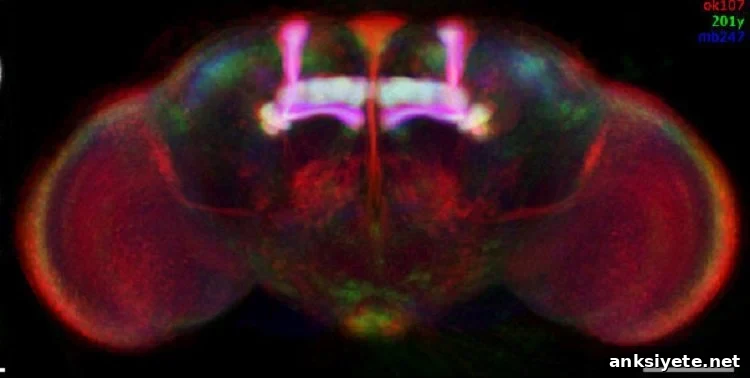
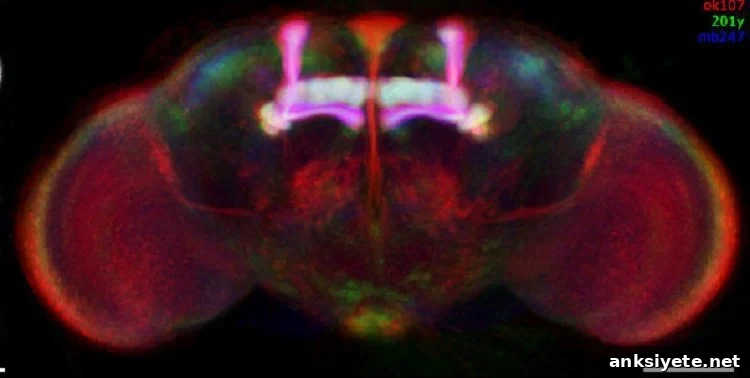
Importantly, the study highlights a precise anatomical location within the fly brain where memory-related cAMP signals are especially prominent: a lobe of the mushroom body, a brain structure essential for olfactory learning in insects. Because olfactory memory formation in fruit flies shares many fundamental features with memory processes in mammals, identifying both the cellular and regional specificity of memory encoding in flies provides a powerful framework for studying similar mechanisms in higher organisms.
“We have a clear model in these two classes of neurons—one that encodes memory and one that does not,” Tomchik explained. “Now we know exactly where memory formation occurs, which tells us where to look to understand how disease may disrupt those signals.”
Tamara Boto, the first author of the study and a member of Tomchik’s laboratory, added, “We know where the critical changes occur, but we don’t yet understand why only these subsets of neurons are affected. Determining the mechanism that makes these neurons uniquely sensitive is the next step.”
Authors of the study, “Dopaminergic Modulation of cAMP Drives Nonlinear Plasticity Across the Drosophila Mushroom Body Lobes,” include Tamara Boto, Thierry Louis, Kantiya Jindachomthong and Seth M. Tomchik of TSRI, and Kees Jalink of The Netherlands Cancer Institute, Amsterdam.
The research was supported by the National Institutes of Health (grant MH092294).
Contact: Office of Communications – Scripps Research Institute
Source: Scripps Research Institute press release
Image Source: Image credited to Jenett A, Schindelin JE, Heisenberg M./BioMed Central (illustrative, not directly tied to this study).
Original Research: Abstract for “Dopaminergic Modulation of cAMP Drives Nonlinear Plasticity Across the Drosophila Mushroom Body Lobes,” by Tamara Boto, Thierry Louis, Kantiya Jindachomthong, Kees Jalink, and Seth M. Tomchik in Current Biology. Published online March 27, 2014 (doi: 10.1016/j.cub.2014.03.021).