
Summary: New study uncovers how the autism-associated gene Cullin 3 (Cul3) influences early brain development and neuronal migration in mouse models.
Source: IST Austria
Autism spectrum disorder (ASD) affects millions across Europe and worldwide. Symptoms range from mild challenges in social interaction to severe disabilities, but most forms share difficulties in communication, social behavior, and repetitive actions.
Genetic studies have linked hundreds of genes to ASD. Among the highest-risk genes is Cullin 3 (Cul3): loss-of-function mutations in this gene are strongly associated with neurodevelopmental disorders. To clarify how Cul3 contributes to brain development and ASD-related traits, researchers led by Professor Gaia Novarino examined mice with partial Cul3 loss and compared them to littermate controls.
The team—including PhD students Jasmin Morandell and Lena Schwarz—published their findings in Nature Communications. Using behavioral, motor, cellular, and molecular analyses, they asked whether Cul3-deficient mice reproduce features relevant to ASD and what molecular mechanisms drive those changes.
Behaviorally, Cul3 haploinsufficient mice showed deficits in social recognition and motor coordination. In the three-chamber sociability test—a common assay for social preference—a control mouse typically explores a novel unfamiliar mouse more than a familiar one. Mice with reduced Cul3 expression did not show this preference, indicating impaired social recognition. They also displayed coordination problems and other cognitive deficits that parallel aspects of ASD, validating the mouse as a useful model to study Cul3-related pathology.
Disrupted Neuronal Migration and Cortical Organization
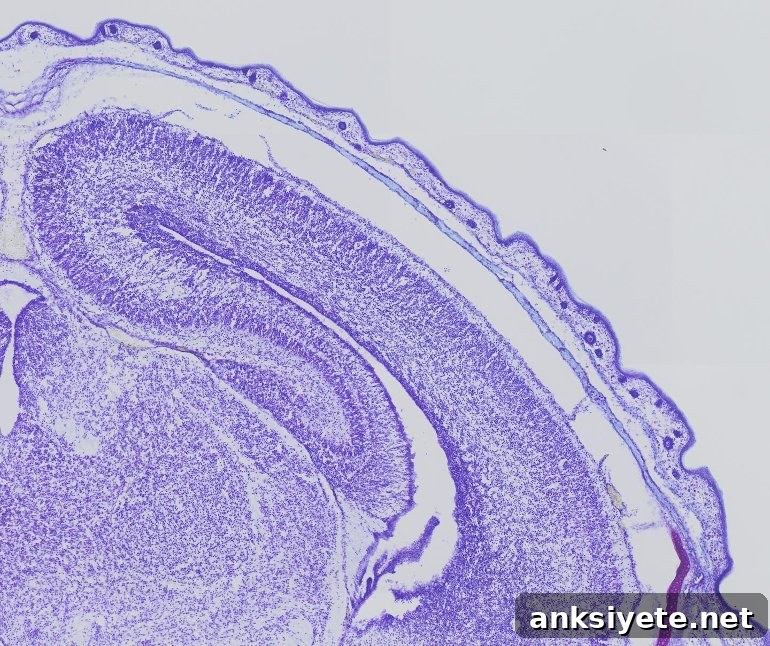
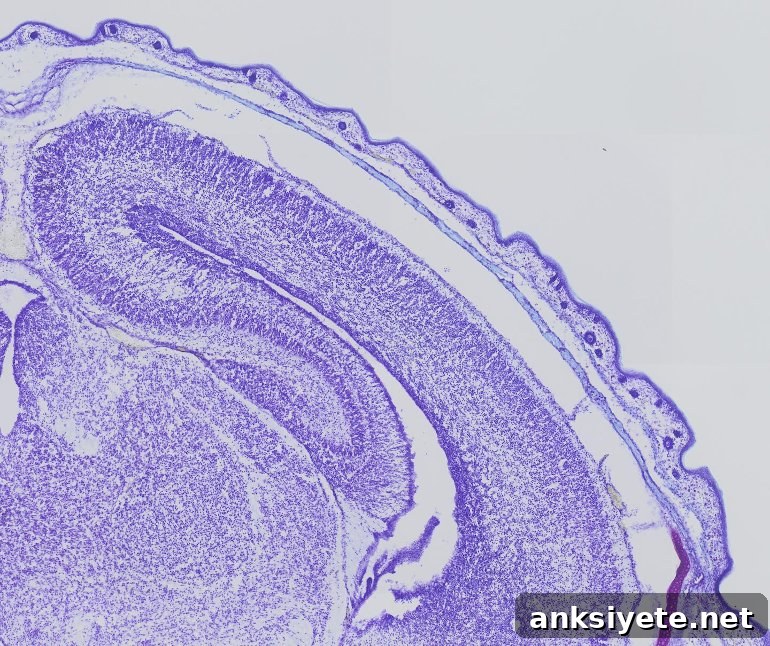
Examining brains from these mice, the researchers detected subtle but consistent abnormalities in cortical layering. Neurons born in specific embryonic zones normally migrate outward to settle in upper cortical layers in a tightly timed process. When neuronal migration is slowed or disrupted, cortical lamination changes and circuit formation can be affected.
By labeling migrating neurons during development, the team observed that many neurons stalled in lower cortical layers instead of reaching their intended destinations. These migration defects offered a cellular explanation for the observed cortical malformations and functional impairments.
Proteostasis: Plastin 3 Accumulates When Cul3 Is Defective
Cul3 is part of the cellular machinery that tags proteins for degradation, maintaining protein homeostasis. When Cul3 function is compromised, proteins that should be degraded can accumulate and disrupt cellular processes. To identify such proteins, the researchers profiled protein composition in the developing mutant brain.
They found that Plastin 3 (Pls3) accumulated in Cul3-deficient brains. Plastin 3 had not previously been implicated in neuronal migration. Independent work at IST Austria on Plastin 3 and cell motility provided complementary evidence, prompting collaboration among groups to explore this link further.
Functional experiments showed that excess Plastin 3 slows neuron movement and shortens migration distance by altering actin cytoskeleton organization. In other words, Cul3 normally limits Plastin 3 levels to ensure neurons migrate at appropriate speed. When Cul3 is reduced, elevated Plastin 3 impairs migration and contributes to cortical layering defects observed in the mutant mice.
Timing Matters: A Critical Developmental Window
These molecular and cellular events occur during an early, prenatal stage of brain development—around mid-gestation in mice—long before clinical signs would be apparent. The study highlights a critical temporal window in which Cul3-dependent regulation of protein homeostasis shapes neuronal migration and cortical structure. Identifying such windows can be essential for designing targeted interventions for specific genetic forms of ASD.
The researchers suggest that therapies aimed at preventing Plastin 3 accumulation or restoring balanced protein degradation might help alleviate some symptoms linked to Cul3-related ASD. Supporting this idea, the study shows that increasing expression from the intact Cul3 allele in vitro can rescue cellular phenotypes associated with gene haploinsufficiency, providing a proof of concept for potential therapeutic approaches.
Following the study, team members plan to expand their work: Jasmin Morandell may apply her expertise in brain development to Huntington’s disease research, while Lena Schwarz will investigate additional high-risk ASD genes to map how other components of the protein degradation pathway contribute to neurodevelopmental risk. The project combined expertise from the Novarino, Danzl, and Schur groups and collaborators from the University of Rome.
Completing this multidisciplinary study in roughly two and a half years, despite the challenges of the pandemic, reflects the collaborative environment at IST Austria, the authors note.
About this genetics research news
Source: IST Austria
Contact: Patrick Müller – IST Austria
Image: The image is credited to IST Austria
Original Research: Open access. “Cul3 regulates cytoskeleton protein homeostasis and cell migration during a critical window of brain development” by Jasmin Morandell, Lena A. Schwarz, Bernadette Basilico, Saren Tasciyan, Georgi Dimchev, Armel Nicolas, Christoph Sommer, Caroline Kreuzinger, Christoph P. Dotter, Lisa S. Knaus, Zoe Dobler, Emanuele Cacci, Florian K. M. Schur, Johann G. Danzl & Gaia Novarino. Nature Communications.
Abstract
Cul3 regulates cytoskeleton protein homeostasis and cell migration during a critical window of brain development
De novo loss-of-function mutations in the ubiquitin ligase-encoding gene Cullin3 (CUL3) lead to autism spectrum disorder (ASD). In mice, constitutive Cul3 haploinsufficiency causes motor coordination deficits plus ASD-relevant social and cognitive impairments. Inducing Cul3 haploinsufficiency later in life does not produce these behaviors, indicating an essential role for Cul3 during an early developmental window.
This study shows that Cul3 is required for proper neuronal migration and that constitutive heterozygous mutant mice display abnormalities in cortical lamination. At the molecular level, Cul3 controls neuronal migration by tightly regulating Plastin 3 (Pls3) levels, a previously unrecognized regulator of neural migration.
Pls3 directly influences actin cytoskeleton organization and cell-intrinsic migration speed: higher Pls3 levels correlate with slower migration. The authors also demonstrate that transcriptional activation of the intact allele can rescue cellular phenotypes in vitro, offering a potential therapeutic proof of concept for ASDs linked to gene haploinsufficiency.