
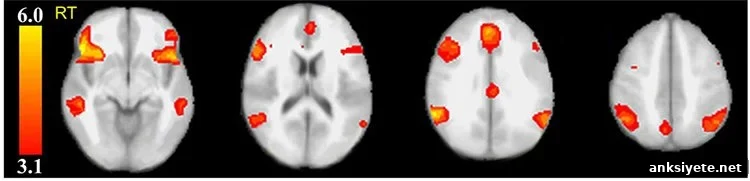
Summary: A new controlled study finds that functional magnetic resonance imaging (fMRI) detects deception more reliably than the traditional polygraph.
Source: University of Pennsylvania
fMRI Outperforms Polygraph in First Controlled Comparison of the Two Methods
Researchers at the Perelman School of Medicine, University of Pennsylvania, report new evidence that brain imaging with fMRI can be more accurate than the conventional polygraph at detecting lies. Published in the Journal of Clinical Psychiatry, the study directly compared the two approaches in the same volunteers under blinded, prospective conditions, providing a rigorous head-to-head assessment of fMRI-based and polygraph-based lie detection.
Decades of neuroimaging research have shown that attempts to deceive engage brain regions involved in decision-making and cognitive control. Those activations can be detected and mapped by fMRI, whereas the polygraph measures peripheral physiological responses—skin conductance, heart rate, and respiration—on the assumption that these signals spike when a person lies. Laboratory studies had previously shown fMRI detecting deception with high accuracy in some settings, while estimates of polygraph accuracy vary widely. This Penn study is notable because it evaluates both technologies within the same individuals using a standardized concealed information protocol and blinded expert review.
The study used the Concealed Information Test (CIT), a well-established experimental paradigm sometimes called the Guilty Knowledge Test. In the CIT, carefully framed questions include items with known correct answers and one item that the participant has secretly chosen. Physiological or neural responses to those items are analyzed to spot which answer is associated with concealment or deception.
Twenty-eight participants took part. Each person secretly wrote down a number between three and eight, then completed two CIT sessions: one inside an MRI scanner and one connected to a five-channel polygraph system. The order of the sessions was counterbalanced and separated by a few hours. During both sessions, participants were instructed to deny owning any of the numbers, so that one of the six answers functioned as a lie in each test.
Data from each session were preprocessed and evaluated independently by experts: three neuroimaging specialists reviewed the fMRI results, and three experienced polygraph examiners reviewed the polygraph recordings. Reviewers were blind to the correct answers. Their independent determinations were then compared to identify which modality was more likely to reveal the concealed number.
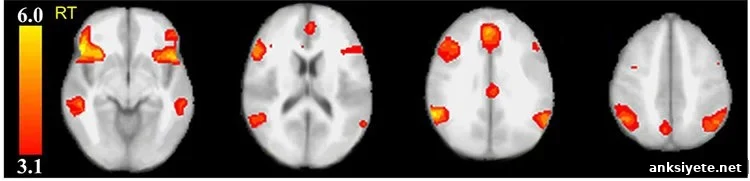
Overall, neuroimaging experts using fMRI data were 24 percent more likely to identify the concealed number correctly than the polygraph examiners. The paper gives concrete examples: in one case the fMRI showed clear increased activation when the participant who had selected the number seven was asked about it, whereas the polygraph readings led examiners to incorrectly single out the number six based on repeated peaks in peripheral responses. The reverse also occurred in other individual cases, illustrating that neither method is perfect for every subject or every trial, but the aggregate results favored fMRI.
Another notable finding was that when both modalities agreed on the concealed number—cases in which two out of three raters in each modality selected the same answer—the result was always correct in the sample. In the 17 instances where fMRI and polygraph determinations matched, accuracy reached 100 percent. The authors caution that this observation suggests a potential complementary use of the two methods but requires experimental confirmation, as the study was not designed to evaluate sequential or combined testing strategies.
Lead author Daniel D. Langleben, MD, professor of Psychiatry, noted the theoretical advantage of brain imaging: “Polygraph measures reflect complex activity of the peripheral nervous system that is reduced to only a few parameters, while fMRI examines thousands of brain clusters with higher resolution in both space and time. While neither pattern of activity is unique to lying, we expected brain activity to be a more specific marker, and our results support that expectation.”
The study was conducted between July 2008 and August 2009 and involved collaborators from Penn’s departments of Psychiatry and Biostatistics and Epidemiology. Co-authors include Ruben C. Gur, PhD; Warren B. Bilker, PhD; Jonathan G. Hakun, PhD; David Seelig, VMD; An-Li Wang, PhD; and Kosha Ruparel, MS. Funding came from the U.S. Army Research Office, No Lie MRI, Inc., and the University of Pennsylvania Center for MRI and Spectroscopy.
Although polygraphy remains the only broadly used biological lie detection method in practice, it is frequently excluded as legal evidence in many jurisdictions and has long been controversial. The new data do not resolve whether fMRI will ever become an accepted forensic tool, but they do justify further study of neuroimaging’s potential role in investigative and legal contexts.
Abstract (condensed)
Objective: Intentional deception has significant social, legal, and clinical consequences. Recent fMRI studies have mapped brain activation patterns associated with deception, but polygraphy remains the primary biological method used in practice. This blind, prospective, within-subjects study compared fMRI and polygraphy for detecting concealed information.
Method: Twenty-eight participants chose a number between three and eight and completed counterbalanced CIT sessions with fMRI and polygraph recording. Three fMRI experts and three polygraph experts independently reviewed the preprocessed data and made blind determinations about the concealed number.
Results: Logistic regression showed that fMRI experts were 24% more likely to detect the concealed number than polygraph experts (relative risk = 1.24, P < .001). When two of three raters agreed within a modality and both modalities concurred (N = 17), combined accuracy was 100% in this sample.
Conclusions: The findings support further evaluation of fMRI as a potential alternative or adjunct to polygraphy. Sequential or combined use of psychophysiological and neuroimaging methods warrants additional investigation.
Article reporting: Adam Phillips, University of Pennsylvania. Image credited to University of Pennsylvania. Original research published in the Journal of Clinical Psychiatry (October 2016) under the title “Polygraphy and Functional Magnetic Resonance Imaging in Lie Detection: A Controlled Blind Comparison Using the Concealed Information Test” by Daniel D. Langleben et al.