
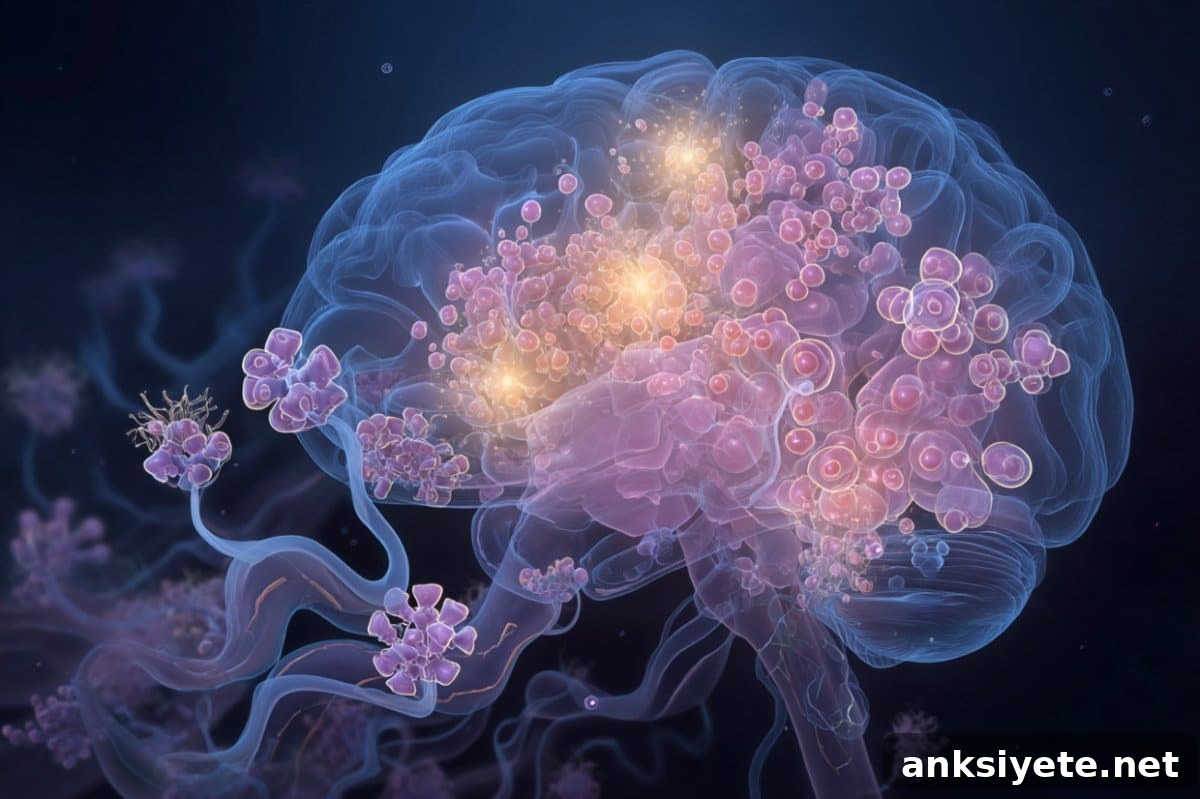
Summary: A new study from Tufts University indicates that overgrowth of the common gut fungus Candida albicans can change the brain’s dopamine reward circuitry and influence alcohol-related behavior. The researchers report that expanding fungal populations increase levels of the inflammatory molecule prostaglandin E2 (PGE2), which can reach the brain and alter dopamine signaling in the dorsal striatum — a key area for reward and habit formation.
Contrary to the researchers’ expectations, mice with elevated fungal colonization showed reduced alcohol consumption. Blocking PGE2 signaling reversed that avoidance, restoring alcohol intake. These results highlight an unexpected fungal contribution to the gut–brain axis and suggest a potential biological target for treating alcohol use disorder (AUD).
Key Facts:
- Fungal–brain connection: Overgrowth of Candida albicans raises PGE2 levels that influence dopamine pathways associated with alcohol reward.
- Reversible behavior: In mice, blocking PGE2 receptors restored alcohol preference, demonstrating a direct gut-to-brain signaling mechanism.
- Potential treatments: Understanding how fungal imbalance and PGE2 affect dopamine signaling could point to new strategies for addressing alcohol use disorder.
Source: Tufts University
Overview of the study
Researchers at Tufts University School of Medicine and Tufts Graduate School of Biomedical Sciences examined how blooms of the commensal yeast Candida albicans affect alcohol preference and brain signaling in mice. Their findings, published October 16 in the journal mBio, identify a mechanism in which fungal overgrowth elevates prostaglandin E2 (PGE2) levels in the bloodstream. PGE2 is an inflammatory mediator that can cross the blood–brain barrier and influence neural circuits involved in reward and learning.
PGE2 performs multiple roles in the body, including mediating inflammation and fever responses. In the context of gut fungal blooms — which can occur after antibiotic treatment, poor diet, or chronic alcohol use — the fungus either produces PGE2 directly or stimulates host production of the molecule. As circulating PGE2 reaches the forebrain, it alters dopamine signaling in the dorsal striatum, a region central to habit formation and reward evaluation.
Based on this biology, the team predicted that fungal colonization would make alcohol taste or feel more rewarding and increase drinking behavior. Instead, colonized mice displayed reduced ethanol consumption and an aversion to alcohol. When the investigators administered antagonists that block PGE2 receptors, the mice’s alcohol preference returned, indicating that PGE2 signaling was driving the change in behavior.
The researchers also observed altered expression of dopamine receptor genes in the dorsal striatum of colonized animals and faster development of ethanol-conditioned taste aversion, suggesting that fungal-driven PGE2 signaling modifies reinforcement and aversion learning related to alcohol. Additionally, mice with C. albicans overgrowth were more sensitive to alcohol’s effects on motor coordination; this sensitivity was likewise reversible when PGE2 activity was inhibited.
Author perspectives
“Our study shows how science works — our initial ideas were very wrong,” said first author Andrew Day, who conducted the work while a Ph.D. student in the Molecular Microbiology program. The unexpected results may reflect differences between mouse and human responses to C. albicans, variation among fungal strains, or that the study captures only part of a more complex interaction.
Senior author Carol Kumamoto, professor of molecular biology and microbiology, emphasized that the findings reinforce the role of gut microbes — including fungi — in shaping behavior: “Our bodies are wired so that behavior responds to gut microbiota, and this study highlights that fungi are important components of the gut–brain axis.” The team suggests that fungal colonization in people with AUD could influence how rewarding alcohol feels and thus affect drinking behavior.
Implications for alcohol use disorder
Alcohol use disorder affects a significant portion of the adult population worldwide and remains challenging to treat, with many existing therapies achieving only moderate success and relapse rates remaining high. These findings add a new dimension to AUD research by implicating fungal members of the gut microbiome and the PGE2 signaling pathway as contributors to alcohol-related behaviors. Future clinical and preclinical studies could investigate whether targeting fungal imbalance or PGE2 signaling complements existing treatment approaches.
Some early clinical efforts have explored fecal microbiota transplants and other microbiome-modifying interventions for AUD, yielding preliminary evidence that altering gut communities can change alcohol preference and consumption. The new Tufts study points to fungal components and inflammatory mediators as specific factors worth examining in follow-up work.
Contributors and funding
Additional contributors include Jamie Maguire (professor at the School of Medicine), research technician Emma Hayes, Ph.D. student Katrina Blandino, graduate Alyssa DiLeo, and Jeyra Perez-Lozada. Funding came from the National Institutes of Health’s National Institute of Allergy and Infectious Diseases (awards T32AI007422 and R01AI118898), the National Institute on Alcohol Abuse and Alcoholism (award R01AA026256), and the Tufts Initiative on Substance Use and Addiction. The published paper provides complete details on methods, limitations, author contributions, and disclosures. The content remains the responsibility of the authors and does not necessarily reflect funders’ views.
Key Questions Answered:
A: Overgrowth of this gut fungus elevates prostaglandin E2 (PGE2) levels, a bioactive molecule that can travel to the brain and alter dopamine signaling tied to alcohol reward.
A: Mice colonized with C. albicans drank less alcohol and developed faster alcohol aversion. Blocking PGE2 receptors reversed this avoidance, restoring alcohol preference.
A: The study suggests fungal imbalances and PGE2-mediated signaling could change how rewarding alcohol feels, offering a new biological target to explore for AUD treatment.
About this AUD and neuroscience research news
Author: Rhonda Siciliano
Source: Tufts University
Contact: Rhonda Siciliano – Tufts University
Image: The image is credited to Neuroscience News
Original Research: Open access. “Gut microbiome affects alcohol preference by influencing brain’s reward system” by Andrew Day et al., published in mBio.
Abstract
Gut microbiome affects alcohol preference by influencing brain’s reward system
Candida albicans is a usual member of the human gastrointestinal microbiome and has been observed to bloom in people with alcohol use disorder. Such blooms can worsen alcohol-associated liver disease, but their broader effects on alcohol-related behaviors have not been well studied. In this research, mice colonized with C. albicans showed reduced ethanol consumption and preference.
Colonized mice had elevated serum levels of prostaglandin E2 (PGE2), and treating animals with antagonists that block PGE2 receptors restored ethanol preference. Administering a PGE2 derivative to mice lowered ethanol preference, indicating that PGE2 acting through EP1 and EP2 receptors mediates the reduction in alcohol-seeking behavior.
The study also found changes in expression of dopamine receptors in the dorsal striatum of colonized mice and quicker development of ethanol-conditioned taste aversion, pointing to altered reinforcement or aversion learning. Finally, C. albicans-colonized mice were more susceptible to ethanol-induced motor coordination impairment, demonstrating behavioral changes in response to alcohol. These results identify a fungal member of the gut microbiome that alters ethanol preference and highlight a role for PGE2 signaling in those effects.