
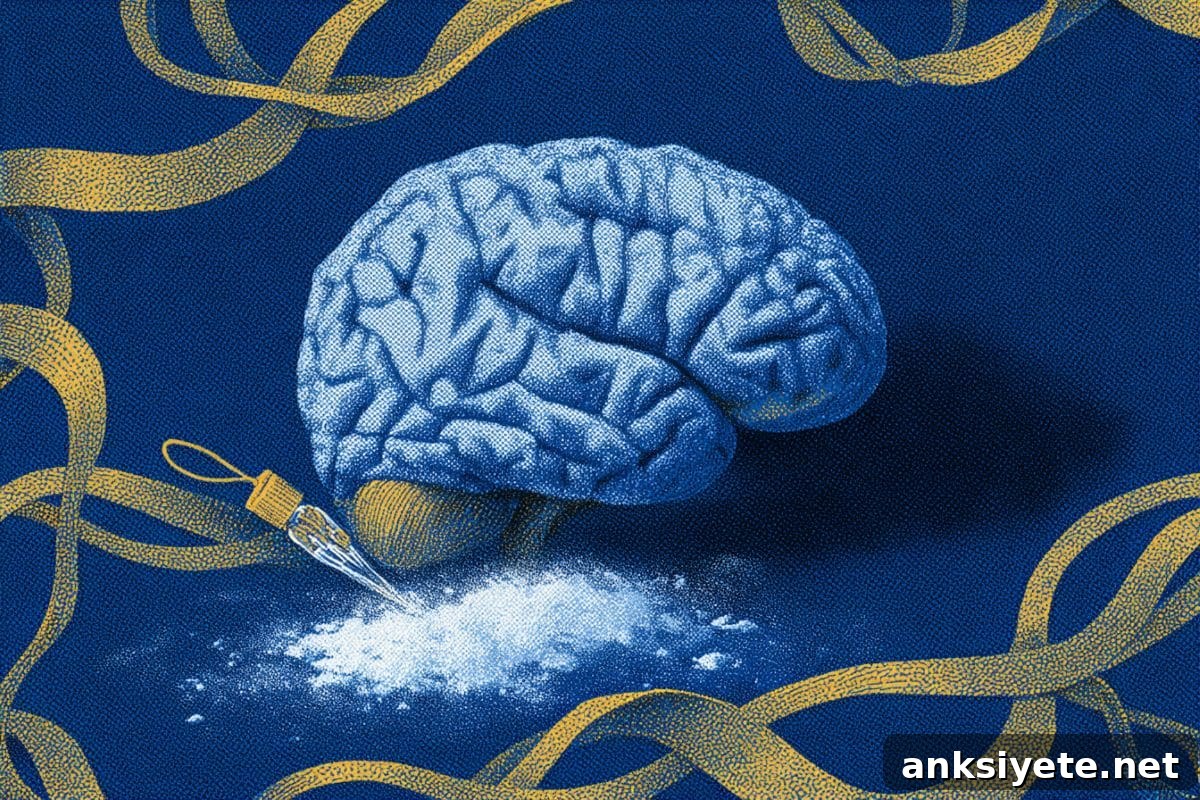
Summary: Relapse is not simply a failure of willpower—new research shows it reflects a biological “rewiring” of the brain. A Michigan State University study maps how chronic cocaine use hijacks the circuit connecting the brain’s reward center to its memory hub, revealing a molecular mechanism that sustains compulsive drug seeking.
Researchers identified a transcription factor, DeltaFosB, that functions like a genetic master switch. With repeated cocaine exposure DeltaFosB accumulates in specific neurons, altering gene expression to create lasting changes in circuit function. Using specialized CRISPR tools to manipulate DeltaFosB in precise neural pathways, scientists demonstrated this protein is required for the persistent brain changes that drive cocaine seeking. The discovery points to DeltaFosB and downstream targets such as calreticulin as promising targets for future therapies aimed at preventing relapse.
Key Facts
- The “Master Switch”: The transcription factor DeltaFosB builds up within the reward–memory circuit during chronic cocaine use, making cessation more difficult and relapse more likely.
- Rewiring the Hippocampus: Cocaine does more than alter mood—it changes the ventral hippocampus, linking drug-related cues and memories to survival-oriented drive states that promote drug seeking.
- Calreticulin’s Role: The study found that DeltaFosB increases expression of calreticulin, an endoplasmic reticulum calcium-buffering protein, which contributes to altered neuronal communication and circuit excitability.
- No Approved Medications Yet: There are currently no FDA-approved drugs for cocaine addiction. This research identifies molecular targets that could guide new medication development.
- CRISPR Insights: Circuit-specific CRISPR approaches were used to show DeltaFosB is necessary—not only associated with—the neural adaptations that underlie persistent cocaine seeking.
Source: Michigan State University
When a person relapses to cocaine use, that setback often reflects biological changes in the brain rather than a moral failing, new research shows.
A team at Michigan State University has shown that repeated cocaine exposure alters how the ventral hippocampus functions and how it communicates with the nucleus accumbens, a core reward structure. Supported by the National Institutes of Health and published in Science Advances, the study helps explain why cocaine addiction is difficult to treat and points to molecular targets that may be exploited by future pharmaceuticals.
“Addiction is a disease in the same sense as cancer,” said senior author A.J. Robison, professor of neuroscience and physiology. “We need to find better treatments and help people who are addicted in the same sense that we need to find cures for cancer.”
Cocaine addiction affects many people in the United States, and unlike opioid withdrawal, stopping cocaine does not produce a uniform set of severe physical withdrawal symptoms. Nonetheless, quitting is often unsuccessful because cocaine strongly reinforces drug-taking by flooding brain reward systems with dopamine. That reinforcement can rewire neural circuits so the brain prioritizes the drug over other rewards and goals.
Even after achieving abstinence, many people relapse: in this study’s context roughly 24% of individuals return to weekly use and an additional 18% re-enter treatment within a year. To understand the biological drivers of relapse, lead author Andrew Eagle used mouse models and circuit-focused molecular tools to study the role of DeltaFosB.
Eagle used a specialized form of CRISPR to manipulate DeltaFosB within the pathway from ventral hippocampus CA1 pyramidal neurons to the nucleus accumbens. He discovered that DeltaFosB accumulation acts like a switch, changing expression of genes that tune the excitability of this circuit. The longer cocaine exposure continues, the more DeltaFosB accumulates and the stronger the persistent drive to seek the drug becomes.
“This protein isn’t just associated with these changes, it is necessary for them,” Eagle said. “Without it, cocaine does not produce the same changes in brain activity or the same strong drive to seek out the drug.”
The team also identified a DeltaFosB-dependent increase in calreticulin expression after chronic cocaine exposure. Calreticulin, an endoplasmic reticulum calcium-buffering protein, was shown to influence circuit excitability and to be necessary for the rewarding effects of cocaine in the models used. Together these findings describe a noncanonical pathway by which cocaine increases calreticulin in ventral hippocampus neurons, decreases circuit excitability, and thereby drives cocaine seeking and reward.
Because many genes and circuits are conserved between mice and humans, these results have translational potential. Robison’s lab is collaborating with researchers at the University of Texas Medical Branch in Galveston to design compounds that modulate DeltaFosB’s interaction with DNA. With support from the National Institute on Drug Abuse, they aim to develop and test molecules that could one day restore healthy circuit function and reduce relapse risk. Robison cautions that therapeutic development will take years, but he considers it a hopeful long-term goal.
Next steps in the lab include studying how hormones influence these circuits and whether cocaine produces different effects in male and female brains. That work could clarify sex-specific biological risks for addiction and help tailor future treatments.
Key Questions Answered:
A: This research supports the view that cocaine addiction is a biological disease. Chronic use changes gene expression in specific brain circuits, producing a buildup of DeltaFosB that rewires neural priorities and often cannot be overcome by willpower alone.
A: Cocaine alters the hippocampus and its connections to reward centers. DeltaFosB creates a long-lasting molecular switch in those circuits that keeps the drive to seek the drug active well after the drug has cleared the body.
A: There is no immediate cure yet, but researchers are developing compounds aimed at blocking DeltaFosB’s DNA binding. If effective and safe, such compounds could help reset addicted neural circuits and improve long-term recovery outcomes.
Editorial Notes:
- This article was edited by a Neuroscience News editor.
- The cited journal paper was reviewed in full.
- Additional context was added by editorial staff to clarify implications and next steps.
About this addiction and neuroscience research news
Author: Bethany Mauger
Source: Michigan State University
Contact: Bethany Mauger – Michigan State University
Image: The image is credited to Neuroscience News
Original Research: Open access. “Transcriptional regulation of ventral hippocampus-nucleus accumbens circuit excitability drives cocaine seeking” by Andrew L. Eagle, Chiho Sugimoto, Marie A. Doyle, Daniela Anderson, Seyedeh Leila Mousavi, Megan M. Dykstra, Hayley M. Kuhn, Brooklynn R. Murray, Ryan M. Bastle, Sarah Simmons, Jin He, Ian Maze, Michelle S. Mazei-Robison, and Alfred J. Robison. Science Advances. DOI: 10.1126/sciadv.adv1236
Abstract
Transcriptional regulation of ventral hippocampus-nucleus accumbens circuit excitability drives cocaine seeking
Ventral hippocampus (vHPC) CA1 pyramidal neurons send glutamatergic projections to nucleus accumbens (NAc), and this vHPC-NAc circuit mediates cocaine seeking and reward. Prior to this work, it was unclear whether properties of vHPC-NAc neurons are altered by cocaine exposure in ways that drive subsequent behavior.
The immediate early gene transcription factor FosB/ΔFosB is induced broadly by cocaine and is critical for cocaine seeking, but its role in vHPC-NAc neurons had not been defined. The authors show that circuit-specific knockout of FosB/ΔFosB in vHPC-NAc neurons impairs cocaine reward expression and reduces forced-abstinence–induced seeking. They found that repeated, experimenter-administered cocaine and cocaine self-administration decrease vHPC-NAc excitability, and that ΔFosB mediates this excitability decrease.
Using circuit-specific translating ribosome affinity purification to profile FosB/ΔFosB-dependent gene expression changes, the team identified an increase in calreticulin expression driven by cocaine. Calreticulin mediated vHPC-NAc excitability and was necessary for cocaine reward. These findings reveal a mechanism whereby cocaine increases calreticulin in vHPC, leading to decreased vHPC-NAc excitability and promoting cocaine seeking and reward.