
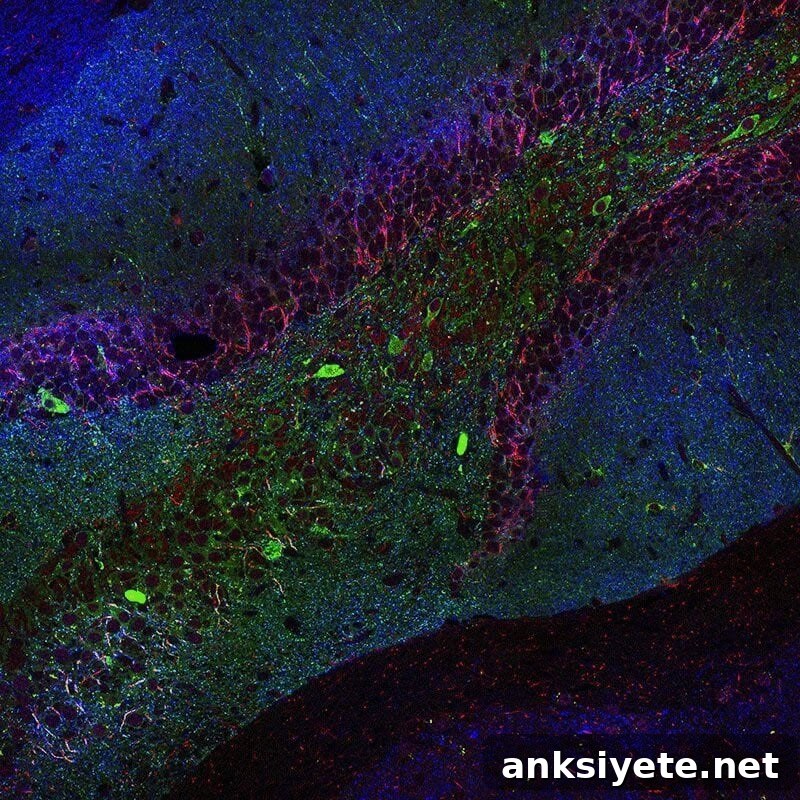
Summary: New research shows that GABA can selectively control the excitability of different types of cortical interneurons.
Source: Florey Institute of Neuroscience and Mental Health
International collaboration reveals that a common neurotransmitter can selectively regulate neuron excitability
Researchers from the Florey Institute and the EPFL Blue Brain Project report evidence that gamma-aminobutyric acid (GABA), the brain’s primary inhibitory neurotransmitter, can modulate the responsiveness of cortical interneurons in a subtype-specific manner. Using detailed computational models alongside laboratory experiments, the team found that tonic GABAergic signaling can either increase or decrease neuronal gain depending on intrinsic electrophysiological properties of the interneuron subtype.
Dr. Alexander Bryson of the Florey Institute explained that computational predictions from the Blue Brain Project suggested an unexpected duality in GABA’s function. “Our models predicted that GABA could increase the excitability of one interneuron subtype while decreasing the excitability of another,” he said. This result challenged the common assumption that GABA primarily suppresses neuronal activity.
“This was surprising to us because GABA is primarily thought to inhibit or reduce the excitability of neurons,” said Dr. Bryson.
The team confirmed these model-based predictions in electrophysiological recordings. Their findings indicate that tonic inhibition produced by GABA acting at extrasynaptic GABAA receptors can differentially alter neuronal gain across functional cell classes. In particular, model neurons with properties characteristic of somatostatin-expressing interneurons showed increased responsiveness (higher gain) under tonic GABAergic currents, whereas models resembling parvalbumin-expressing interneurons displayed decreased gain. Patch-clamp experiments on cortical interneurons supported these opposing effects.
Professor Sean Hill, co-Director of the Blue Brain Project, emphasized that this discovery was made possible by combining advanced modelling and high-performance computational resources with experimental receptor and electrophysiology expertise. “The result was wholly counterintuitive and exciting, with significant implications for understanding brain circuit alterations in mental health disorders,” he said.
Professor Steven Petrou, Director of the Florey Institute, highlighted the broader significance for neuroscience. “GABA is the predominant chemical messenger in the brain, and while its role is known to change during development, these findings reveal an additional layer of complexity in how tonic GABAergic signaling shapes circuit function,” Professor Petrou said.
Source:
Florey Institute of Neuroscience and Mental Health
Media contacts:
Press Office – Florey Institute of Neuroscience and Mental Health
Image source:
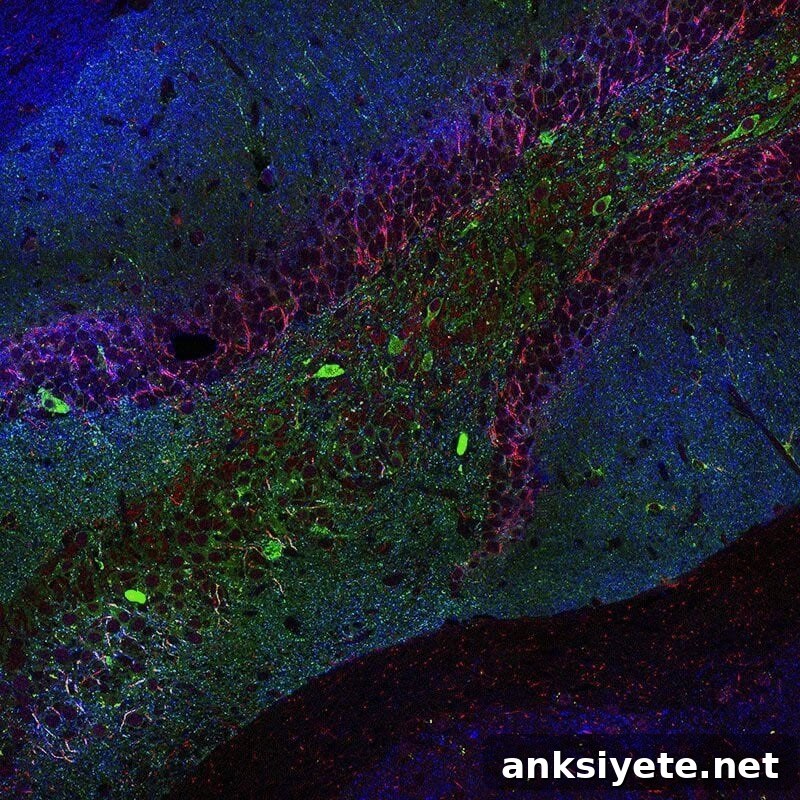
Image credited to Florey Institute of Neuroscience and Mental Health.
Original research (open access):
“GABA-mediated tonic inhibition differentially modulates gain in functional subtypes of cortical interneurons”. Alexander Bryson et al. PNAS. DOI: 10.1073/pnas.1906369117
Abstract (summary)
Tonic inhibition arises when ambient GABA binds to extrasynaptic GABAA receptors, generating a persistent conductance that modulates cortical network activity. Although GABA is present across the brain’s extracellular space, previous work suggested that its effects might vary between neuron subtypes due to differences in chloride gradients. Using biophysically detailed neuron models, the authors predicted that tonic inhibition can also differentially modulate excitability according to intrinsic electrophysiological properties. Unexpectedly, tonic inhibition increased gain in models with somatostatin-like features while reducing gain in models with parvalbumin-like features. Patch-clamp recordings of cortical interneurons supported these model predictions. Further in silico analysis identified likely mechanisms: gain modulation depended on the magnitude of tonic current at depolarized membrane potentials—a property linked to outward-rectifying GABAA receptors. Tonic inhibition also produced two biophysical changes relevant to excitability: enhanced action potential repolarization via increased current flow into dendrites, and reduced activation of voltage-dependent potassium channels. Reduced potassium channel activation selectively increased gain in models with action potential dynamics typical of somatostatin interneurons, while potassium channels in parvalbumin-type models deactivated rapidly and were less available for further modulation. Together, these findings demonstrate that GABA can differentially modulate interneuron excitability through mechanisms tied to intrinsic electrophysiological differences.