
Researchers have activated the brain’s own stem cells to regenerate a neuron type lost in Huntington’s disease, producing new neurons that integrate into neural circuits and substantially prolong survival in affected mice, a study in Cell Stem Cell reports.
Scientists at the University of Rochester Medical Center (URMC) triggered the production of medium spiny neurons— the specific cell type primarily lost in Huntington’s disease—by mobilizing endogenous neural stem cells. The new neurons not only formed but migrated to the striatum, established long-range connections, and displayed electrical communication with existing networks. Treated mice showed dramatically extended survival, in some cases doubling life expectancy.
“This study demonstrates the feasibility of a completely new concept to treat Huntington’s disease, by recruiting the brain’s endogenous neural stem cells to regenerate cells lost to the disease,” said Steven A. Goldman, M.D., Ph.D., co-director of Rochester’s Center for Translational Neuromedicine.
Huntington’s disease is an inherited neurodegenerative disorder that primarily destroys medium spiny neurons in the striatum, a brain region essential for motor control. The progressive loss of these neurons leads to uncontrolled movements, coordination problems, cognitive decline, and psychiatric symptoms. Presently there is no therapy that slows or halts disease progression; treatments address symptoms but do not replace lost neurons.
The research builds on decades of work on adult neurogenesis and neural plasticity. Goldman and colleagues drew on earlier discoveries made while studying songbirds, where adult brains show robust neuron addition in learning-related regions. That work highlighted molecular cues that instruct neural stem cells to produce neurons during learning and adaptation.
Human brains also retain neural precursor cells lining the ventricular system. During development these precursors produce neurons; after birth they largely shift to making glial support cells, and the striatum’s capacity to generate new neurons is essentially turned off in adults. To restore neuron production in the adult mammalian striatum, the team sought to both activate neuronal programs in stem cells and suppress their default tendency to form glia.
Two molecules proved critical. Brain-derived neurotrophic factor (BDNF) is a well-known protein that promotes neuron survival and differentiation and was observed in earlier avian studies to stimulate local neurogenesis. Noggin is a protein that inhibits signaling pathways that drive glial cell formation. When delivered together, BDNF and noggin reprogrammed endogenous neural progenitors to generate medium spiny neurons instead of glia.
To deliver sustained, localized expression of these molecules within the adult brain, the investigators used a recombinant adeno-associated viral vector engineered to drive long-term overexpression of both BDNF and noggin. In mouse models of Huntington’s disease, viral transduction of ventricular and periventricular regions led neighboring neural stem cells to differentiate into medium spiny neurons, which then migrated toward and populated the striatum.
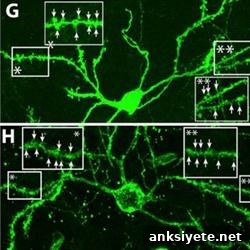
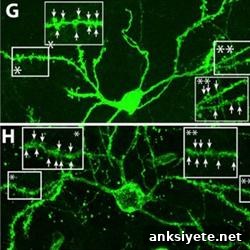
The newly formed neurons were tracked using genetic tagging techniques. The team observed that these neurons extended axonal projections to appropriate distant targets and made functional synaptic contacts, as evidenced by electrical signaling consistent with integration into existing circuits. Functionally, these changes translated into markedly slower disease progression and extended survival in treated animals.
Importantly, the researchers were also able to reproduce key aspects of this approach in the brains of normal squirrel monkeys, demonstrating that the method can mobilize endogenous progenitors in a primate brain and marking an essential step toward clinical translation.
“Sustained delivery of BDNF and noggin into the adult brain was clearly associated with increased neurogenesis and delayed disease progression,” Goldman said. The authors conclude that mobilizing endogenous neural stem cells with targeted molecular cues represents a promising therapeutic strategy for Huntington’s disease that merits further preclinical development.
Study notes and acknowledgments
The study’s first author was Abdellatif Benraiss, who has collaborated with Goldman for many years. Additional co-authors included Michael Toner, Qiwu Xu, Elodie Bruel-Jungerman, Eloise Rogers, Fushun Wang, Maiken Nedergaard, Aris Economides, Beverly Davidson, and Ryoichiro Kageyama. Funding sources included the National Institute of Neurological Disorders and Stroke, the Hereditary Disease Foundation, the CHDI Foundation, and the New York State Stem Cell Research Program.
Contact: Mark Michaud – University of Rochester Medical Center
Source: University of Rochester Medical Center press release
Image credit: University of Rochester Medical Center
Original research: Abstract for “Sustained Mobilization of Endogenous Neural Progenitors Delays Disease Progression in a Transgenic Model of Huntington’s Disease” published in Cell Stem Cell by Abdellatif Benraiss et al., June 2013.