
When we want to listen closely to someone, the first thing we do is stop talking. The second is to hold still. Those quieting behaviors improve hearing by preventing noise from our own movements from masking important sounds.
That same relationship between movement and hearing exists inside the brain. For years, indirect evidence has hinted that the motor cortex — the brain area that plans and controls movement — influences the auditory cortex, which produces our conscious perception of sound. How exactly the motor system changes auditory processing, however, has remained unclear.
A new study from Duke University, published online August 27 in Nature, uses electrophysiology, optogenetics and behavioral analysis to show how the motor cortex anticipates movement and adjusts the “volume control” in the auditory cortex. The work reveals causal mechanisms by which motor signals alter auditory responses, going beyond prior correlational observations.
“These experiments let us move past a century of powerful but largely correlative data and establish a more causal picture of how motor and sensory systems interact,” said Richard Mooney, Ph.D., professor of neurobiology at Duke University School of Medicine and a member of the Duke Institute for Brain Sciences.
The findings expand fundamental understanding of how communication between motor and auditory cortices shapes hearing during speech and musical performance, and they point to circuitry that, when disrupted, could contribute to auditory hallucinations in disorders such as schizophrenia.
In 2013, Mooney’s lab mapped anatomical and functional connections between motor and auditory regions in mouse brain slices and anesthetized animals. The current study answers the critical question of how those pathways operate in awake, freely behaving mice.
“A major advance here is that we probed the system in animals that are moving naturally,” said David Schneider, a postdoctoral associate in Mooney’s lab.
Mooney and colleagues propose that the motor cortex learns to suppress responses in the auditory cortex to self-generated sounds while preserving or even enhancing sensitivity to unexpected environmental sounds. The team is now testing that hypothesis using behavioral tasks that require animals to ignore self-produced noise in order to detect salient external cues.
To characterize auditory processing during movement, the researchers recorded electrical activity from individual neurons in the auditory cortex while mice walked, groomed or emitted high-pitched vocalizations. The recordings showed that auditory cortical neurons responded less strongly to tones when the animals were moving than when they were at rest. In other words, movement dampened tone-evoked activity in the auditory cortex.
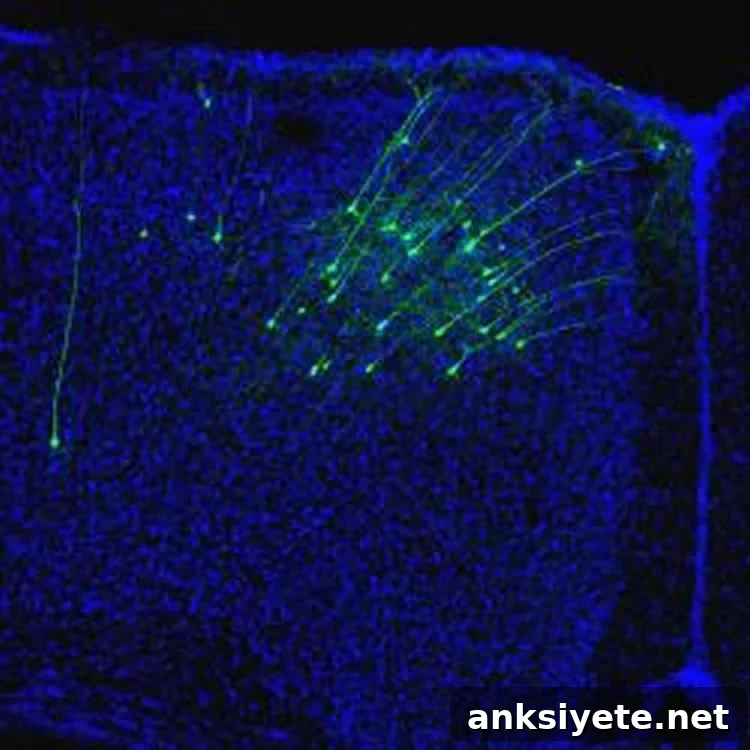
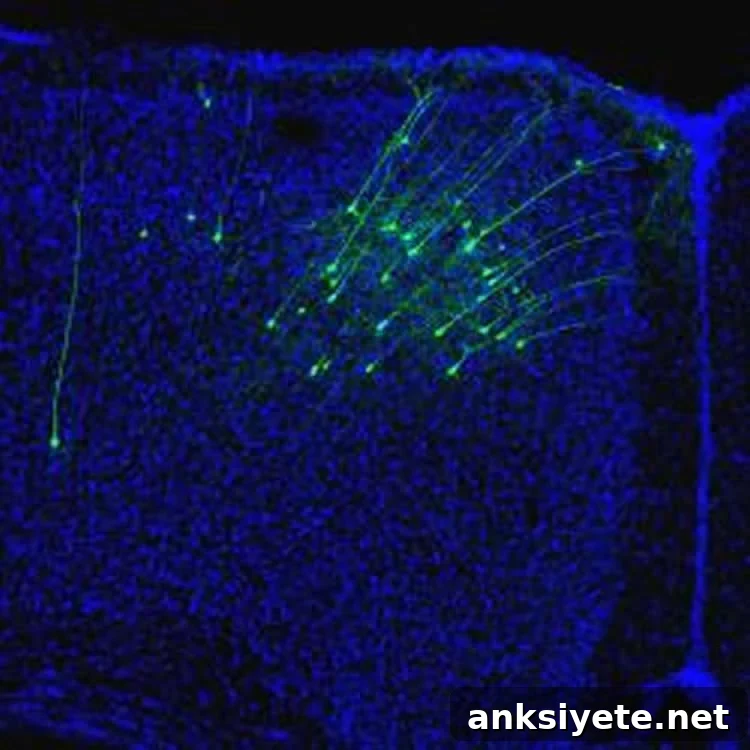
To determine whether the motor system directly drives that suppression, the group used optogenetics — a method that employs light to activate or silence genetically targeted neuron populations. Sound signals travel through multiple brain relays before reaching auditory cortex; optogenetics allowed the team to selectively manipulate specific nodes in that network and to test their roles in movement-related suppression.
About half of the observed suppression during movement arose within the auditory cortex itself, underscoring substantial local modulation rather than effects only at earlier auditory relays. The investigators traced this local modulation to inhibitory interneurons: movement selectively activates these inhibitory cells, which in turn reduce auditory cortical responses to tones.
Next, the team asked what input activates those inhibitory neurons during movement. Many brain areas project to auditory cortex and could influence interneurons. Prior work had shown that secondary motor cortex (M2) sends projections to auditory cortex. To isolate M2’s contribution, the researchers again used optogenetic control to selectively turn M2 inputs to auditory cortical interneurons on and off.
When the researchers activated M2 inputs, the auditory cortex behaved as if the animal were moving, even when the mouse was resting. Tone responses were similarly suppressed, demonstrating that M2 provides a “I am moving” signal that engages local inhibition. Conversely, silencing M2 inputs made the auditory cortex resemble a resting state, even while the animals were physically moving.
“Seeing those results for the first time was incredibly exciting,” said Anders Nelson, a neurobiology graduate student in Mooney’s group. The experiments confirm that motor-cortical inputs can causally control auditory cortical gain via local interneurons.
The work was supported by the Helen Hay Whitney Foundation, the Holland-Trice Graduate Fellowship in Brain Sciences, and the National Institutes of Health (NS079929).
Contact: Karl Bates – Duke University
Source: Duke University press release
Image Source: Anders Nelson, Duke University (image adapted from the press release)
Original Research: “A synaptic and circuit basis for corollary discharge in the auditory cortex” by David M. Schneider, Anders Nelson and Richard Mooney, published online August 27, 2014 in Nature (doi:10.1038/nature13724).