
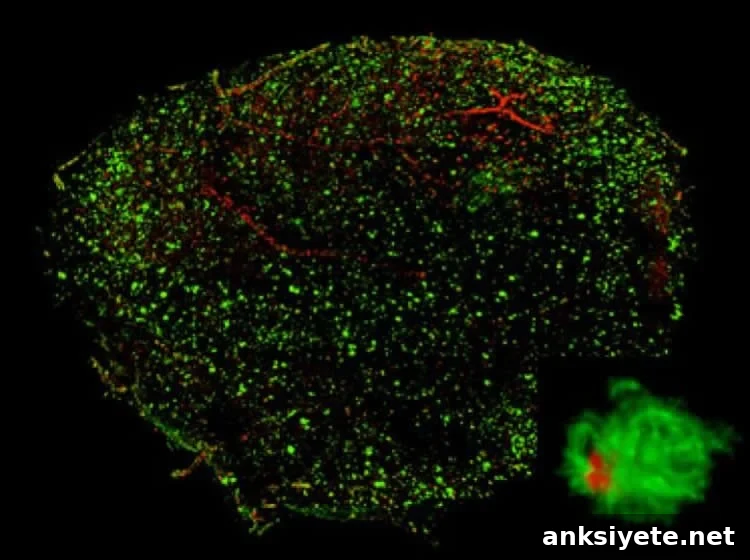
Researchers at the RIKEN Brain Science Institute in Japan have developed an improved method for rendering biological tissue transparent, enabling high-resolution three-dimensional visualization of brain anatomy. Published in Nature Neuroscience, this work introduces ScaleS, a practical optical clearing technique that preserves structure and fluorescence while revealing new details of Alzheimer’s disease pathology.
“The value of optical clearing depends on producing accurate, three-dimensional structural information that cannot be obtained from conventional two-dimensional methods,” explains lead scientist Atsushi Miyawaki. “With ScaleS we achieved reliable 3D imaging of intact brain tissue and resolved questions about plaque formation in Alzheimer’s disease. While comic-book x-ray vision remains fictional, ScaleS is a tangible way to see through brain and body tissue.”
Optical clearing—the process of making tissue transparent to light—has become a major goal for life scientists because it enables deep imaging of organs and cells with advanced microscopes. Earlier clearing methods often improved transparency at the cost of damaging cellular architecture or diminishing fluorescent signals, limiting their usefulness for multi-scale imaging.
The Miyawaki team originally introduced an aqueous urea-based clearing recipe called Scale in 2011. Over five years they refined that approach to address structural damage and signal loss. The outcome, ScaleS, introduces sorbitol, a sugar alcohol, into the formulation. When combined with urea at optimized ratios, sorbitol stabilizes tissue structure while maintaining compatibility with fluorescent labels and immunochemical staining, including in older specimens.
ScaleS produces transparent brain samples that remain stable in solution for more than a year without detectable deterioration. Internal anatomy retains its native shape, and cleared brains are sufficiently firm to allow micron-thick sectioning for higher-resolution follow-up analyses. This durability makes ScaleS useful for repeated imaging sessions and complementary techniques.
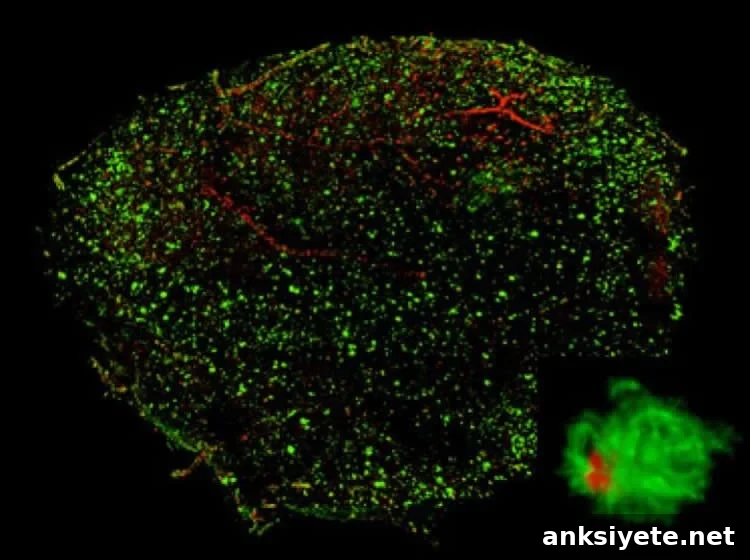
“The central challenge in optical clearing is preserving fine structure at the microscopic and ultrastructural levels,” says Miyawaki. “A truly useful clearing method must permit light microscopy while also preserving tissue for accurate electron microscopy.”
In benchmark tests, ScaleS provided a strong balance between optical transparency and retention of fluorescent signals. The researchers report that cellular ultrastructure after ScaleS treatment remains exceptionally well preserved for electron microscopy, enabling correlated multi-scale imaging of the same sample.
To extend the technique’s versatility, the team developed complementary variants: AbScale for improved immunolabeling and ChemScale for compatibility with small fluorescent compounds. By combining ScaleS with these variants the group produced multi-color, high-resolution 3D reconstructions of amyloid beta plaques, neurons, and microglia in older transgenic mice from a genetic Alzheimer’s model developed at RIKEN.
Applying ScaleS to human and mouse tissue revealed new insights into diffuse plaques—lesions often observed in postmortem Alzheimer’s brains that can be difficult to interpret in 2D sections. Three-dimensional visualization showed that diffuse plaques are not isolated deposits but are frequently associated with microglia, the brain’s mobile immune cells that survey and protect neurons.
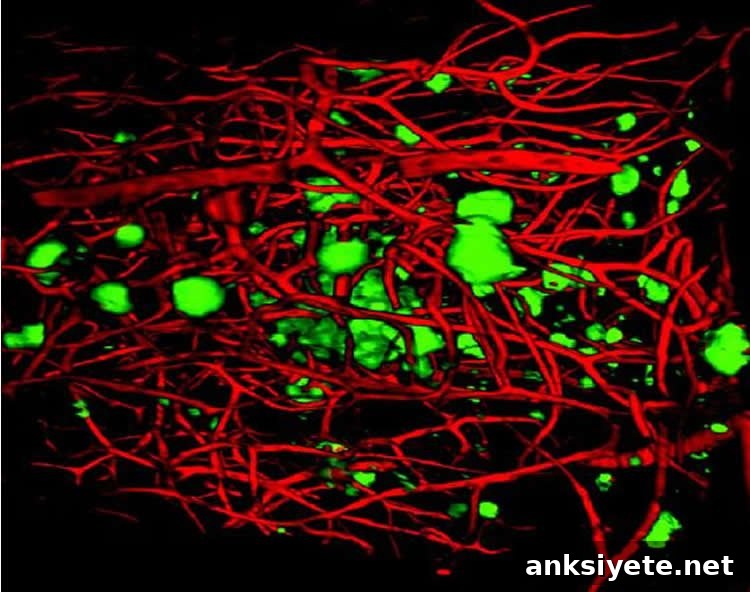
ScaleS also clarified the temporal relationship between plaque growth and microglial activation. Detailed 3D reconstructions showed that active microglial association is common in early plaque development but becomes less apparent at later disease stages when plaques have accumulated and matured. These dynamic relationships are difficult to appreciate using traditional 2D histology but emerge clearly with volumetric imaging.
“Clearing tissue with ScaleS and following up with 3D microscopy offers distinct advantages over 2D stereology and standard immunohistochemistry,” states Miyawaki. “The method is applicable not only to studying plaques in Alzheimer’s disease, but also to mapping normal neural circuits and identifying structural alterations in other neurological disorders.”
Source: Adam Phillips – RIKEN
Image credit: RIKEN
Original research: Article titled “ScaleS: an optical clearing palette for biological imaging,” published in Nature Neuroscience by Hiroshi Hama, Hiroyuki Hioki, Kana Namiki, Tetsushi Hoshida, Hiroshi Kurokawa, Fumiyoshi Ishidate, Takeshi Kaneko, Takumi Akagi, Takashi Saito, Takaomi Saido and Atsushi Miyawaki. Published online September 14, 2015. doi:10.1038/nn.4107
Abstract
ScaleS: an optical clearing palette for biological imaging
Optical clearing reduces light scattering to permit deep imaging of intact biological specimens, yet multi-scale high-resolution studies require preservation of tissue architecture for accurate signal reconstruction. Many clearing reagents contain chemicals that can compromise structural integrity or fluorescent signal stability, limiting reproducibility. ScaleS is a sorbitol-based clearing palette designed to stabilize tissue for immunochemical labeling and three-dimensional signal rendering. The method enables optical reconstruction of aged and diseased brain tissue in Alzheimer’s models, allowing mapping of 3D networks of amyloid plaques, neurons and microglia and enabling correlated fluorescence and electron microscopy of single plaques. Analysis of human Alzheimer’s tissue using reversible optical sectioning revealed plaque morphology along the z axis, and comparative benchmarking showed superior preservation of fluorescence and structure with ScaleS relative to contemporary agents. These results indicate that ScaleS is a simple, reproducible method for accurate visualization of biological tissue across scales.