
Summary: Melatonin and its brain metabolite AMK improve long-term memory and protect against age-related cognitive decline in mice.
Source: Tokyo Medical and Dental University
Researchers at Tokyo Medical and Dental University (TMDU) report that melatonin and its metabolites support long-term memory formation and can prevent memory loss in mice.
Dietary supplements marketed for memory—such as fish oil, ginkgo, vitamin E, and ginseng—are common in pharmacies. Melatonin, most often used to aid sleep, has now emerged as a candidate for supporting cognition. New results from a team led by Atsuhiko Hattori at TMDU indicate that melatonin and two of its metabolites, especially N1‑acetyl‑5‑methoxykynuramine (AMK), strengthen memory consolidation and protect against age-related memory decline in mice.
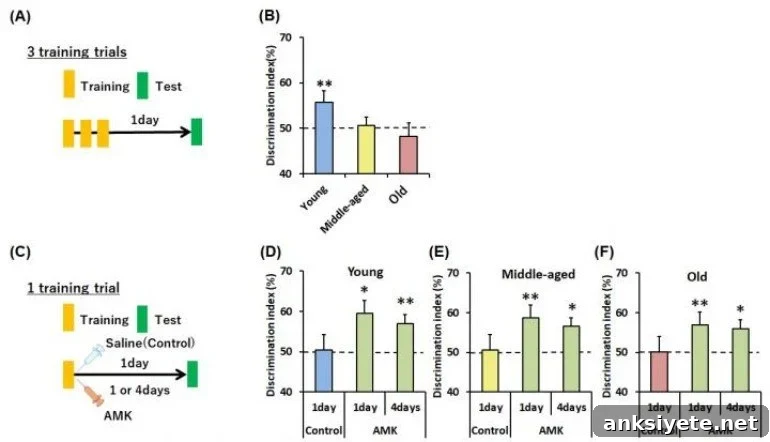
The researchers used the novel object recognition test, a widely used behavioral assay that relies on mice naturally preferring unfamiliar objects. If a mouse remembers an object from prior exposure, it will spend more time investigating a novel object than a familiar one. Age-related cognitive decline impairs this discrimination: older mice often behave as if both objects are new, reflecting poorer memory retention.
Hattori and colleagues focused on melatonin’s brain metabolites—AFMK (N1‑acetyl‑N2‑formyl‑5‑methoxykynuramine) and AMK—because melatonin is rapidly converted into these compounds in the brain. To test their effects on memory, mice were first familiarized with objects and then received systemic doses of melatonin, AFMK, or AMK one hour after training. Memory was assessed 24 hours later and at later time points.
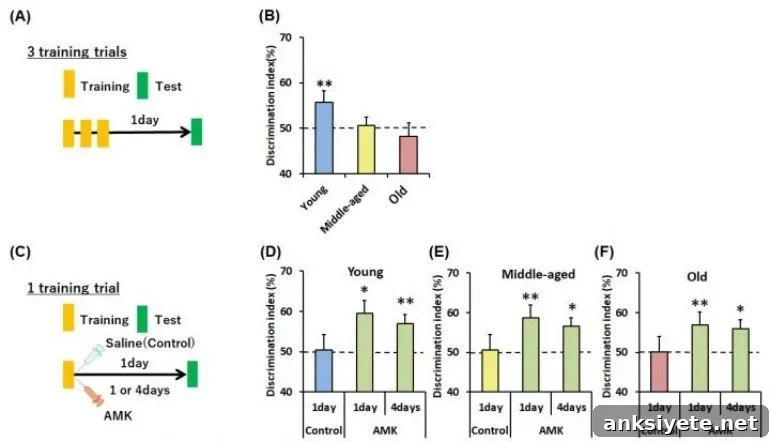
All three compounds reached the hippocampus—a brain region central to forming long-term memories—but AMK showed the strongest memory-enhancing effect. In young mice, three brief exposures to an object within a day were sufficient for the mice to remember that object on the following day. Older mice, however, typically failed to show this memory unless treated. A single dose of AMK administered 15 minutes after a single brief exposure enabled older mice to retain the memory for up to four days.
Timing and metabolism data suggest AMK acts during the consolidation phase of memory formation: administering AMK around the training period produced the beneficial effect, and melatonin was rapidly converted to AMK in brain tissue. When the metabolic pathway converting melatonin to AMK was blocked, the memory benefits were lost—supporting the idea that endogenous AMK is necessary for long-term memory consolidation.
Hattori emphasizes the translational potential: “We have shown that the melatonin metabolite AMK facilitates long-term object memory in mice of all ages. Its ability to rescue memory in older animals is particularly promising. If comparable effects are observed in humans, AMK-based interventions might help reduce the impact of mild cognitive impairment and delay progression toward conditions such as Alzheimer’s disease.” The authors, however, note that human studies are needed before any clinical recommendations can be made.
About this memory research news
Source: Tokyo Medical and Dental University (TMDU)
Contact: Atsuhiko Hattori – Tokyo Medical and Dental University
Image credit: Department of Biology, TMDU
Original Research: Closed access. “The melatonin metabolite N1‑acetyl‑5‑methoxykynuramine facilitates long‑term object memory in young and aging mice” by Atsuhiko Hattori et al., Journal of Pineal Research.
Abstract
The melatonin metabolite N1‑acetyl‑5‑methoxykynuramine facilitates long‑term object memory in young and aging mice
Melatonin has been reported to influence cognitive processes and is considered a candidate for addressing cognitive decline. The roles of its metabolites AFMK and AMK have been unclear. This study examined the acute effects of systemic melatonin, AFMK, and AMK on novel object recognition and measured their levels in hippocampus and temporal lobe tissue following treatment. AMK administered after training produced a stronger enhancement of object memory than melatonin or AFMK and rescued age-related memory deficits when tested up to four days after training. Time-course experiments and metabolic analyses indicate that AMK supports memory consolidation. Blocking the conversion of melatonin to AMK impaired 24-hour memory, suggesting endogenous AMK contributes to long-term memory formation. These findings identify AMK as a promising candidate for therapies aimed at preventing or reducing memory decline.