
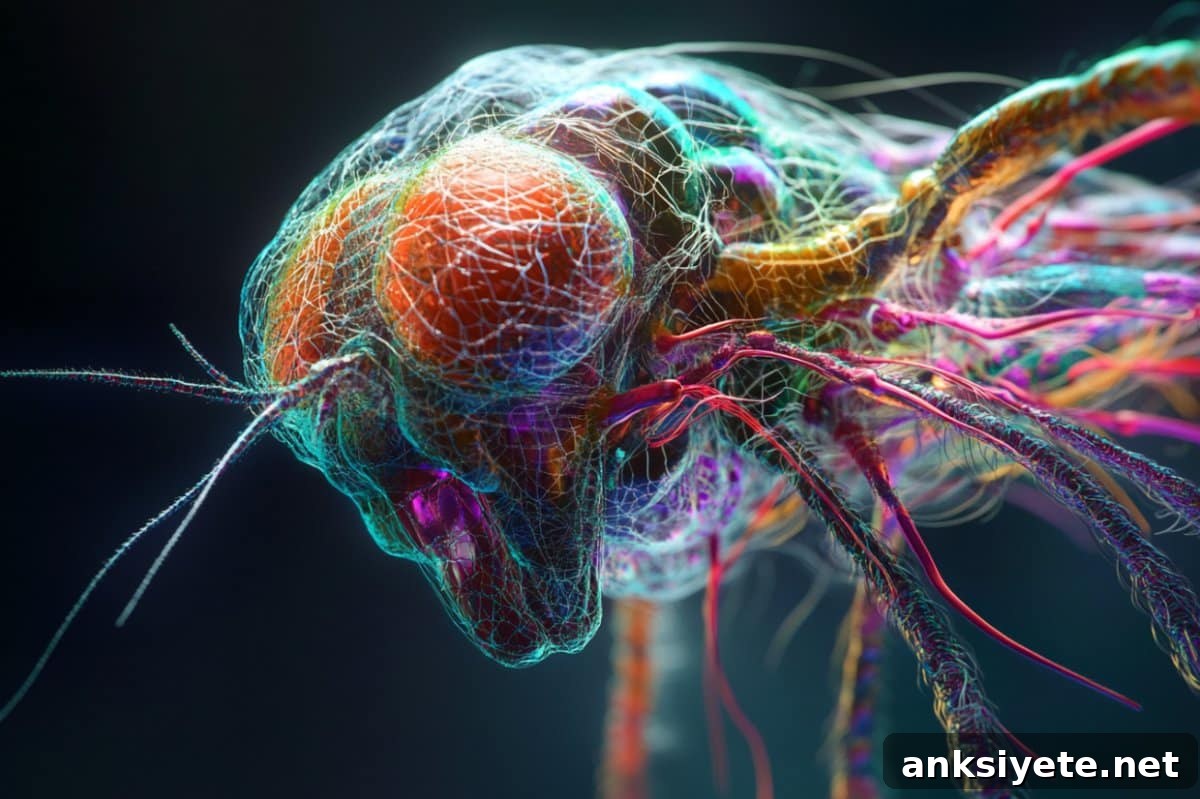
Summary: Researchers have completed the first full connectome of the adult fruit fly, mapping both the brain and the ventral nerve cord and revealing how neural signals pass between these key structures. This milestone exposes previously unknown neurons in the neck that transmit brain commands to the body and clarifies how the nervous system routes sensorimotor information.
The team compared male and female connectomes and identified sex-specific neurons and circuits that help explain behaviors such as mating and egg-laying. The complete map offers a practical roadmap for designing experiments to test how individual neurons and circuits produce specific behaviors.
Key Facts:
- First Full Connectome: The dataset covers both the brain and the ventral nerve cord in Drosophila.
- Sex-Specific Neurons: The analysis revealed neurons and circuit elements found only in one sex.
- Behavioral Insight: Structural differences in the connectome help account for sex-specific actions such as mating and oviposition.
Source: University of Leipzig
For the first time, teams at Leipzig University and collaborating institutions have reconstructed the full adult nervous system of the fruit fly (Drosophila melanogaster).
Published in Nature, this study provides the first detailed, connectome-level description of neurons that span the entire central nervous system of an adult fruit fly, including the brain and ventral nerve cord.
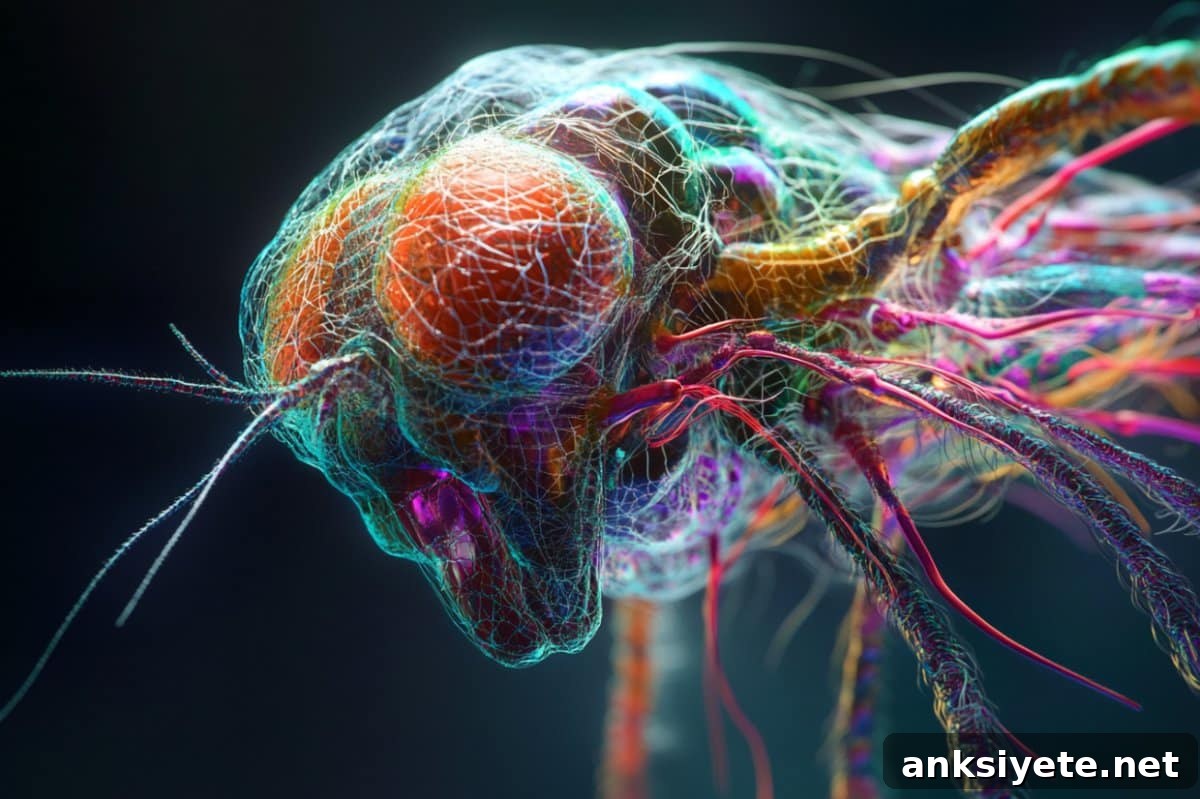
A central advance of the work is the inclusion of neurons that traverse the neck connective—the narrow link between brain and ventral nerve cord. Prior connectome datasets typically stopped at the neck; by extending mapping through this bottleneck, the researchers captured the pathways that carry commands from the brain to motor centers in the nerve cord.
Lead author Dr Katharina Eichler of Leipzig University explains that until now technical limits kept full central nervous system reconstructions out of reach. The new approach integrates three separate electron microscopy datasets and matches neuronal reconstructions across hemispheres, datasets and sexes to produce a complete description of descending (DN) and ascending (AN) populations.
The researchers analyzed one female brain dataset and both male and female ventral nerve cord datasets. They matched many descending neuron types to light-level driver lines—enabling experimental access to specific cell types—and classified all ascending neuron populations. This cross-modal matching connects anatomy to tools that experimentalists can use to test function.
When comparing male and female nervous systems the team identified previously unknown, sexually dimorphic cells—neurons present in one sex but absent in the other. For example, the descending neuron commonly referred to as aSP22 (DNa12) connects, in females, with neurons that only occur in females. This specific connectivity helps explain why activation of that neuron produces different behaviors in males and females: females tend to extend the abdomen, likely linked to egg-laying, while males display a forward curling of the abdomen associated with courtship and mating.
Beyond cataloguing cell types, the study exposes connected chains of descending and ascending neurons that span the neck connective and may support coordinated motor sequences. The connectome includes detailed analyses of circuits relevant to reproductive behaviors: male courtship and song production circuits, and female oviposition-related circuits such as those involving DNp13.
Eichler notes that this comprehensive map functions as a practical roadmap for the field: by revealing which neurons connect where, it allows researchers to design targeted functional experiments and thus save time and resources when probing behavior and neural function.
Having resolved the technical hurdles, the group is now assembling two new full central nervous system datasets—one female and one male—to further refine our understanding of adult Drosophila circuitry.
About this brain mapping research news
Author: Susann Sika
Source: University of Leipzig
Contact: Susann Sika – University of Leipzig
Image: The image is credited to Neuroscience News
Original Research: Open access. “Comparative connectomic atlas of Drosophila descending and ascending neurons” by Katharina Eichler et al., published in Nature.
Abstract
Comparative connectomic atlas of Drosophila descending and ascending neurons
In many complex nervous systems the nerve cord, which houses much of the final motor output, is anatomically separated from the brain. In insects, the neck connective forms both a physical and informational bottleneck between the brain and the ventral nerve cord (the insect analogue of the spinal cord). This region contains diverse populations of descending neurons (DNs), ascending neurons (ANs) and sensory ascending neurons that are central to sensorimotor signaling and motor control.
By integrating three electron microscopy datasets, the authors provide a complete connectomic description of ANs and DNs in the female Drosophila nervous system and compare these populations with neurons mapped in the male ventral nerve cord. Reconstructions were proofread and matched across hemispheres, datasets and sexes. About half of DN cell types were matched to light-level driver lines, enabling experimental targeting, and all ascending populations were classified.
The analysis reveals anatomical and circuit-level principles of neck connective neurons, including chains of connected DNs and ANs that span the neck and may underlie motor sequences. The work presents a full description of sexually dimorphic DN and AN populations and examines selected circuits for reproductive behaviors—such as male courtship and song production, and female ovipositor extrusion—providing an electron microscopy–level circuit analysis that spans the entire adult central nervous system.