
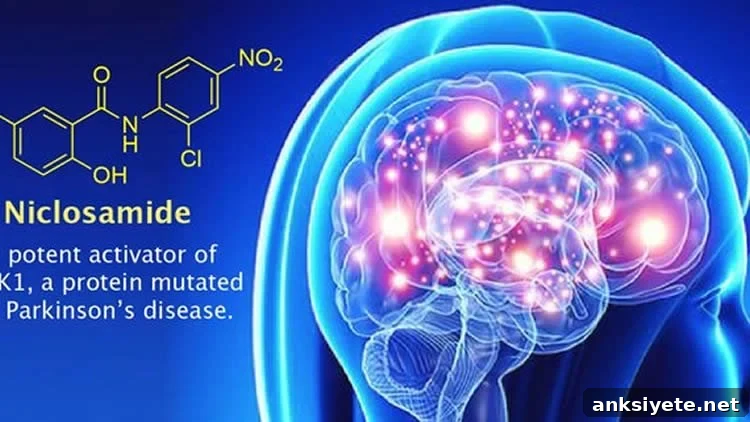
Summary: Researchers at Cardiff University report that a molecule within a widely used tapeworm drug can activate the PINK1 protein and may slow the progression of Parkinson’s disease.
Tapeworm Drug Molecule Activates PINK1 and Offers Potential Path for Parkinson’s Treatment
Researchers at Cardiff University, working in collaboration with the University of Dundee, have identified that niclosamide—a drug commonly used to treat tapeworm infections—can activate PINK1, a protein linked to Parkinson’s disease. This discovery could open new avenues for therapies aimed at slowing neurodegeneration in Parkinson’s patients.
Parkinson’s disease is a progressive neurological disorder affecting movement and other functions of the central nervous system. It is estimated to affect around one person in 500, leading to tens of thousands of people living with the condition in the UK alone. Scientific attention in recent years has focused on PINK1, a mitochondrial protein kinase whose dysfunction is implicated in early-onset and inherited forms of Parkinson’s disease.
PINK1 plays a central role in mitochondrial quality control and in signaling pathways that promote the clearance of damaged mitochondria. When PINK1 function is reduced or lost, the resulting mitochondrial dysfunction contributes to neuronal death and disease progression. For that reason, drugs that can restore or enhance PINK1 activity are of high interest to researchers seeking disease-modifying treatments rather than symptomatic relief.
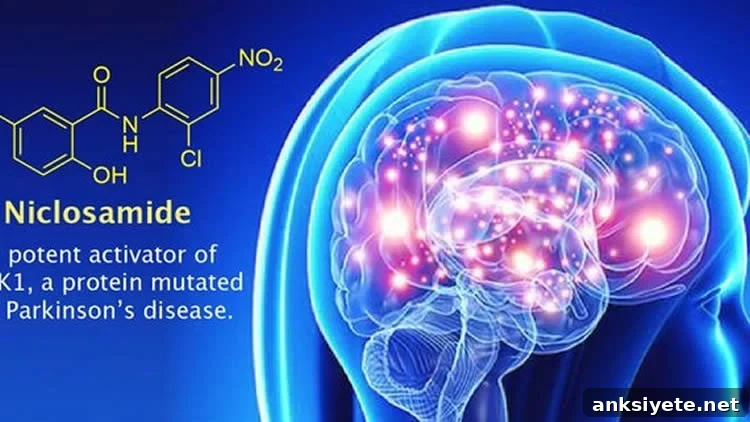
The collaborative study found that niclosamide and several structurally related analogues can activate PINK1 in cells by transiently and reversibly impairing mitochondrial membrane potential. This reversible effect appears sufficient to engage the PINK1 pathway without causing irreversible mitochondrial damage. Importantly, the researchers were able to detect PINK1 pathway activation in primary neurons, demonstrating that these compounds act in the relevant cell types implicated in Parkinson’s disease.
Funded by the Wellcome Trust and the Medical Research Council (MRC), the research suggests niclosamide and its analogues are robust chemical tools to probe PINK1 biology and may have therapeutic potential. Because niclosamide is already an approved anthelmintic with a known safety profile in humans, repurposing it or refining its derivatives could accelerate the pathway to clinical evaluation for Parkinson’s disease compared with entirely new drug entities.
Dr Youcef Mehellou of Cardiff University’s School of Pharmacy and Pharmaceutical Sciences, a co-leader of the study, said this represents the first report of a clinically used drug capable of activating PINK1. The team plans to progress their work by testing niclosamide and optimized analogues in disease models of Parkinson’s to evaluate efficacy and safety in physiological systems that mirror the human condition.
Institutions: Cardiff University and University of Dundee
Funding: Wellcome Trust and the Medical Research Council (MRC)
Publication: The full study, titled “The Anthelmintic Drug Niclosamide and its Analogues Activate the Parkinson’s Disease Associated Protein Kinase PINK1,” was published in ChemBioChem (online December 10, 2017). Authors include Erica Barini, Ageo Miccoli, Federico Tinarelli, Katie Mulholland, Hachemi Kadri, Farhat Khanim, Laste Stojanovski, Kevin D. Read, Kerry Burness, Julian J. Blow, Youcef Mehellou, and Miratul Muqit. DOI: 10.1002/cbic.201700500.
Mutations in PINK1 that reduce its kinase activity cause autosomal recessive early-onset Parkinson’s disease. Activation of PINK1 is therefore an attractive strategy for developing treatments that might slow or prevent neurodegeneration. The study demonstrates that niclosamide and selected analogues activate PINK1 in cells by a reversible mechanism involving transient mitochondrial membrane depolarization. These compounds enabled detection of an active PINK1 pathway in primary neurons and provide promising starting points for further research into therapeutic strategies for Parkinson’s and related disorders.
This discovery represents a promising step toward repurposing an existing drug class for a new indication and highlights the value of chemical biology in identifying actionable pathways for neurodegenerative disease research.