
Children with Tourette Syndrome may unconsciously train their brains to better control tics, a University of Nottingham-led study has found.
Researchers discovered that teenagers with Tourette Syndrome (TS) were slower than typically developing peers when performing a simple eye movement task that required them to look directly at targets. In contrast, when the task became more demanding—requiring participants to decide whether to look toward or away from a target—the young people with TS matched their peers in speed and made significantly fewer incorrect eye movements. Those who showed the strongest performance on the more difficult task also tended to have fewer tics.
The study, published in the British Journal of Neuropsychology, suggests that repeated efforts to manage or suppress tics may strengthen cognitive control systems involved in voluntary motor actions, including eye movements.
Controlling the impulse to look
Professor Georgina Jackson, from the Institute of Mental Health, explained that while most children do not constantly worry about accidentally performing embarrassing movements or sounds, many young people with TS spend considerable time and effort delaying or concealing tics. “That continual monitoring and suppression can be exhausting,” she said, “but it may also train the brain systems that control voluntary actions.”
Professor Jackson noted that when people see something interesting, the instinct is to look at it. “When asked not to look, most people will still make a very brief glance before correcting their gaze,” she said. The study’s more demanding task required delaying or redirecting that natural response, and the adolescents with TS performed particularly well at avoiding those brief, erroneous glances.
Tourette Syndrome is a neurodevelopmental disorder marked by involuntary noises and movements called tics. Tics vary from simple acts like eye blinking or throat clearing to more complex patterns such as head shaking or repeating phrases. Symptoms typically begin in early childhood—often between ages five and seven—peak between eight and 12, and then become less frequent or severe for many individuals as they move through adolescence.
TS frequently co-occurs with other conditions such as obsessive-compulsive disorder (OCD) or attention deficit hyperactivity disorder (ADHD). Participants in this study did not have diagnosed ADHD; ADHD is commonly associated with reduced performance on attentionally demanding control tasks like the one used here.
Motor control and the basal ganglia
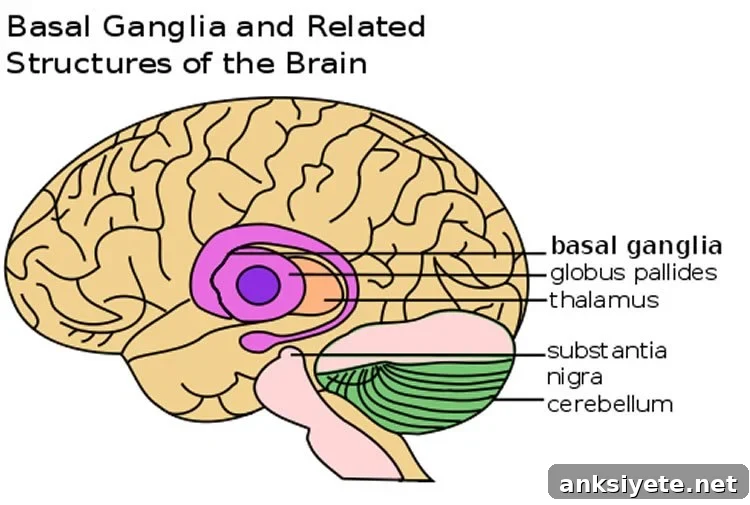
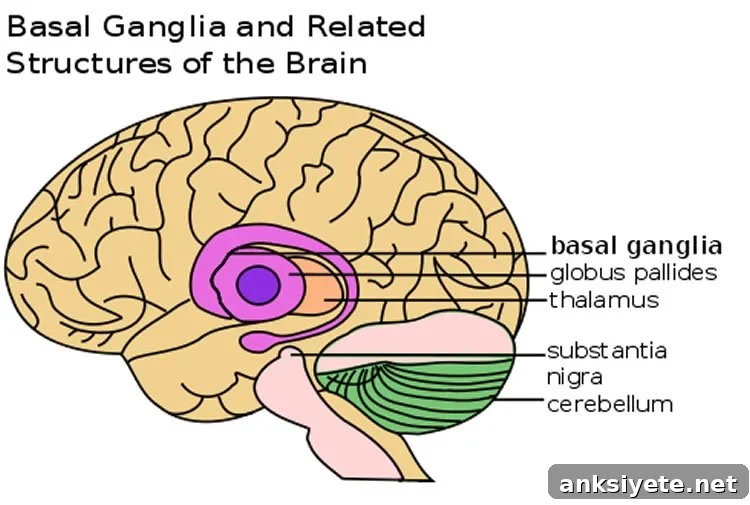
Although the exact causes of TS are still not fully understood, many researchers point to atypical function in brain areas that regulate movement, especially the basal ganglia. Previous work by this research group suggested that the improvements in controlled movements seen in young people with TS are connected to changes in motor control regions of the brain.
Contrary to the expectation that tic disorders would produce widespread impairment of voluntary movement control, this study found a more nuanced pattern. Reflexive eye movements were slower among the TS group, yet cognitive control over eye movements—measured by the ability to suppress automatic responses—was enhanced, and this enhancement correlated with less severe tic symptoms.
“Our tasks measured tiny directional errors,” Professor Jackson added. “Children with TS made fewer of these errors when careful, controlled responses were required, indicating improved inhibitory control in that context.”
Study tasks and key results
Participants completed two eye-movement tasks. The first, a pro-saccade task, required repeatedly looking at a target. The second, an anti-saccade task, required unpredictably switching between looking at an object and deliberately looking away from it. The anti-saccade task places heavier demands on cognitive control and inhibition.
When performing the simpler pro-saccade task, the TS group was approximately 20 milliseconds slower to initiate and complete eye movements than the control group. In the more complex anti-saccade task, however, the TS participants made about 20 percent fewer directional errors than controls. Performance on the challenging task also correlated strongly with scores on a global tic severity measure: better cognitive control was associated with lower tic severity.
The authors note that longitudinal research is needed to determine whether measures of cognitive control like these can predict which children will experience natural remission of tics during adolescence or whether targeted interventions might harness this adaptive control to improve outcomes.
Contact: Emma Thorne – University of Nottingham
Source: University of Nottingham press release
Image source: Image credited to John Henkel/FDA; public domain.
Original research: Related study titled “Enhanced saccadic control in young people with Tourette syndrome despite slowed pro-saccades” by JeYoung Jung, Stephen R. Jackson, Kichun Nam, Chris Hollis and Georgina M. Jackson, published in Journal of Neuropsychology.