
Inhibiting the Prefrontal Cortex Can Improve Performance on Creative Tasks
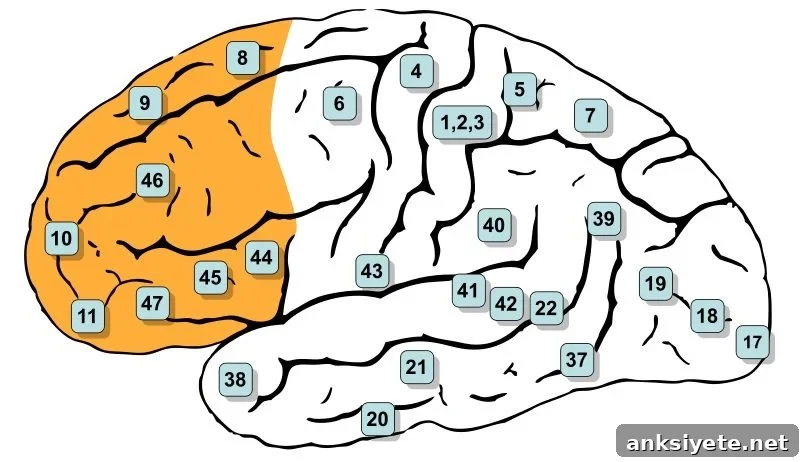
The brain’s prefrontal cortex is widely regarded as the center of cognitive control, acting as a filter that prevents irrelevant thoughts, perceptions and memories from interfering with goal-directed tasks.
Researchers at the University of Pennsylvania have found that temporarily reducing that filtering function can improve performance on tasks that benefit from unfiltered, flexible thinking. The study demonstrates that inhibiting activity in the left prefrontal cortex helps people generate novel uses for everyday objects more quickly and with fewer failures than when that region is active.
The research team was led by Sharon Thompson-Schill, the Christopher H. Browne Distinguished Professor of Psychology and director of the Center for Cognitive Neuroscience, with Evangelia Chrysikou (now an assistant professor at the University of Kansas). They collaborated with Roy Hamilton and H. Branch Coslett from Penn’s Department of Neurology and with Abhishek Datta and Marom Bikson from the Department of Biomedical Engineering at the City College of New York. The findings were published in the journal Cognitive Neuroscience.
Study design and the uncommon-use task
To test whether reduced cognitive control can be advantageous, participants completed an “uncommon-use” task while researchers applied transcranial direct current stimulation (tDCS) to specific regions of the prefrontal cortex. In the task, people were shown 60 pictures of common objects, one every nine seconds, and asked to produce a valid but unconventional use for each object—for example, suggesting that a baseball bat could serve as a rolling pin. The researchers recorded how many objects a participant failed to provide an uncommon use for and how long it took them to produce each valid response.
The investigators hypothesized that strong cognitive control—useful for most everyday tasks—would interfere with generating uncommon uses because it encourages focusing on the object’s typical function and suppressing irrelevant properties. To produce an uncommon use, participants need to consider features such as shape and material rather than default uses.
Noninvasive brain stimulation: tDCS
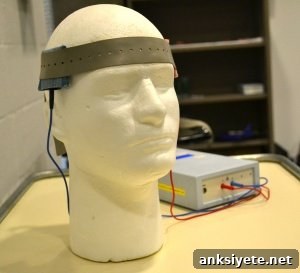
The team used transcranial direct current stimulation (tDCS), a noninvasive method that passes a weak electrical current through the skull to modulate neuronal excitability in targeted brain regions. By adjusting current polarity and electrode placement, tDCS can make neurons in a region slightly more or less likely to fire. In this experiment, stimulation was applied to reduce excitability in the target area, effectively diminishing behaviorally relevant activity in the left prefrontal cortex.
Groups, controls and results
Participants were randomly assigned to three stimulation conditions: tDCS over the left prefrontal cortex, tDCS over the right prefrontal cortex, or a placebo (sham) condition. Because tDCS produces a brief tingling when first applied, the sham group received only a short initial stimulation so they felt the sensation but received no ongoing current during the task. Each stimulation group was further divided so that half performed the uncommon-use task while the other half simply named the objects’ common uses. All participants also completed a number-memory task (digit span) to verify that any effects were specific to the creative task and not due to a general change in cognitive function.
Stimulation had no effect on participants’ ability to recall number sequences or on their performance when listing common uses for objects. However, it did affect performance on the uncommon-use task. Participants who received inhibitory stimulation over the left prefrontal cortex missed far fewer objects and responded more quickly than those in the right-prefrontal or sham groups. On average, the right-prefrontal and sham groups failed to produce an uncommon use for 15 of the 60 objects, whereas the left-prefrontal inhibition group missed only about eight. The left-inhibition group also supplied correct uncommon uses roughly one second faster on average—a substantial difference in psychological research, where effects often measure only milliseconds.
Implications for creativity and development
These results support the idea that strong cognitive control is not always beneficial. In situations where flexibility and broad consideration of features help—such as generating novel uses for objects—reducing top-down filtering can improve performance. The findings also suggest a developmental perspective: the prefrontal cortex matures slowly in humans, and this prolonged immaturity may allow children to excel at imaginative tasks and rapid knowledge acquisition because they filter less information as irrelevant during early learning.
Thompson-Schill and colleagues note that selectively withholding filtering can be advantageous when learning or when a task lacks a clearly defined goal. In such contexts, keeping more information in play increases opportunities to discover new associations and uses.
Notes about this cognitive neuroscience and creativity research
The research was supported by the National Institutes of Health and the Robert Wood Johnson Foundation.
Contact: Evan Lerner – University of Pennsylvania
Source: University of Pennsylvania press release
Image Source: The tDCS image is adapted from, and credited to, the University of Pennsylvania press release. The brain diagram with the prefrontal cortex highlighted is credited to Gray’s Anatomy and is public domain.
Original Research: Abstract for “Noninvasive transcranial direct current stimulation over the left prefrontal cortex facilitates cognitive flexibility in tool use” by Evangelia G. Chrysikou, Roy H. Hamilton, H. Branch Coslett, Abhishek Datta, Marom Bikson and Sharon L. Thompson-Schill in Cognitive Neuroscience. Published online February 21, 2013. DOI: 10.1080/17588928.2013.768221