
Summary: Researchers identified a protein that helps zebrafish rebuild severed spinal cord tissue, a discovery that may guide new approaches to human tissue repair.
Source: Duke.
Healing Protein Bridges Severed Tissue in Fish
A common freshwater zebrafish may cost little at a pet store, but it demonstrates an extraordinary ability: its spinal cord can fully regenerate after being severed, an injury that typically causes permanent paralysis in humans. Duke University researchers studying this natural recovery have identified a protein that plays a central role in the process. Their findings, published in the journal Science, point to potential avenues for developing therapies that improve tissue repair in humans.
“This is one of nature’s most remarkable feats of regeneration,” said senior investigator Kenneth Poss, professor of cell biology and director of Duke’s Regeneration Next initiative. “Because effective therapies for restoring lost tissues remain limited, studying animals like zebrafish can reveal important clues about how to stimulate regeneration.”
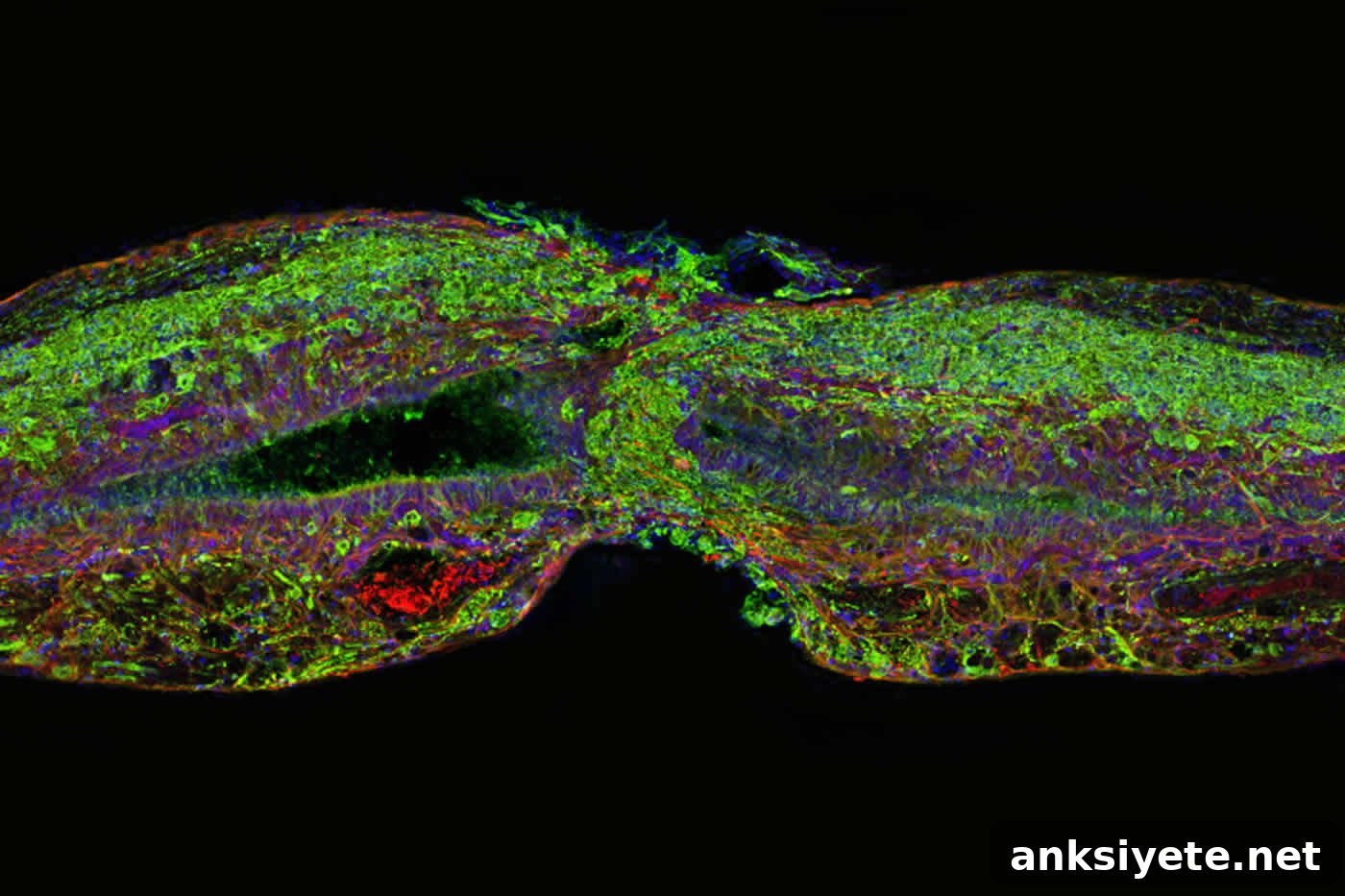
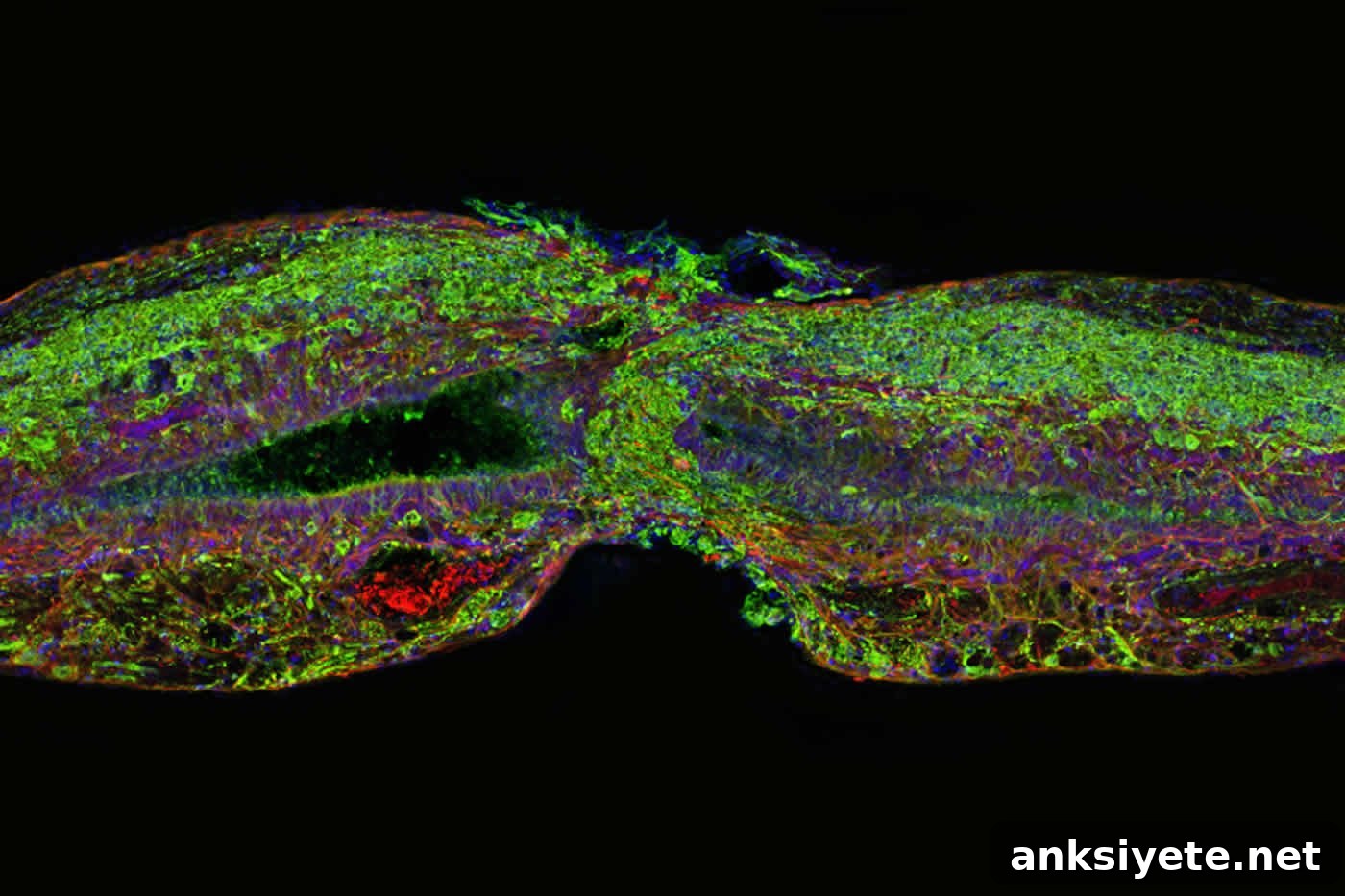
When a zebrafish’s spinal cord is cut, an actual cellular bridge forms across the injury. Certain support cells, called glia, extend long cellular projections across the gap—sometimes tens of times their own length—to physically connect the separated ends. Nerve cells then follow these glial paths. Over roughly eight weeks, new nerve tissue fills the gap and the fish recover full motor function.
To discover which molecules drive this repair, the team performed a genome-wide screen to identify genes whose activity rises sharply after spinal cord injury. Among dozens of genes activated by injury, seven encoded secreted proteins. One of these, connective tissue growth factor a (ctgfa or CTGF), stood out because its expression increased in the glial cells that form the initial bridge during the first two weeks after injury.
“We were surprised to see CTGF expressed only in a subset of glial cells after injury,” said lead author Mayssa Mokalled. “That pattern suggested those cells and this gene are important.” When the researchers generated zebrafish lacking CTGF, those fish were unable to regenerate their spinal cords. Conversely, adding the human CTGF protein to the injury site in zebrafish enhanced bridging and improved swimming by two weeks after injury, indicating that the human and fish proteins are functionally similar.
Humans and zebrafish share most protein-coding genes, and the human CTGF protein is nearly 90% identical at the amino acid level to the zebrafish version. The research team found that CTGF is a multi-domain protein, but the second half of the molecule appears to be the main driver of the healing response. That discovery could simplify potential therapeutic approaches by focusing on the most active portion of CTGF.
Poss emphasized that CTGF alone is unlikely to be sufficient to enable full spinal cord regeneration in humans because mammalian healing is complicated by factors such as scar formation, which blocks regrowth. The Duke group plans to test CTGF in mammalian systems, including mice, to learn when and where the protein is produced in those species and whether manipulating it can improve repair.
“Mouse experiments could be key,” Mokalled said. “We need to know if mice express CTGF after injury, in which cell types, and whether altering that expression changes outcomes.” These follow-up studies may reveal whether the difference between regenerative animals and non-regenerative mammals lies in the protein’s presence, its regulation, or both.
In addition to CTGF, the initial screen identified other secreted proteins induced after injury. The researchers intend to investigate those candidates as well, which could uncover additional components of the zebrafish regenerative program and suggest complementary strategies for enhancing tissue repair.
Implications and Next Steps
While CTGF advances are promising, the path from fish to human therapies will require careful study. Mammalian injuries trigger inflammatory responses and scar tissue that impede regrowth, and effective treatments will likely need to address multiple biological barriers. The Duke team aims to evaluate CTGF’s effects in mammalian models and to explore other secreted factors identified by their screen. Together, these efforts could yield new strategies for improving recovery after spinal cord injury and for promoting tissue repair more broadly.
Contributors to the study include Mayssa H. Mokalled, Chinmoy Patra, Amy L. Dickson, Toyokazu Endo, Didier Y. R. Stainier, and Kenneth D. Poss. Additional collaborators were Amy Dickson and Toyokazu Endo at Duke University, and Chinmoy Patra and Didier Stainier at the Max Planck Institute for Heart and Lung Research.
Funding: The work was supported by the National Institutes of Health (T32HL007101, R01 HL081674), the Max Planck Society, and Duke University School of Medicine. Duke’s Office of Licensing and Ventures has pursued patent applications related to this research.
Source: Duke University. Image credit: Mayssa Mokalled and Kenneth Poss, Duke. Video credit: Duke University. Original research published in Science: “Injury-induced ctgfa directs glial bridging and spinal cord regeneration in zebrafish” by Mayssa H. Mokalled et al., published online November 4, 2016 (doi:10.1126/science.aaf2679).
Abstract
Unlike mammals, zebrafish efficiently regenerate functional nervous system tissue after major spinal cord injury. Whereas glial scarring presents a roadblock for mammalian spinal cord repair, zebrafish glial cells form a bridge across severed spinal cord tissue and facilitate regeneration. A genome-wide profiling screen for secreted factors up-regulated during zebrafish spinal cord regeneration identified connective tissue growth factor a (ctgfa) as induced in and around glial cells that participate in initial bridging events. Mutations in ctgfa disrupted spinal cord repair, and transgenic ctgfa overexpression or local delivery of human CTGF recombinant protein accelerated bridging and functional regeneration. This study reveals that CTGF is necessary and sufficient to stimulate glial bridging and natural spinal cord regeneration.