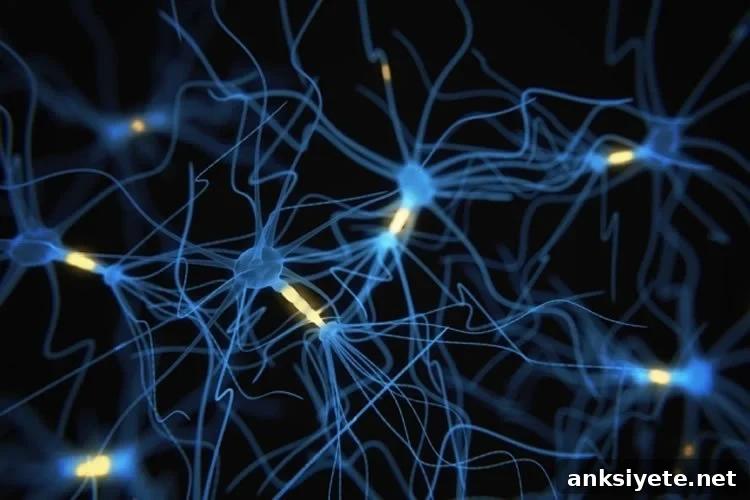
Summary: Researchers have developed a neuron-labeling method that captures which cells are active at a precise moment. The new technique offers minute-scale temporal precision and could reveal fast neural dynamics that longer-term labeling methods miss.
Source: MIT.
FLARE technique can reveal which cells respond during different tasks
Cognitive processes such as decision-making or rapid sensory responses often unfold in seconds to minutes. For decades, neuroscientists have sought tools that can capture neuronal activity with comparable temporal resolution. A team of researchers from MIT and Stanford has now introduced a method that labels neurons only when they are active during a user-defined, short time window, essentially creating a snapshot of neural activity at that moment.
The technique, called FLARE, senses the coincidence of elevated intracellular calcium and brief exposure to blue light. When both signals occur together, an engineered transcription factor moves to the nucleus and triggers expression of a chosen reporter gene. That gene can encode a fluorescent protein to mark active cells, or a functional protein such as an optogenetic actuator or a DREADD to allow later manipulation of those same neurons.
“Thoughts and many cognitive processes typically last on the order of tens of seconds,” says Kay Tye, assistant professor in the Department of Brain and Cognitive Sciences at MIT and a senior author on the work. “FLARE is designed to capture activity within that short timeframe, enabling experiments that require minute-scale specificity rather than the hours-to-days window offered by prior methods.”
The technology was developed by collaborators including Kay Tye and Alice Ting, now at Stanford, with the lead experimental work carried out by a Stanford postdoctoral researcher. The system is genetically encoded and built to be delivered via viral vectors, making it adaptable to many model organisms and experimental settings.
Why FLARE improves temporal precision
Traditional activity-dependent labeling tools typically rely on immediate-early genes such as cfos to drive reporter expression. Those approaches are powerful but inherently slow: they label cells that were active over extended intervals (hours to days), which blurs short-lived patterns of neural recruitment. FLARE instead requires two simultaneous conditions — a rise in cytosolic calcium, which correlates with neuronal firing, and controlled illumination with blue light — to activate transcription tightly at the desired moment.
Because the calcium signal reflects rapid electrical activity, and the light can be delivered with precise timing, FLARE provides labeling on a minute-scale timescale. In cultured neurons, the system produced a high light-to-dark ratio and strong discrimination between high- and low-calcium states after short stimulation. In live mice, the approach successfully marked neurons in motor cortex that were active while animals ran on a treadmill.
Applications: imaging, manipulation, and disease studies
By marking only the neurons active during a defined short interval, researchers can later target that specific population for imaging, electrophysiology, or functional manipulation. For example, FLARE-labeled cells could be made to express optogenetic proteins so investigators can test whether reactivating that precise ensemble reproduces a behavior or perceptual state. Alternatively, expressing DREADDs would enable pharmacological control of the labeled neurons during subsequent experiments.
Such capabilities open experiments that were previously impractical: probing the circuit dynamics of rapid decisions, identifying neurons that represent brief emotional or sensory events, and tracing how information flows through networks during specific task epochs. The rapid labeling also helps avoid conflating activity from multiple behaviors that occur at different times.
Beyond basic research, the method may help isolate neuron populations implicated in disease processes. For instance, selectively labeling neurons that show pathological activity patterns could guide targeted interventions while sparing nearby healthy cells.
Performance and future directions
The current FLARE implementation achieves labeling within minutes and shows low background activity in the absence of coincident calcium and light, a desirable property for specificity. Authors describe this as a first-generation tool with room for optimization to further tighten temporal resolution and expand applications. Because its components are modular, researchers can adapt FLARE to drive different reporters or effectors depending on experimental goals.
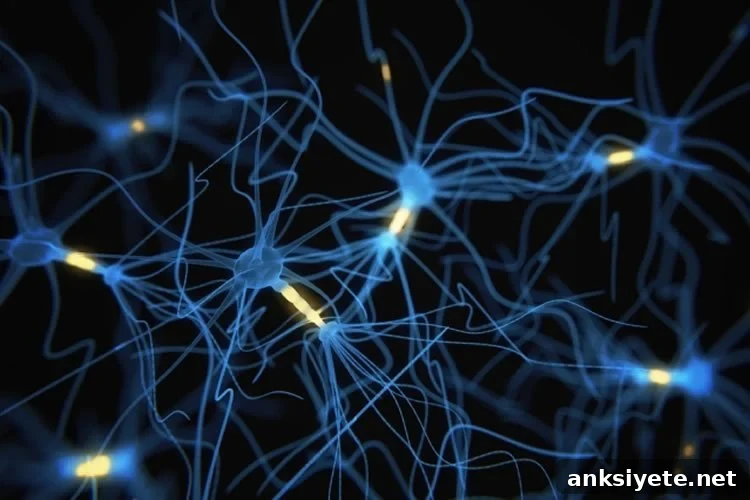
Independent experts note that a tool that reliably and precisely labels neurons active during specific thoughts or behaviors would have a major impact on systems and circuit neuroscience. Early data reported by the authors indicate strong specificity and minimal off-target labeling, suggesting the approach will be useful for many laboratories.
Funding: The work received support from the JPB Foundation, the National Institutes of Mental Health, and a National Institutes of Health Director’s New Innovator Award.
Authors and source: The study was carried out by Wenjing Wang and colleagues, with senior contributions from Kay M. Tye and Alice Y. Ting. The report was summarized from MIT communications and the original paper published in Nature Biotechnology.
Abstract (concise)
FLARE is an engineered, light- and calcium-gated transcription factor that enables precise, minute-scale labeling and manipulation of neurons that are active during a defined time window. By requiring both elevated cytosolic calcium and externally applied blue light for activation, FLARE drives expression of fluorescent proteins, opsins, or other genetic tools selectively in neurons that experience activity during the illumination period. In cultured neurons and in adult mouse cortex, FLARE produces robust activity-dependent transcription with minimal background, enabling functional interrogation of behaviorally relevant neural populations.
This article summarizes findings and context provided by the authors and institutional communications. The described technique aims to combine temporal precision with genetic specificity to advance the study of rapid neural processes and the circuits that support cognition and behavior.