
Summary: Researchers have identified a link between loss of ovarian hormones and altered activity in the nucleus accumbens after menopause.
Source: University of Missouri.
Potential treatments may restore motivation for physical activity.
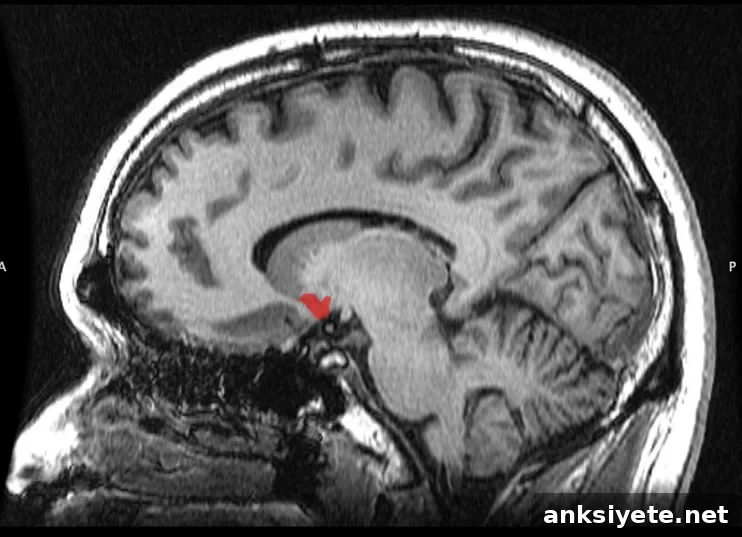
Women commonly experience a decline in physical activity as they enter menopause, but the biological reasons for this change have been unclear. Researchers at the University of Missouri now report a connection between diminished ovarian hormones and changes in the brain’s reward center—the nucleus accumbens—a region that helps process motivation, reward, pleasure and the drive to exercise. Their results suggest that targeting receptors in this brain region could become a strategy to preserve or restore motivation for physical activity in postmenopausal women.
“Postmenopausal women face a higher risk of weight gain and related health problems,” said Victoria Vieira-Potter, assistant professor of nutrition and exercise physiology at MU. “It’s especially difficult because these physical changes come at a time when many women are already coping with other menopausal symptoms. Our findings indicate that reductions in physical activity after menopause may stem from changes in brain signaling rather than from increased caloric intake alone.”
In the study, Vieira-Potter and colleagues compared two groups of female rats bred for contrasting aerobic capacity: one group with high intrinsic fitness and one group with low fitness. The researchers monitored voluntary wheel running before and after surgical removal of the ovaries (ovariectomy) and measured expression of dopamine receptor genes in the nucleus accumbens. Dopamine signaling in this brain region is closely tied to motivation and reward-driven behaviors such as voluntary exercise.
The high-fit rats ran substantially more than the low-fit rats prior to ovariectomy, and they showed higher ratios of excitatory to inhibitory dopamine receptor gene expression in the nucleus accumbens. However, both groups experienced significant reductions in voluntary wheel running after ovariectomy. Notably, although high-fit rats started with greater running distances, they also experienced a larger absolute drop in running after ovarian hormone loss, so that eleven weeks after ovariectomy the two groups no longer differed in activity levels. This decline in activity paralleled a reduction in the ratio of excitatory to inhibitory dopamine receptor gene expression, implicating changes in dopamine signaling as a likely contributor to the decrease in motivated physical activity.
“The hormonal shifts that occur with menopause caused measurable changes in the brain that translated into reduced physical activity in both groups of rats,” Vieira-Potter said. “These data support prior observations in humans and animal models that postmenopausal weight gain is more likely related to decreased overall activity than to increased food intake. If we can identify how ovarian hormone loss alters dopamine signaling in the nucleus accumbens, it may be possible to develop treatments that preserve motivation to be physically active.”
The study was co-authored by Jaume Padilla, assistant professor; Jill Kanaley, professor and associate chair, both in the Department of Nutrition and Exercise Physiology at MU; and Victoria J. Vieira-Potter. Other contributors included Young-Min Park (former graduate student), Terese Zidon (graduate student), Rebecca Welly (lab manager), Matthew Will (associate professor of psychological sciences and research investigator), Frank Booth (professor of biomedical sciences), and additional collaborators from the University of Michigan Medical School and the University of Kansas Medical Center.
Funding: The research, titled “Effects of Intrinsic Aerobic Capacity and Ovariectomy on Voluntary Wheel Running and Nucleus Accumbens Dopamine Receptor Gene Expression,” was published in Physiology and Behavior and supported by a MU Research Council grant.
Original research: The paper reports that rats bred for high intrinsic aerobic capacity (HCR) exhibit greater voluntary running and a higher excitatory/inhibitory dopamine receptor mRNA ratio in the nucleus accumbens than low-capacity rats (LCR). Both HCR and LCR animals experienced significant reductions in wheel running after ovariectomy. Surprisingly, HCR animals showed a larger ovariectomy-induced decline in running so that activity levels converged between lines by 11 weeks post-ovariectomy. These behavioral changes were associated with ovariectomy-induced reductions in the ratio of excitatory to inhibitory dopamine receptor mRNA expression in the nucleus accumbens, suggesting that changes in dopamine signaling may underlie reduced motivation for physical activity following loss of ovarian hormones.
Conclusion: The findings indicate that dopamine signaling in the nucleus accumbens plays an important role in motivation to run in female rats. Intrinsic fitness correlates with higher running and a dopamine receptor expression profile favoring excitatory signaling, but high intrinsic fitness does not protect against ovariectomy-induced decreases in motivated physical activity or the associated changes in dopamine receptor expression. These results point to the nucleus accumbens dopamine system as a potential therapeutic target to help maintain physical activity after menopause.
Source: Sandra Jacob – University of Missouri
Article abstract (condensed)
The researchers studied 40 female HCR and LCR rats given either a sham operation or ovariectomy at about 27 weeks of age, then provided access to running wheels for 11 weeks. Weekly wheel running distance was recorded and nucleus accumbens tissue was analyzed for dopamine receptor mRNA expression at sacrifice. HCR rats ran farther and had a higher excitatory/inhibitory dopamine mRNA ratio compared to LCR. Across all animals, wheel running distance correlated positively with this ratio. Ovariectomy reduced wheel running in both lines and reduced the excitatory/inhibitory dopamine receptor mRNA ratio; the reduction in activity was proportionally greater in HCR animals, leading to similar activity levels between groups by 11 weeks after ovariectomy.
Park Y-M, Kanaley JA, Padilla J, Zidon T, Welly RJ, Will MJ, Britton SL, Koch LG, Ruegsegger GN, Booth FW, Thyfault JP, Vieira-Potter VJ. Effects of Intrinsic Aerobic Capacity and Ovariectomy on Voluntary Wheel Running and Nucleus Accumbens Dopamine Receptor Gene Expression. Physiology & Behavior. Published online June 7, 2016. doi:10.1016/j.physbeh.2016.06.006