
Summary: Researchers identify the protein CRTC1 as a regulator of gene expression that strengthens long-term memory.
Source: Rutgers University.
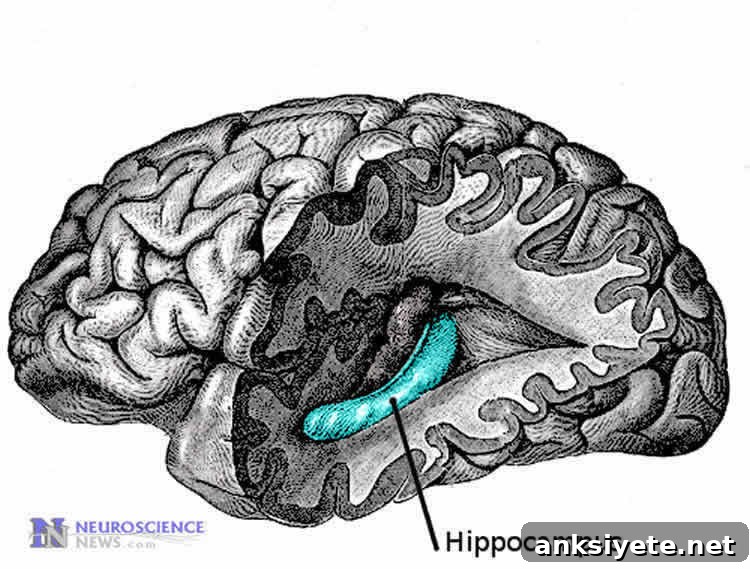
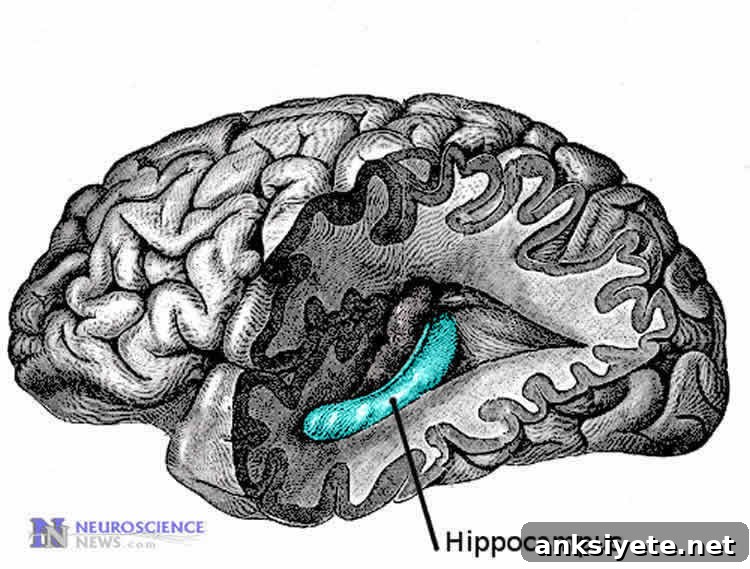
Rutgers University researchers have identified a molecular pathway in the hippocampus that appears to strengthen long-term memory and could point toward drug-based strategies to treat memory decline and dementia.
“Memory decline causes deep suffering for affected individuals and their families and carries enormous social and economic costs,” said Gleb Shumyatsky, an associate professor in the Department of Genetics in the School of Arts and Sciences and a co-author of the study. “Our findings may help guide future therapeutic approaches for age-related memory loss and neurodegenerative conditions.”
The study, published January 10 in Cell Reports, examined how signals travel from synapses — the contact points between neurons — to the nuclei of hippocampal neurons, the brain region central to learning and memory. The team focused on how these synapse-to-nucleus signals control gene transcription, the cellular process that turns genes on and off to produce proteins needed for memory formation and maintenance.
Using experiments in mice, the researchers found that the transcriptional cofactor CRTC1 boosts memory by regulating gene expression. When CRTC1 moves from synapses into the neuronal nucleus after learning, it promotes sustained activation of specific genes that support long-lasting memory.
“There is potential for this mechanism to be relevant in the human brain,” Shumyatsky said. “In our experiments, the longer CRTC1 remained active in the mouse hippocampus after training, the stronger and more persistent the memory became.”
Researchers used two behavioral models — fear conditioning and object location memory — to compare weak versus strong training. Mice receiving more intensive or prolonged training showed higher nuclear activity of CRTC1, stronger gene transcription at key targets, and superior long-term memory performance compared with mice that experienced weaker training.
The study identified Fgf1 (fibroblast growth factor 1) as a critical gene regulated by CRTC1. FGF1 supports neuronal functions that include cell growth, survival, and tissue maintenance. Learning-induced nuclear transport of CRTC1 activates transcription of Fgf1, linking the strength of the learning event to the duration and intensity of gene expression and, ultimately, to memory strength.
Normal aging often brings modest memory decline, but progressive memory loss is a hallmark of neurodegenerative diseases such as Alzheimer’s disease. These conditions reflect, in part, breakdowns in the brain’s communication networks and in molecular pathways that sustain cognitive function. Because consistent biological targets for treating age-related memory impairment have been elusive, identifying pathways like the CRTC1–FGF1 axis provides a tangible direction for future research into therapeutic development.
Shumyatsky emphasized the translational value of the findings. “Molecular mechanisms of memory are remarkably conserved between mice and humans. By mapping the signaling events that modulate gene transcription after learning, we can better understand how memory is maintained and explore ways to strengthen it pharmaceutically,” he said.
Source: Robin Lally – Rutgers University
Image Source: NeuroscienceNews.com image is in the public domain.
Original Research: Full open access research titled “CRTC1 Nuclear Translocation Following Learning Modulates Memory Strength via Exchange of Chromatin Remodeling Complexes on the Fgf1 Gene” by Shusaku Uchida et al., published in Cell Reports, January 10, 2017. DOI: 10.1016/j.celrep.2016.12.052
MLA: Rutgers University. “Protein in Brain Pathway Enhances Memory and Could Be Dementia Treatment Target.” NeuroscienceNews. January 11, 2017.
APA: Rutgers University (2017, January 11). Protein in Brain Pathway Enhances Memory and Could Be Dementia Treatment Target. NeuroscienceNews.
Chicago: Rutgers University. “Protein in Brain Pathway Enhances Memory and Could Be Dementia Treatment Target.” January 11, 2017.
Abstract
CRTC1 Nuclear Translocation Following Learning Modulates Memory Strength via Exchange of Chromatin Remodeling Complexes on the Fgf1 Gene
Highlights
• Neuronal stimulation and learning induce Fgf1b expression in the mouse hippocampus.
• FGF1 is essential for enduring long-term potentiation and for enhancing memory.
• Learning triggers nuclear transport of CRTC1, which activates Fgf1b transcription.
• CRTC1-mediated replacement of CBP by KAT5 on the Fgf1b promoter supports sustained transcription and stronger memory.
Summary
Memory formation depends on synapse-to-nucleus communication that regulates gene transcription, yet the signaling logic behind this process has been unclear. This study identifies CRTC1 as a key regulator of prolonged gene transcription and memory strength in the hippocampus. After associative learning, CRTC1 translocates from synaptic sites to the nucleus in an activity-dependent manner and promotes transcription of Fgf1b. Both weak and strong training cause departure of the HDAC3-N-CoR corepressor complex from the Fgf1b promoter, allowing a transient transcriptional response driven by CRTC1, phosphorylated CREB, and CBP. With stronger training, CRTC1 facilitates exchange of CBP for KAT5, independently of CREB phosphorylation, producing persistent Fgf1b transcription and enhanced memory. These results indicate that memory strength depends on activity-dependent chromatin remodeling and temporal control of gene transcription at specific CREB/CRTC1-target genes.
Reference: “CRTC1 Nuclear Translocation Following Learning Modulates Memory Strength via Exchange of Chromatin Remodeling Complexes on the Fgf1 Gene” by Shusaku Uchida, Brett J.W. Teubner, Charles Hevi, Kumiko Hara, Ayumi Kobayashi, Rutu M. Dave, Tatsushi Shintaku, Pattaporn Jaikhan, Hirotaka Yamagata, Takayoshi Suzuki, Yoshifumi Watanabe, Stanislav S. Zakharenko, and Gleb P. Shumyatsky. Cell Reports. Published online January 10, 2017. DOI: 10.1016/j.celrep.2016.12.052