Summary: The immune system’s chronic response, rather than direct parasite action, may be largely responsible for the health and behavioral changes linked to Toxoplasma gondii infections.
Source: The Conversation
Illness changes us. From a runny nose during a cold to extreme aggression in rabies, infections often alter behavior in ways that help pathogens spread.
Many pathogens modify host behavior to improve their own transmission. For example, rabies increases aggression to promote virus transfer through bites. Other microbes act more subtly. The single-celled parasite Toxoplasma gondii reproduces sexually only in cats but can infect almost any warm-blooded animal. In rodents, latent infection alters instinctive behavior so that infected animals become more likely to be eaten by cats — a transmission advantage for the parasite.
That capability raises concern because a large portion of people worldwide carry Toxoplasma tissue cysts, often in the brain. Latent toxoplasmosis in humans has been linked with several neurological and psychiatric conditions, including schizophrenia, intermittent explosive disorder and suicide, but a causal relationship has not been established.
Could Toxoplasma manipulate human behavior as it does in rodents? Is it possible to remove the parasite and restore normal behavior? I am a microbiologist who has studied Toxoplasma for more than two decades, seeking both to understand how the parasite affects hosts and to find weaknesses that clinicians might exploit to treat this lifelong infection.
Working with biochemist Ronald Wek and neuroscientist Stephen L. Boehm II, my lab made a surprising discovery: many behavioral effects attributed to the parasite itself may instead be driven by the host’s immune response to chronic brain infection.
Your brain on Toxoplasma
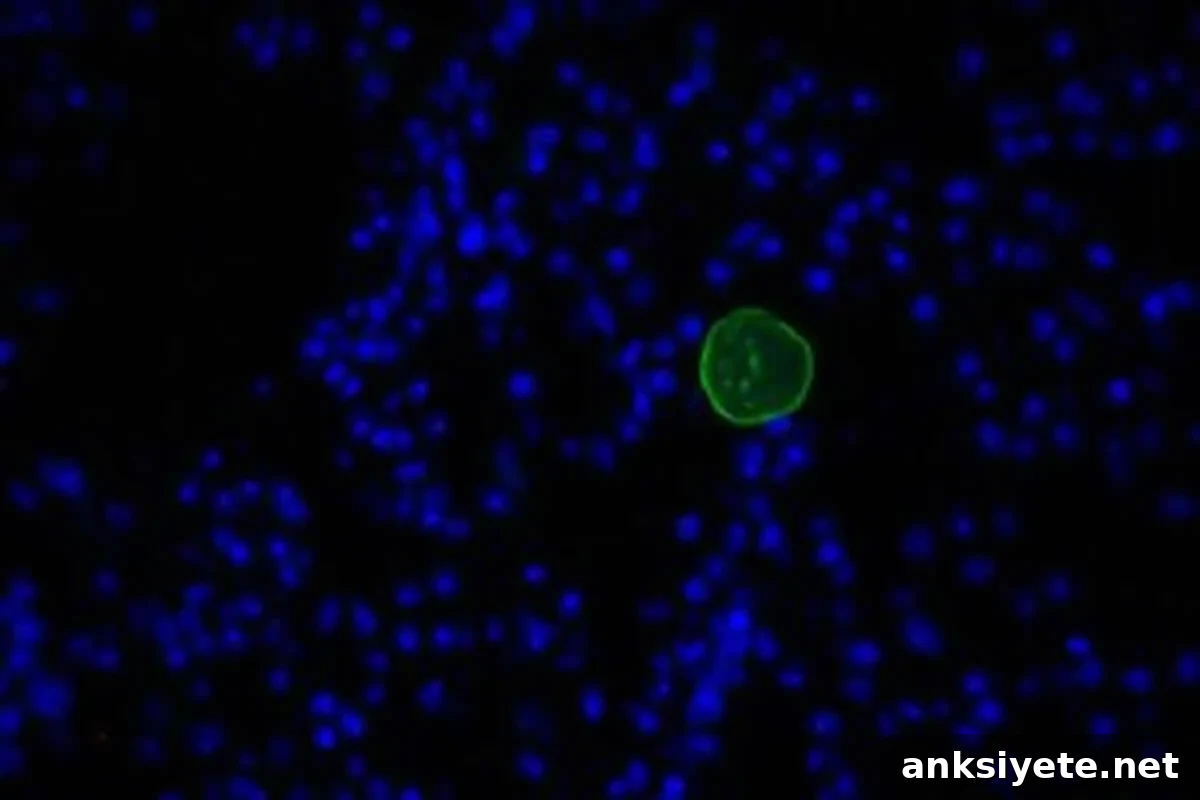
Toxoplasma gondii is widespread, forming latent tissue cysts in infected animals that can persist for life. These cysts are commonly found in brain, heart and skeletal muscle, and infection can occur through ingestion of oocysts shed by cats or by consuming undercooked meat containing tissue cysts. In healthy people the infection is often asymptomatic, but the tissue cysts remain and can recruit a persistent immune response.
In rodents, latent toxoplasmosis produces clear behavioral shifts: infected mice and rats may become hyperactive and lose their innate fear of predators like cats. How a relatively inactive cyst encased in a protective wall drives such profound behavioral changes has been a long-standing mystery. Toxoplasma releases many proteins that can alter host cell gene expression, but connecting those molecular changes to behavior has proven difficult.
Previous work from our group showed that guanabenz, an FDA-approved antihypertensive drug, dramatically reduced brain cyst numbers in one strain of infected mice (BALB/c). Jennifer Martynowicz, an M.D.-Ph.D. student in the lab, used guanabenz to ask a simple question: if cyst counts in the brain are reduced, does behavior return to normal?
Behavior reverses after treatment — but not because cysts disappeared
Martynowicz treated hyperactive, infected BALB/c mice with guanabenz for three weeks and found cyst numbers fell by roughly 75%, consistent with earlier observations. Treated animals also lost the hyperactivity typically associated with latent toxoplasmosis and behaved like uninfected controls. This result initially suggested a direct correlation between cyst burden and altered behavior.
However, when the experiment was repeated in a different strain of mice (C57BL/6), the results were unexpected. In C57BL/6 animals guanabenz did not reduce the number of brain cysts, yet it still reversed the hyperactive behavior. These findings decoupled behavioral change from parasite cyst count and prompted a closer look at another variable: neuroinflammation.
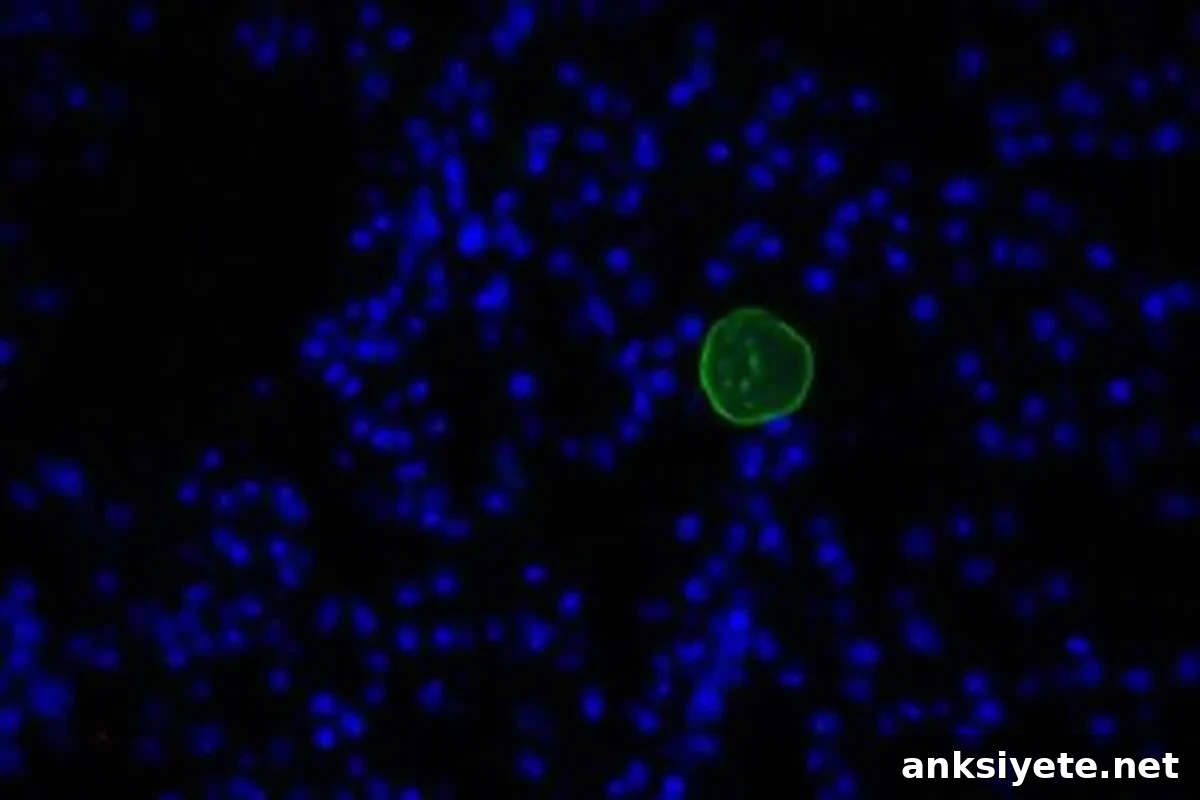
Latent brain cysts recruit immune cells and create a low level of sustained inflammation. Guanabenz has known anti-inflammatory properties, and in both mouse strains the drug reduced signs of brain inflammation. Taken together, the data suggest that the hyperactivity observed in infected mice is more likely a consequence of the immune response and chronic neuroinflammation than direct manipulation by the parasite itself.
How inflammation produces hyperactivity is not yet clear. Nonetheless, these results align with developing evidence linking inflammation to certain psychiatric conditions; for example, some studies have explored associations between inflammation and attention-deficit hyperactivity disorder (ADHD). If inflammation drives behavioral changes in the context of chronic brain infection, then modulating the immune response could be a viable strategy to manage or reverse some neurological consequences.
Our findings, published in the journal mBio, indicate that neurological outcomes from brain infections like toxoplasmosis may depend on individual immune responses. This perspective shifts the therapeutic focus: rather than targeting the parasite alone, treatments that reduce damaging inflammation could help restore normal behavior in some infected hosts.
Funding: Bill Sullivan works for Indiana University School of Medicine and his research is supported by grants from the National Institutes of Health.
Source:
The Conversation
Media Contacts:
Bill Sullivan – The Conversation
Image Source:
The image is credited to Jennifer Martynowicz.