
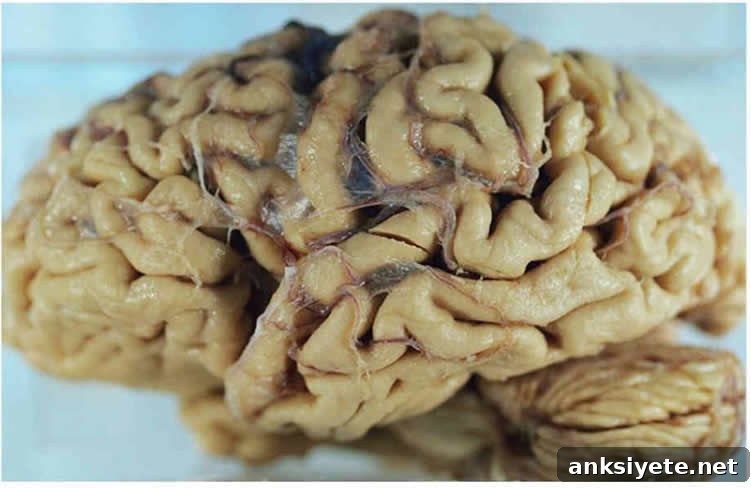
Summary: Researchers report that mice can retain memory and learning ability when almost all apolipoprotein E (ApoE) is removed from the brain while ApoE remains in the liver to regulate blood cholesterol.
Source: UT Southwestern
ApoE Can Be Reduced in the Brain Without Impairing Memory in Mice
New research from the Peter O’Donnell Jr. Brain Institute at UT Southwestern shows that nearly complete removal of apolipoprotein E (ApoE) from the brain does not necessarily impair learning and memory in mice, provided ApoE remains active in the liver to maintain normal cholesterol levels. The findings clarify an important question for Alzheimer’s research: whether therapies that lower ApoE in the brain would harm cognition.
The study also found that when ApoE is absent from both brain and peripheral tissues, the resulting rise in blood cholesterol is associated with cognitive decline. This observation supports growing evidence that cardiovascular health and lipid metabolism influence brain function and dementia risk.
ApoE is a multifunctional protein that transports cholesterol and lipid-related molecules. Different variants of the ApoE gene influence how effectively the brain clears b-amyloid and other molecules that can aggregate into the plaques associated with Alzheimer’s disease. The ApoE2 variant is most effective at promoting clearance, ApoE3 is intermediate, and ApoE4 is least effective and is linked to increased Alzheimer’s risk.
Because the ApoE4 isoform contributes to plaque buildup, lowering ApoE in the brain has been proposed as a potential therapeutic strategy. However, prior studies with ApoE knock-out mice showed synaptic loss and cognitive deficits, leaving open the possibility that ApoE itself is required for normal brain function. Those earlier mouse models also exhibited severe changes in plasma lipid levels, complicating interpretation of whether cognitive changes were due to lack of brain ApoE or systemic lipid disturbances.
To separate these effects, investigators created a model in which ApoE expression was largely eliminated in the brain but preserved in peripheral tissues such as the liver. These brain-specific ApoE knock-out (bEKO) mice had synaptic alterations comparable to full ApoE knock-outs, yet they did not show the same learning and memory impairments. Importantly, mice lacking ApoE both centrally and peripherally developed dysregulated cholesterol and showed cognitive decline, indicating that elevated plasma lipids can independently impair cognition.
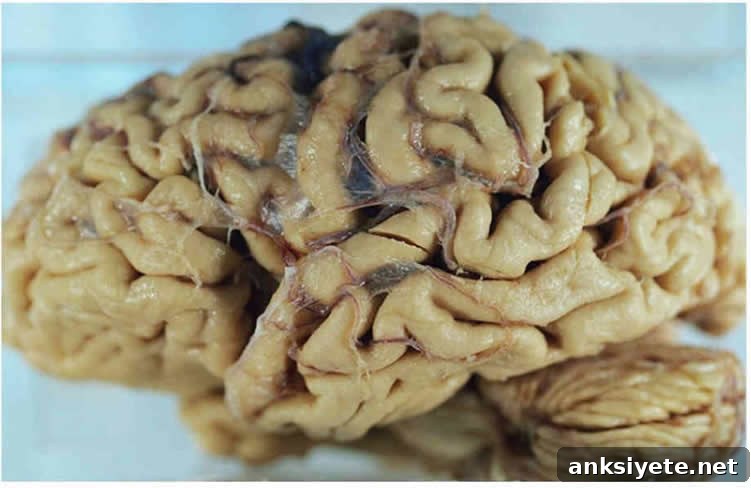
“This approach still holds potential,” said Dr. Joachim Herz, principal investigator of the study and holder of the Thomas O. and Cinda Hicks Family Distinguished Chair in Alzheimer’s Disease Research. Dr. Herz is Director of the Center for Translational Neurodegeneration Research at the O’Donnell Brain Institute. He noted that additional research is required to determine how increased plasma lipids negatively affect the brain and which pathways mediate that effect.
The study, published in the Journal of Neuroscience, strengthens the rationale for exploring brain-targeted ApoE reduction as a therapeutic avenue for Alzheimer’s disease. By demonstrating that cognitive function can be preserved when peripheral ApoE supports healthy lipid regulation, the research suggests that central and peripheral roles of ApoE are separable and both relevant to brain health.
The lead author of the paper is Courtney Lane-Donovan, a Medical Science Training Program student at UT Southwestern, who worked with co-authors Wen Mai Wong, Murat S. Durakoglugil, Catherine R. Wasser, Shan Jiang, Xunde Xian, and Joachim Herz. The work was conducted in the Department of Molecular Genetics and the Center for Translational Neurodegeneration Research.
Funding: The research received support from the National Institutes of Health, the American Health Assistance Foundation, the Consortium for Frontotemporal Dementia Research, the BrightFocus Foundation, the Lupe Murchison Foundation, and the Ted Nash Long Life Foundation.
Publication details: The findings are described in the article “Genetic Restoration of Plasma ApoE Improves Cognition and Partially Restores Synaptic Defects in ApoE-Deficient Mice” published online in the Journal of Neuroscience on September 28, 2016. Authors: Courtney Lane-Donovan, Wen Mai Wong, Murat S. Durakoglugil, Catherine R. Wasser, Shan Jiang, Xunde Xian, and Joachim Herz.
Abstract (edited for clarity)
Alzheimer’s disease is the most common form of dementia in people over 65. The ε4 allele of apolipoprotein E (ApoE4) is the most prevalent genetic risk factor for Alzheimer’s, and strategies that reduce ApoE are under consideration. A key unresolved question is whether ApoE is required for normal brain function. ApoE knock-out mice display synaptic loss and cognitive dysfunction, but they also develop severely elevated plasma lipids, which may independently affect brain health.
To address this, researchers produced a mouse model with normal ApoE levels in peripheral tissues but severely reduced ApoE in the brain, permitting study of brain ApoE deficiency in the context of normal plasma lipid profiles. These brain ApoE knock-out (bEKO) mice showed synaptic loss and dysfunction similar to full knock-outs, but did not exhibit the learning and memory deficits seen in ApoE knock-out mice. The memory deficit in full ApoE knock-outs was specific to female mice and was fully rescued in female bEKO mice. While certain synaptic signaling ratios were reduced in full knock-outs, these measures were unchanged in bEKO mice compared with controls. The results indicate that plasma lipid levels influence cognition and synaptic function independently of ApoE expression within the brain.
Significance: Targeting ApoE in the brain remains a promising strategy for Alzheimer’s therapy. Restoring peripheral ApoE to normalize plasma lipids can rescue learning and memory even if synaptic loss persists, suggesting that central and plasma ApoE are independent factors that together affect brain health.
Readers are encouraged to share information from this summary for educational and research awareness purposes.