
Fasting-Activated Brain Pathway Strengthens Gut Barrier and Limits Inflammation
Summary: Researchers identify a brain-to-gut molecular pathway activated during fasting that helps prevent intestinal bacteria from leaking into the bloodstream and triggering inflammation.
Source: Salk Institute
Researchers at the Salk Institute report that a molecular pathway switched on in the brain during fasting helps reinforce the intestinal barrier and reduce bacterial translocation into the bloodstream.
Published in the Proceedings of the National Academy of Sciences (PNAS), the study describes how a genetic switch in the brain, called Crtc, communicates with the gastrointestinal (GI) tract to prevent unnecessary immune activation during periods without food. By strengthening the gut barrier, this brain-gut signaling pathway reduces inflammation and conserves energy—findings that may eventually inform treatments for inflammatory bowel disease.
The gastrointestinal tract performs two essential roles: extracting nutrients from food and housing a complex community of microbes that aid digestion by producing enzymes and metabolites that break down fats and carbohydrates. Maintaining a strong intestinal barrier is critical to keep these helpful microbes confined to the gut and prevent their components from entering circulation and activating the immune system.
“Fasting has benefits that go beyond metabolism, influencing inflammation and brain function,” says Marc Montminy, professor in the Clayton Foundation Laboratories for Peptide Biology and holder of the J.W. Kieckhefer Foundation Chair. “Understanding how the gut maintains its barrier during fasting, and developing therapies to enhance that barrier, could offer advantages for people with inflammatory bowel disease.”
This study is part of a collaboration between the Montminy lab and John Thomas’ lab to define how Crtc, a brain genetic switch, regulates energy balance. Crtc interacts with the transcription factor CREB; both are activated by fasting and are known to affect long-term memory and metabolic responses. The teams used fruit flies as a model because flies share many metabolism-related genes and pathways with humans.
Prior work showed flies lacking Crtc are far more sensitive to starvation, surviving roughly half as long without food as normal flies. The researchers initially hypothesized this shortened survival reflected reduced fat or sugar stores in the mutants. Instead, the new data revealed a different, more complex explanation.
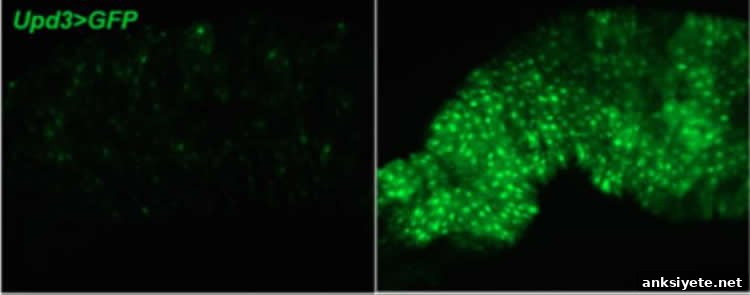
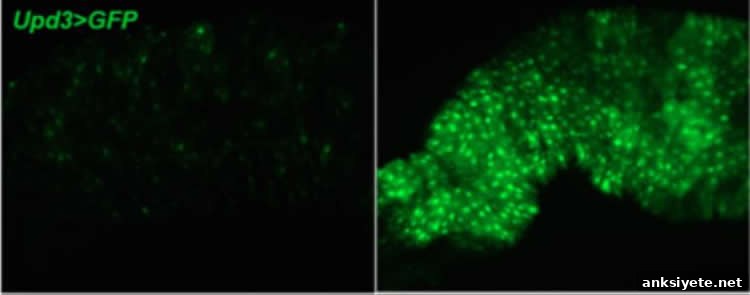
Guts from Crtc-deficient flies showed molecular signs of immune activation and inflammation. Microscopic images of fluorescently stained cells lining the intestinal tube revealed an unexpected increase in immune-related markers. Those observations suggested that the immune system in mutant flies was chronically engaged, an energetically expensive state that could hasten mortality during fasting.
The investigators found that without Crtc, the tight connections between intestinal epithelial cells—structures that form the gut barrier—became compromised. This breakdown allowed bacteria or bacterial components to leak from the gut into the fly’s circulation, triggering immune responses and depleting energy reserves. In other words, Crtc normally helps fortify the gut barrier during fasting to prevent bacterial translocation and unnecessary inflammation.
In the search for molecules that function with Crtc, the team identified short neuropeptide F (sNPF), which is expressed in the fly brain and is analogous to neuropeptide Y in mammals. sNPF is known to signal hunger and drive food-seeking behavior. Flies lacking sNPF in the brain displayed gut inflammation and disrupted intestinal tight junctions similar to those seen in Crtc-deficient flies, implicating sNPF as a neural mediator of gut barrier protection.
Conversely, increasing levels of Crtc or sNPF in neurons made flies more resilient to fasting: these animals survived longer without food and maintained tighter intestinal junctions, showing fewer signs of bacterial leakage and immune activation. These results support a model in which fasting activates Crtc in the brain, leading to neuropeptide signaling that enhances gut barrier function and limits inflammation.
The researchers are continuing experiments to determine how neuropeptides produced in the brain activate receptors in the gut to preserve barrier integrity and prevent bacterial invasion. Understanding the precise molecular steps and receptors involved will be important to translate these findings toward therapies that protect the gut barrier in humans.
Other contributors to this research include Biao Wang and Maria Giribaldi of the Salk Institute. Funding for the work came from the National Institutes of Health, the Leona M. and Harry B. Helmsley Charitable Trust, and the Glenn Centers for Research in Aging.
Original research: Proceedings of the National Academy of Sciences (PNAS). Source: Salk Institute. Image credit: Salk Institute.