
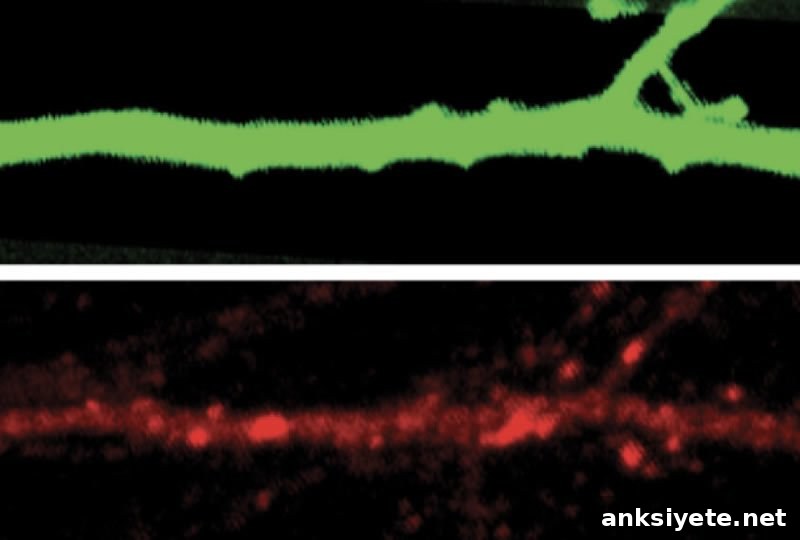
Summary: New evidence indicates that lithium, a medication most commonly used to stabilize mood in bipolar disorder, may reduce repetitive behaviors in models of SHANK3-related autism by restoring disrupted neuronal homeostasis.
Source: Brandeis University
The mood-stabilizing drug lithium reduces repetitive behaviors in mice lacking SHANK3, an autism-linked gene.
Researchers report that lithium restores specific forms of neuronal plasticity and reduces compulsive grooming in mice missing the SHANK3 gene, findings that point to lithium as a candidate for further study in people with SHANK3-related autism. The drug is not without risks—common side effects include tremor and memory impairment—so careful evaluation is needed before any clinical use.
“Lithium is, of course, a challenging and imperfect treatment,” says lead investigator Gina Turrigiano, professor of vision science at Brandeis University. “It can be difficult for patients to tolerate long-term lithium therapy. But uncovering why lithium works may lead to safer, more targeted therapies.”
Mutations or deletions of SHANK3 occur in about 1 percent of individuals with autism and are also responsible for many cases of Phelan-McDermid syndrome, a condition marked by intellectual disability, delayed speech and frequent autistic features. Case reports in people with Phelan-McDermid syndrome have previously suggested that lithium can ease behavioral deterioration associated with the disorder.
Previous research established that SHANK3 helps neurons maintain stable activity by balancing excitatory and inhibitory signaling through homeostatic plasticity—a set of mechanisms that adjust neuronal responsiveness to changing sensory input. The new study shows that SHANK3 loss disrupts this “thermostat,” altering both how often neurons fire and the electrical currents they use to communicate. When SHANK3 is absent or mutated, neurons fail to recalibrate in response to sensory changes.
“We’ve demonstrated a specific cellular mechanism that breaks down when SHANK3 is lost,” Turrigiano explains. “This failure appears to underlie the inability of circuits to adapt to altered sensory input.”
Firepower
To investigate these effects at the cellular level, the team recorded electrical activity from rat neurons in which SHANK3 expression was partially suppressed. After experimentally blocking neuronal firing, control cells recovered their firing rates to normal ranges, but the SHANK3-deficient neurons did not. Those mutant cells also showed reduced electrical responses when synaptic currents were manipulated, indicating a loss of intrinsic and synaptic homeostatic plasticity.
Pyramidal neurons—excitatory cells in the cortex—were most strongly affected. Treating the deficient neurons with lithium restored their ability to regulate both firing rate and membrane currents, suggesting lithium can reverse the cellular deficits caused by SHANK3 loss.
To test how these changes affect intact circuits, the researchers implanted electrode arrays in the visual cortex of mice lacking SHANK3 and in control mice, then temporarily closed one eye in each animal. Both groups initially reduced firing in response to the altered sensory input, but the SHANK3-deficient mice showed a slower and incomplete recovery. Neurons in control mice returned to baseline firing rates within a couple of days, consistent with normal homeostatic compensation. In contrast, neurons lacking SHANK3 never regained their original firing rates, indicating an impaired capacity to adapt to sensory deprivation.
Behaviorally, SHANK3 knockout mice display excessive self-grooming, a repetitive activity often regarded as a model for human obsessive or repetitive behaviors. Unexpectedly, lithium treatment eliminated this overgrooming in the mutant mice. The full study was published in Neuron in March.
Treatment potential
Experts not involved in the work note that these results support the idea that lithium could benefit people with SHANK3 mutations and possibly other forms of autism that involve disrupted homeostatic mechanisms. Jean Martin Beaulieu, associate professor of psychiatry and neurosciences at the University of Toronto, praises the findings but cautions that the study does not definitively prove that impaired homeostatic plasticity causes the repetitive behavior. Overgrooming is a complex phenotype that engages multiple brain regions, while the experiments focused primarily on visual cortex circuits.
Thomas Bourgeron, professor of genetics at the Institut Pasteur, likewise points out that it remains unclear whether lithium acts directly on SHANK3 or on downstream components of the affected circuit. Turrigiano suggests that SHANK3 loss may initiate a cascade of changes that culminate in failed sensory adaptation; pinpointing which steps lithium corrects could reveal safer drug targets.
Her team continues to investigate how SHANK3 maintains the balance between excitatory and inhibitory neuronal activity, aiming to clarify its role in homeostatic plasticity and to identify intervention points that might be translated into clinical treatments for SHANK3-related neurodevelopmental disorders.
About this neuroscience research article
Source:
Brandeis University
Media Contacts:
Peter Hess – Brandeis University
Image Source:
Image credited to Brandeis University.
Original Research: Closed access
“Autism-Associated Shank3 Is Essential for Homeostatic Compensation in Rodent V1” by Vedakumar Tatavarty et al., Neuron. DOI: 10.1016/j.neuron.2020.02.033
Open access case report:
“Lithium as a rescue therapy for regression and catatonia features in two SHANK3 patients with autism spectrum disorder: case reports” by Sylvie Serret et al., BMC Psychiatry. DOI: 10.1186/s12888-015-0490-1
Abstract
Autism-Associated Shank3 Is Essential for Homeostatic Compensation in Rodent V1
Highlights
• Shank3 loss abolishes synaptic and intrinsic homeostatic plasticity.
• Lithium treatment rescues homeostatic plasticity after Shank3 loss.
• Shank3 knockout impairs homeostatic compensation to sensory deprivation.
• Lithium rescues an overgrooming phenotype in Shank3 knockout mice.
Summary
Mutations in Shank3 are strongly associated with autism spectrum disorders and with circuit-level changes in multiple brain regions. The cellular mechanisms behind these defects were unclear. Homeostatic plasticity enables neural circuits to maintain stable function during development and changing experience. The researchers found that loss of Shank3 in vitro abolished both synaptic scaling and intrinsic homeostatic plasticity; these deficits could be reversed with lithium. In vivo, Shank3 knockout mice showed severely compromised recovery of visual cortical circuits following sensory perturbation. Finally, lithium reduced repetitive self-grooming in Shank3 knockout mice. These results indicate that Shank3 loss disrupts the ability of central circuits to use homeostatic mechanisms to compensate for altered drive, potentially making them more vulnerable to perturbations.
Abstract
Lithium as a rescue therapy for regression and catatonia features in two SHANK3 patients with autism spectrum disorder: case reports
Background
Phelan-McDermid syndrome often results from deletions affecting SHANK3 and is characterized by neonatal hypotonia, intellectual disability, absent or delayed speech, minor dysmorphic features and autism-like behaviors. Point mutations or small deletions in SHANK3 produce related but heterogeneous clinical presentations.
Case presentation
Two patients with SHANK3 mutations experienced psychiatric regression with catatonia-like features after stressful events in adolescence. Standard pharmacological treatments—including antipsychotics, benzodiazepines, mood stabilizers, antidepressants and stimulants—were ineffective and caused adverse events. In both cases, lithium therapy reversed the clinical regression, stabilized behavior, and helped restore previous levels of functioning without significant side effects.
Conclusion
These cases support the existence of a specific SHANK3-related clinical phenotype that may be particularly responsive to lithium in the context of catatonia-like decline. The reports contribute to understanding potential pharmacological approaches for SHANK3-associated disorders.
Feel Free To Share This Autism News.